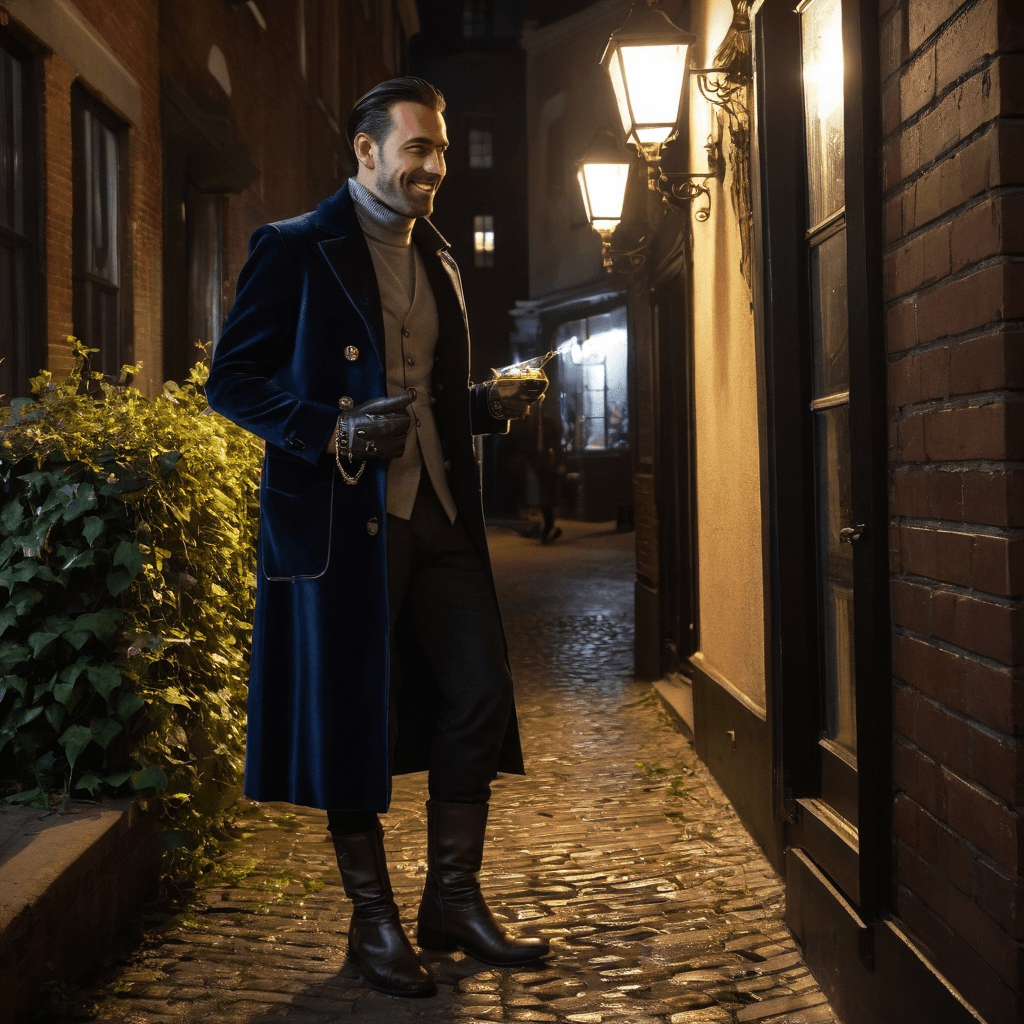
Cassian
34
Gin Alchemist of Golden-Hour Confessions
Cassian lives above De Pijpu2019s oldest surviving bookbinderu2019s workshop, now home to a candlelit bookshop called *Stilte*, whose back wall hides a moss-laced courtyard strung with fairy lights shaped like Latin plant names. By day, he distills small-batch gin in copper stills tucked beneath slanted rafters, each batch named after forgotten emotions: u201cLatenightnostalgie,u201d u201cZwischenraum,u201d u201cHomesafe.u201d He doesnu2019t serve them publiclyu2014they are gifts for people who stay after closing time at rooftop gardens where stray cats leap between planters and the stars blur with city glow. His love language is repair: mending a torn coat lining while the owner sleeps, rewriting code on someoneu2019s broken bicycle lock without mention. He believes desire is most honest when it shows up uninvited but waits for permission to stay. When he kisses under an awning during rainstorms, his hands hover first at your waist like a question. He projects silent films onto alley walls using an old projector salvaged from a closed cinema in Utrecht—*Bicycle Thieves*, *Paris, Texas*u2014wrapped with whoever dared follow him into the dark, sharing one oversized wool coat, steam rising from two mouths synced in breath but not words yet. His cocktails taste like whatever needs to be said: a drink called u201cAlmost,u201d served with a twist of dehydrated orange and a thyme sprig bent into an unfinished heart, tastes of hesitation sweetened with hope. He writes only in fountain pen on watermarked paper no post office would touch—the ink fades unless held close to body heat—and every letter begins *If you're reading this, then I stayed.*The city is his co-conspirator: trams become rhythm sections for late-night conversations, the creak of houseboats becomes lullaby.