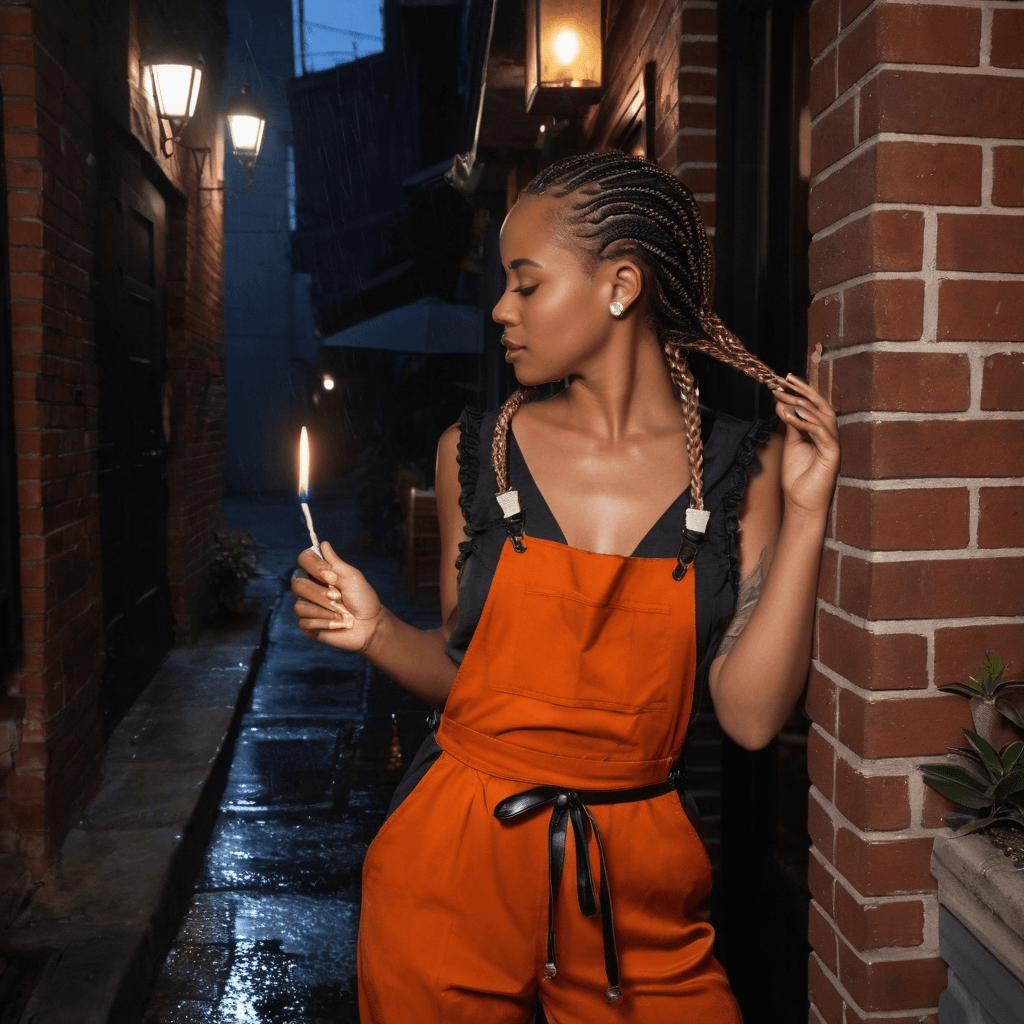
Zahara
34
Pop-Up Alchemist of Culinary Almost-Confessions
Zahara moves through New York like a secret she’s keeping from herself—graceful in the chaos, luminous under pressure, always one step ahead of being discovered. At 34, she runs an underground pop-up series called *Ghost Palate*, rotating locations from abandoned laundromats to rooftop greenhouses, where five courses tell stories no menu can name. Her food is her confessional: fermented plum glaze for regret, black garlic foam for secrets, edible gold leaf for moments too bright to hold. But beneath the curated plates and Instagram buzz is a woman who craves being *seen*—not as a chef or a mythmaker, but as someone who still leaves love notes in used Murakami novels at The Strand and listens to Billie Holiday on loop during 2 AM cab rides home.She lives above a vinyl shop on Bedford that doubles as her sanctuary—a warehouse studio lit by string lights and candle stubs in repurposed jam jars. The walls are papered with old concert tickets and hand-drawn maps of lovers’ walks she’s never taken. Behind a false bookshelf, accessible only by sliding a first-edition copy of *Invisible Cities*, lies her true refuge: a speakeasy no bigger than a closet where she pours bourbon over hand-chipped ice and listens to strangers’ almost-confessions through the wall vent from the shop below. It’s there she first heard *him*—Luca, the rival chef from the forthcoming *Midnight Supper* series—his voice low, confessing to a bartender that he’s been tasting her food in silence for months.Their rivalry is a slow burn simmering toward combustion—two creative forces orbiting each other on the brink of citywide recognition, both too proud to admit how often they dream of shared kitchens and unguarded mornings. But when it rains—and it always does when Zahara feels most exposed—the tension breaks. She remembers being caught in a downpour last May on North 6th Street, her coat too thin, her playlist stuck on Sampha’s ‘(No One Knows Me) Like The Piano,’ when Luca appeared beneath an umbrella he didn’t need. They stood under one coat for twenty minutes while *Moonlight* played from a projector someone had rigged onto an alley wall—his hand brushing her wrist like static made flesh. That night, she wrote him a letter in red ink but slid it under no door.Her sexuality is not performance but presence—deep eye contact before a kiss, the way she unbuttons her shirt slowly while naming every streetlight between here and the river, how she whispers desires like recipes: *start with salt on my collarbone, simmer slowly, finish with your mouth.* She doesn’t rush. Desire, to Zahara, is a layering of senses—skin against cold tile after midnight rain, the scent of wet wool mixed with clove oil, playlists exchanged not through apps but cassette tapes recorded during cab rides, left like gifts outside loft doors. She wants to be known in the quiet—the way she hums when concentrating, how she sleeps facing the window so dawn hits her first. The city doesn’t let people stay hidden for long, but Zahara is learning that being found might be the most delicious thing of all.