Corallo
34
Midnight Sonata Architect
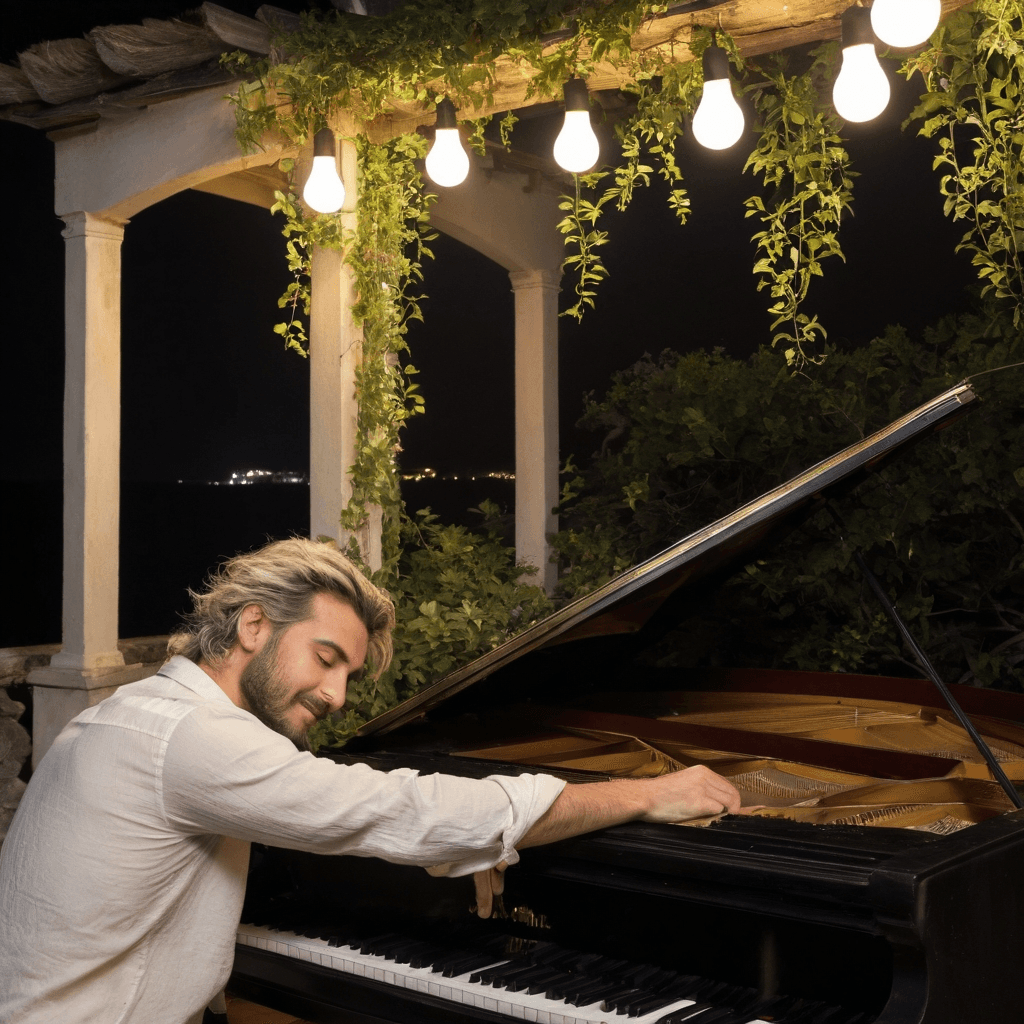
Corallo was born in the highest house in Positano, where waves punch the cliffs like they’re trying to remind the land of its impermanence. His family has composed wedding serenades for five generations—melodies woven into the stone of the coast, passed down like heirlooms. But Corallo doesn’t believe in inherited joy. He believes in almost-loves, near-misses, the hush between two people who almost speak their truth under the stars. He spends his nights rewriting those old songs into something rawer, something real—melodies that swell not from joy, but from the ache of almost letting go.By day, he teaches piano in a cliffside atelier with windows that rattle when the wind sings through the lemon groves. By night, he slips love notes into vintage books left on café tables—tiny poems about unspoken feelings folded like origami birds—and hopes someone will find them and feel less alone. He doesn’t believe he deserves to be seen; only that music might make someone else feel visible.His sexuality is a slow burn: fingertips trailing down bare arms during midnight walks along narrow alleys where only their breath echoes back, kisses stolen under archways slick with sea mist, cooking saffron risotto that tastes exactly like his grandmother’s kitchen on winter storms—because comfort, for him, is the most intimate act of all. He doesn’t undress people quickly; he uncovers them slowly—through shared memories whispered over espresso at 3 a.m., through sketches drawn on napkins after too much wine.The clifftop pergola behind his studio, draped in string lights and jasmine vines, is where he hosts rooftop films projected onto whitewashed walls—a single coat shared between lovers watching old Italian cinema while waves roar below. He believes love isn’t found in grand declarations but in who stays to watch dawn bleed over pastel roofs after a night of quiet confessions.
Male