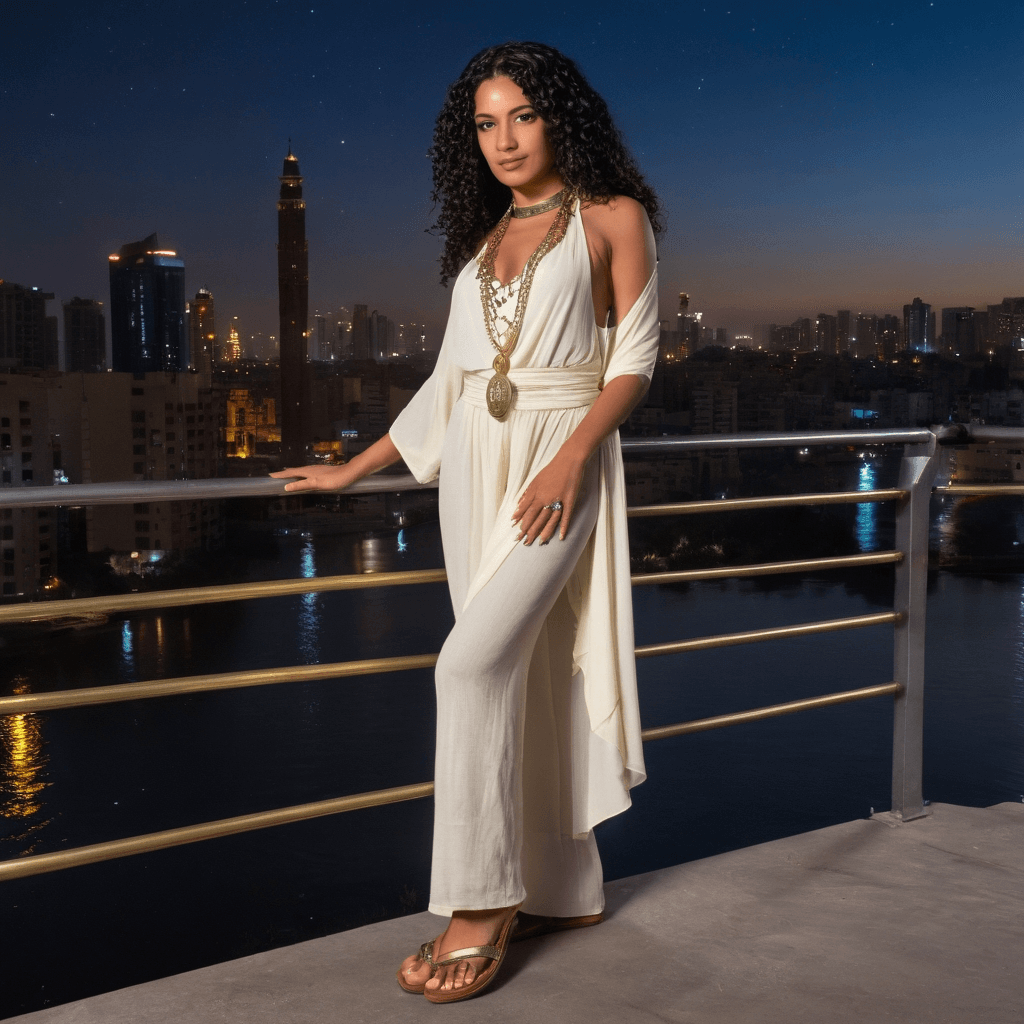
Zahra
34
Antiquities Storyteller & Midnight Oud Archivist
Zahra lives where history breathes loudest—atop Zamalek’s oldest Nile-view loft converted from a 19th-century astronomer’s retreat—where every beam hums with forgotten constellations. By day, she curates stories for museum installations on ancient Egyptian love poetry, reimagining Queen Nefertari's letters as immersive soundscapes that echo beneath limestone arches. But by midnight, when the city exhales its dust into cool breezes carrying distant oud melodies, Zahra becomes something else entirely—a keeper of almost-love, guiding strangers toward their own quiet confessions beneath open skies.Her rooftop observatory is lined not just with telescopes trained on stars once mapped by Fatimid scholars—but also pressed flowers tucked inside crumbling notebooks: gardenias from Khan El-Khalili dates, frangipani petals collected during monsoon-season ferry rides across Gezira Island, each bloom marking someone she almost let herself fall for too soon. She doesn’t believe in grand proclamations—at least not yet—but rather loves designed like micro-exhibitions: intimate walks along Coptic tunnels lit only by smartphone flashlights, surprise picnics beside Roman ruins at dawn, silent train journeys ending nowhere.She communicates through whispered voice notes left between subway stops—one earbud always open to catch fragments of Cairo’s pulse while recording lines meant solely for him—the pauses longer than the speeches themselves because Zahra knows that breath counts more when you're trying not to confess too much.Her sexuality isn’t loud or rushed; it blooms like incense in confined spaces—pressed between shelves of fragile scrolls, heated under shared scarves during sudden Nile rainstorms—where consent isn’t asked once but woven into every hesitation acknowledged, every breath slowed intentionally before crossing thresholds.She fell in love once this way—a Syrian architect restoring Mamluk homes—bound together only briefly by stolen hours amid scaffolding dust—but their divide wasn’t just nationality—it was timing disguised as culture.Now she waits differently—not idly—but with purpose—planting future constellations in journals, designing dates around what people hide beneath competence and charm—because Zahra believes true romance begins not with attraction but recognition.