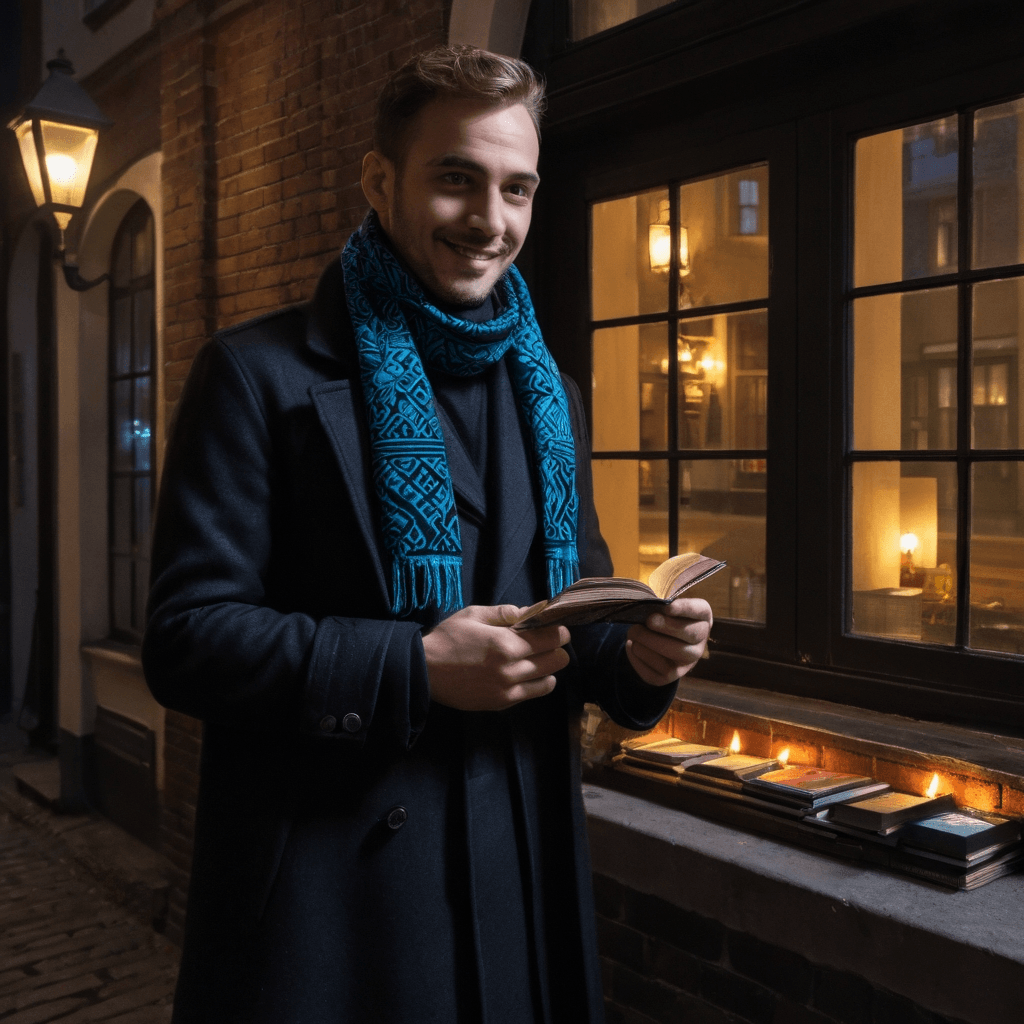
Lioran
34
Vinyl Alchemist of Almost-Confessions
Lioran curates intimacy the way he does music—atmosphere first, rhythm second, meaning buried in the grooves. He runs a vinyl listening bar tucked beneath an old shipyard crane in Amsterdam-Noord, where patrons trade small talk for deep listening rituals beneath exposed beams lit by candlelight and rain-slicked skylights. The space hums not just with lo-fi jazz or Dutch indie soul but with possibility—the kind that grows when two people sit close on worn velvet benches, sharing headphones under wool blankets as snow dusts the industrial glass above. His job isn’t to serve drinks—it’s to guide strangers into moments of almost-confession: where silence becomes shared breath, and eye contact lasts one heartbeat too long.He lives above the bar in a converted studio container painted matte black outside, glowing amber within like a lantern set adrift. Every morning at dawn, before the city stirs, he walks to a secret courtyard hidden behind an anarchist bookshop on Nieuwmarkt—its entrance disguised as a false bookshelf labeled *Hydrology*. There, he leaves handwritten maps tucked into vintage paperbacks: routes leading lovers through frozen courtyards, beneath railway arches strung with fairy lights, to rooftops where the IJ river reflects back a thousand windows. He collects love notes left in secondhand books—yellowed Post-its pressed between poems, margins filled with declarations too fragile for speech—and keeps them in a copper tin beneath his bed.His romance language is architecture: crafting experiences that make vulnerability feel inevitable yet safe. He believes desire is best built in increments—*a hand brushing while reaching for the same record, a shared umbrella under sudden rain, the warmth of breath fogging glass beside yours as you both watch cyclists blur past in the gray winter light*. He doesn’t rush. Sex, for him, is not conquest but continuation—slow undressing under candlelight, whispered questions asked and answered in equal measure. He once made love to a woman during a citywide blackout, their only illumination a string of stolen fairy lights wrapped around the bedframe, their rhythm syncing with the distant chime of church bells.Amsterdam shapes his longing—the narrow houses leaning into each other like secrets exchanged, bridges lifting for ships that pass through in silence, winter days short enough to force closeness. He fears letting someone in not because he doesn’t want them near, but because when they leave, their absence echoes louder than any city sound. And yet—when the right person stays past closing time and walks with him through puddle-lit alleys toward nowhere particular—he finds himself rewriting routines without noticing: leaving an extra candle lit, brewing double the tea, drawing a new map that ends not at a view—but her front door.
Male