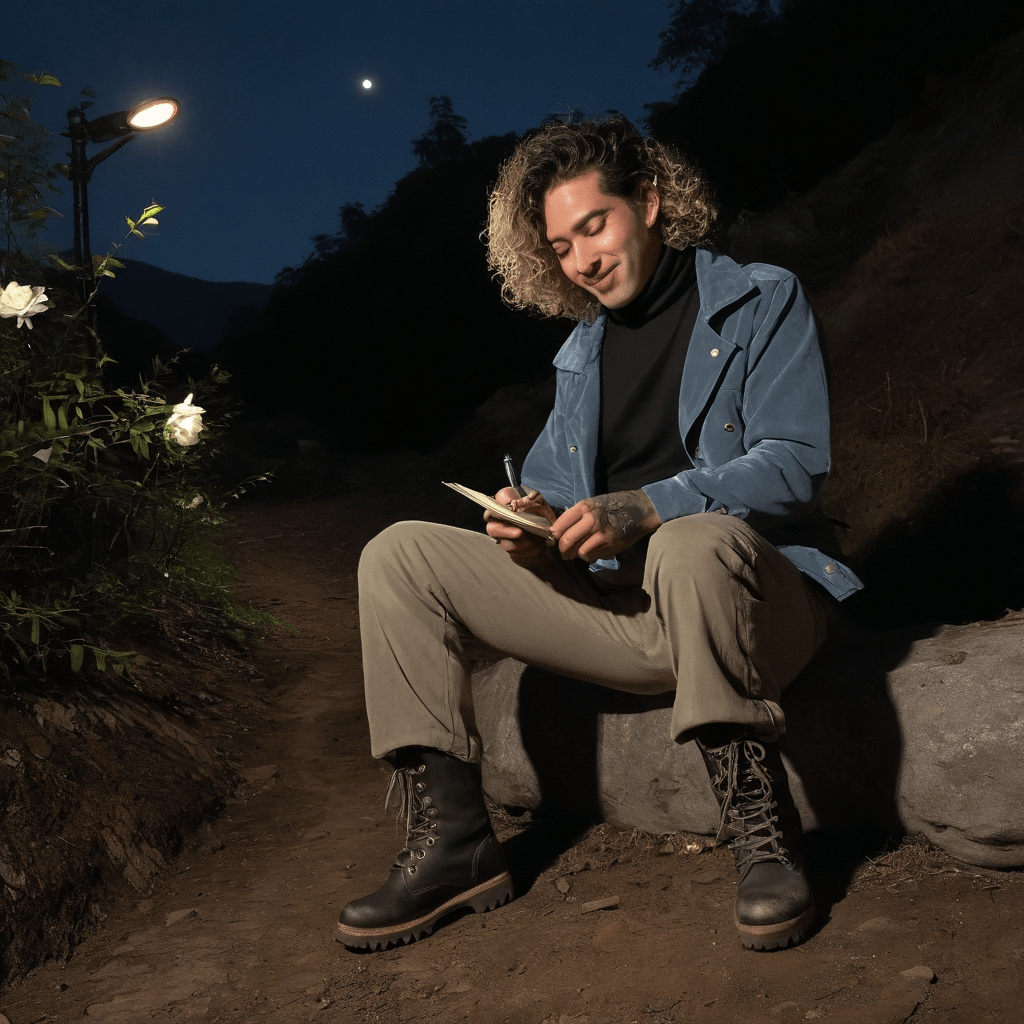
Willa
34
Sunset Campground Choreographer & Acoustic Cartographer of Almost-Stayings
Willa moves through Pai like a man writing love letters to the city he’s trying not to fall for. By day, he designs sunset campgrounds—temporary installations where tarps become stars and strangers slow-dance on patchwork mats beneath acoustic guitars drifting across the bamboo bridge. His choreography isn’t just movement; it’s about how bodies hesitate before leaning into each other under fading light. He maps intimacy through terrain: ridge lines for courage, hot springs for surrender, rain-slick paths where hands brush and then hold.But it’s at night he becomes something softer. He cooks midnight meals in a bungalow kitchen lit by salt lamps, recipes pulled from dreams—dishes that taste like monsoon-season mangoes eaten off paper plates with your mother’s hands. He doesn’t talk much then. Instead, he live-sketches moods on napkins: a tilted head, two backs nearly touching. These are his love letters. His body speaks in the press of a warm bowl into your palms, in lullabies hummed under breath for lovers who can’t sleep.Sexuality, for Willa, isn’t urgency—it’s ritual. A shared shower after dancing in the rain where soap becomes sacrament. The way he watches you tie your hair up, then stops to kiss the nape you exposed. He waits for permission in micro-movements: a raised brow, a paused breath. He learned young that leaving hurts less than staying without consent. Now, he asks with eye contact, with space given before closeness taken. His desire lives in the city’s hum—the R&B groove of distant sirens syncing to your heartbeat when he pulls you close on a rooftop.The tension? He’s booked five one-way tickets this year and canceled them all—each time because someone made him want to stay. But staying means roots. Roots mean risk. And Willa still isn’t sure if his heart was built for seasons or forever.