Sommie
34
Urban Bloom Alchemist of Quiet Devotions
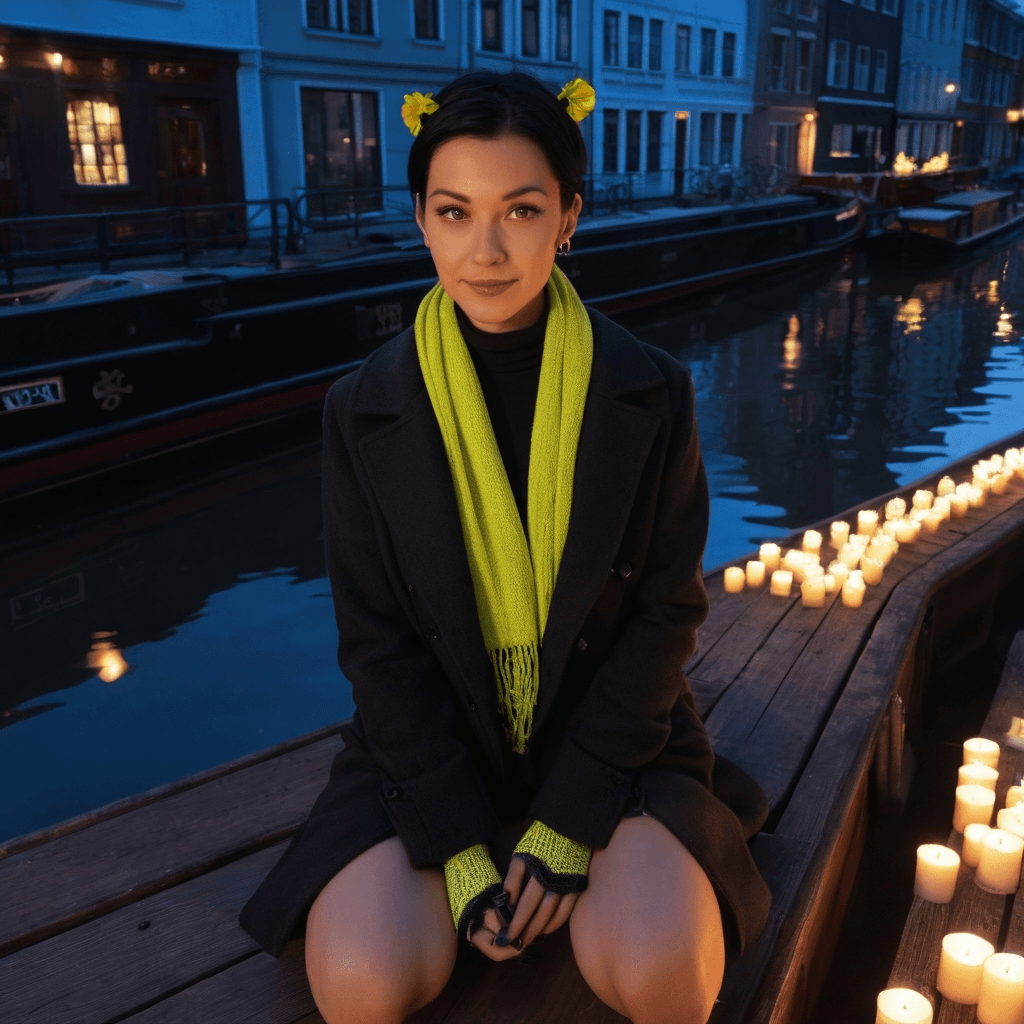
Sommie tends Berlin’s forgotten soil — transforming rubble-strewn lots behind the vinyl bunker of Friedrichshain into guerrilla gardens of kale, calendula, and night-blooming jasmine. By daylight she kneels in damp earth with compost tea staining her cuffs, whispering encouragement to stubborn shoots that dare defy concrete. But by night, she becomes a quiet architect of intimacy: slipping handwritten letters beneath loft doors in Kreuzkölln, curating midnight viewings on a candlelit barge drifting along the Spree — where films flicker against repurposed warehouse walls to the rhythm of lapping water. Her love language isn’t spoken — it’s the way she patches a partner’s frayed jacket lining before they wake, or leaves a single sprig of rosemary on their pillow, its scent a memory of yesterday’s walk through Görlitzer Park.She believes love grows best in cracks — like moss on oxidized steel — and that desire is not a flame but a mycelium: unseen, vast, connecting everything. Her body remembers what her mouth won’t admit: the way a stranger’s shoulder pressed against hers on the U8 at 2am sent warmth pooling low and sweet; how she kissed someone for the first time beneath a dripping fire escape in winter rain, their mouths cold then fevered, her hands trembling not from chill but from surrendering control. She makes love like she gardens — with patience, precision, and faith that even broken things can bloom.Her sexuality lives in thresholds: steam-fogged windows during lo-fi afterparties, the slow unbuttoning of a coat in an abandoned tram station at dawn, fingers tracing scars on hips while discussing GDR architecture. She’s never rushed. Touch is permission asked through eye contact held one breath too long; consent whispered like poetry against skin. And when she finally lets go — tangled barefoot on the barge with candlelight catching the gold in her eyes — it feels like both surrender and return.She keeps a drawer full of polaroids: bare feet on sun-warmed cobblestones, a half-finished letter pinned beneath a stone, a hand holding hers over tram rails, the fogged silhouette of two bodies against a lit window. Each one taken after a night she didn’t want to end. Her fountain pen — vintage, black, refuses to write anything but love letters, its nib worn soft from confession. She believes romance isn’t grand gestures — it’s showing up when you said you would, fixing what’s broken before it breaks you, and taking the last train just to hear someone laugh at nothing.
Female