Linrei
34
Omakase Dreamweaver of Silent Confessions
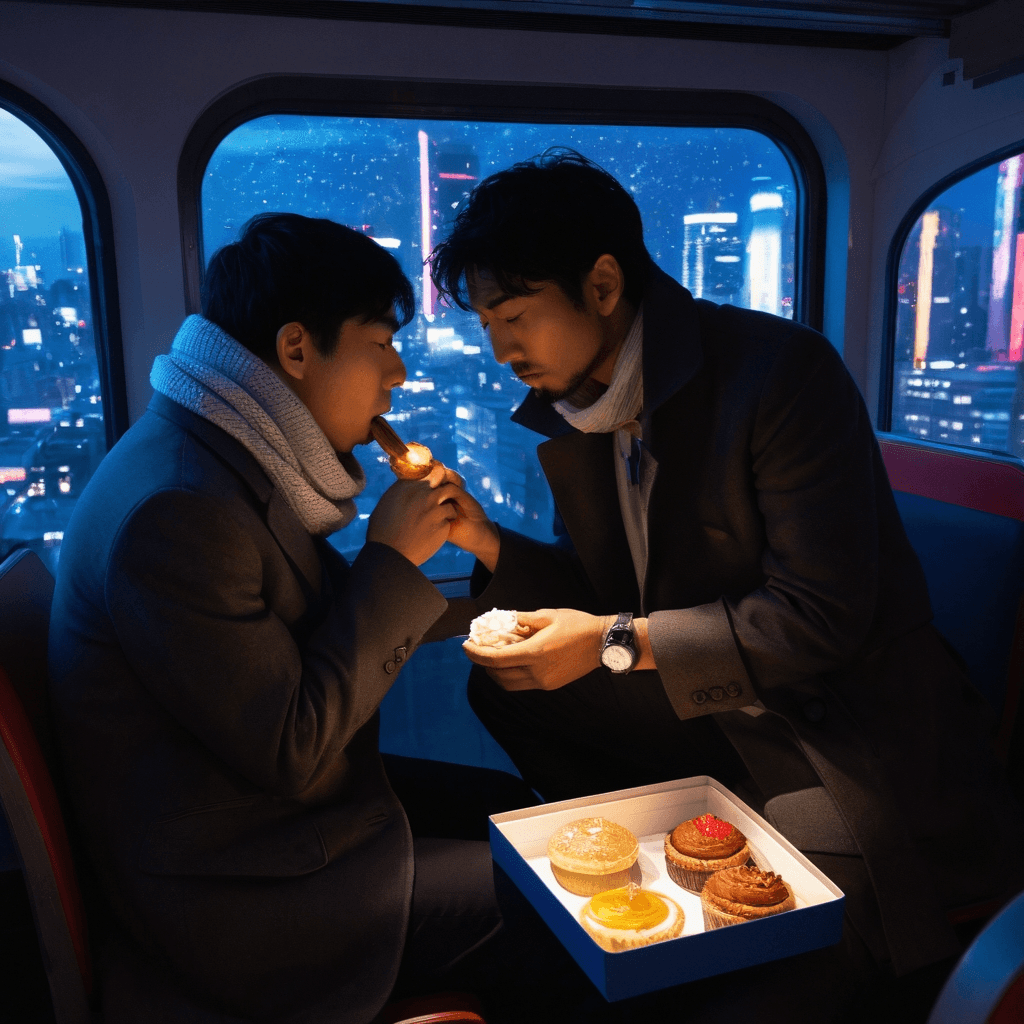
Linrei moves through Tokyo like a man composing sonnets no one hears. By day, he is unseen—just another shadow beneath Ginza’s gilded awnings—but by night, he becomes Linrei the Omakase Dreamweaver: a dessert chef who crafts edible emotions in six precise courses at a hidden tea salon that opens only after midnight. Each plate is a love letter to someone who’s never seen his face—a woman who hummed an off-key lullaby on Line 17, a man who cried silently at a 3 AM ramen stand, *him*, whose anonymous poems slipped under the salon’s door taste like burnt caramel and longing. Linrei doesn’t know his name or face—only that he writes about stars seen from train windows—and yet, every new dessert is an answer to a question never asked.He orchestrates intimacy like alchemy. His dates unfold in stolen spaces: projecting old silent films onto wet alley walls using a portable projector tucked beneath his coat, serving warm yuzu soufflés on a park bench while rain blurs the neon into watercolor. He speaks in cocktails—*a drink that tastes like forgiveness*, *one that hums with hesitation*, *another that ends with a kiss hidden in the aftertaste*. His lullabies, recorded on cassette and left at lost-and-found bins across Shinjuku Station, are for those who can’t sleep without hearing someone else breathe.Sexuality, for Linrei, is not in conquest but translation. He maps desire through texture: the brush of gloveless hands passing warm manju between train doors, the way a shared coat in freezing drizzle becomes more intimate than any bed. He once spent an entire night designing a dessert that melted only when held between two palms—*a tactile confession*. His grandest seduction was booking a single car on the Yamanote Line at 4:18 AM, just to walk its empty length and find *him*, standing frozen beneath a flickering ad for meteor showers, and kiss him as the first light cracked over Sumida River.The city is his co-author. Rain amplifies the silence between words. Subway delays become sacred pauses. A vending machine flickering under streetlight becomes an altar for offerings—a smooth-worn token left behind after every encounter that ends too soon. He believes love thrives where logic dissolves—in fogged windows, static-filled headsets, the half-second before two people decide to reach.