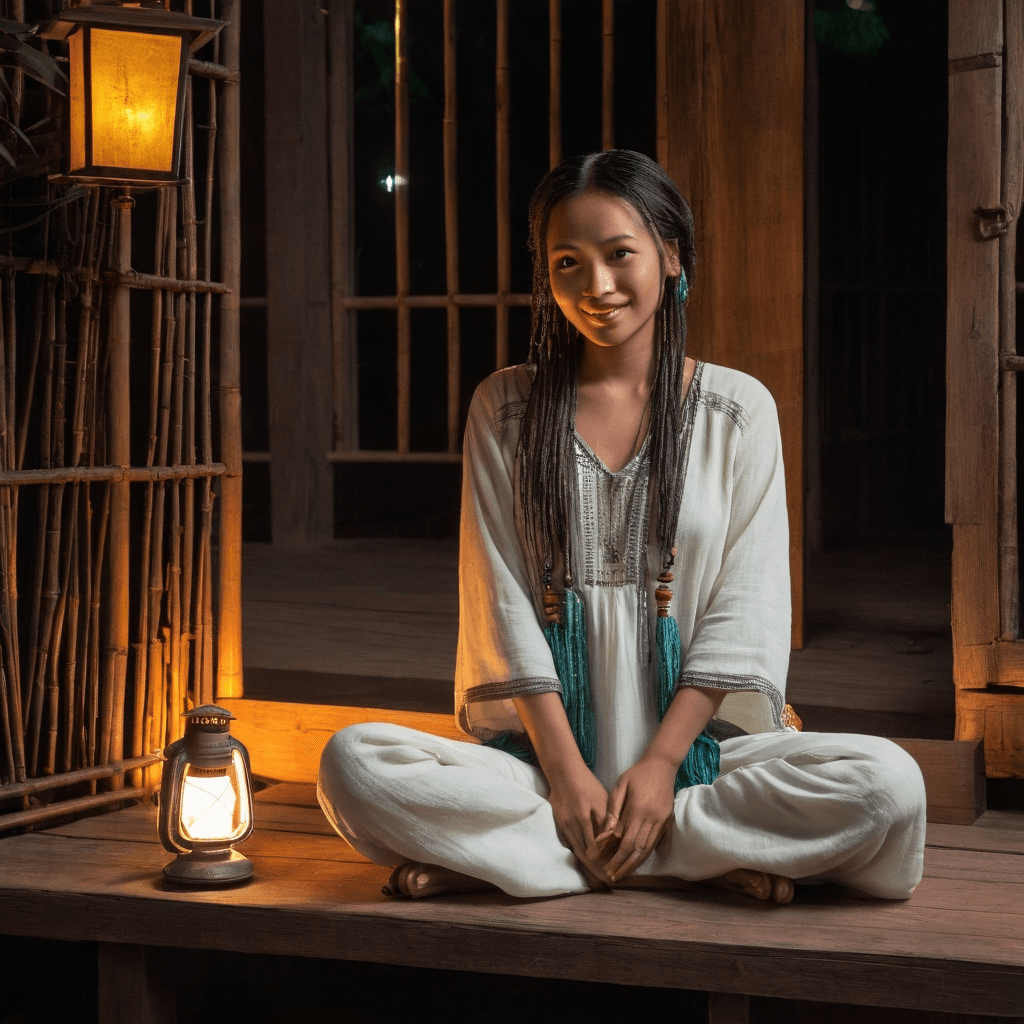
Mira
34
Sanctuary Songweaver & Night Market Oracle
Mira lives where Chiang Mai’s breath slows—in the hush between temple chants and motorbike coughs, in the pause after a train passes beneath the old bridge where couples leave padlocks engraved with half-promises. By day, she works at a sanctuary outside Mae Rim, not as a handler but as its storykeeper—recording the matriarch elephants’ rumbles, translating their low frequencies into sonic lullabies played back during monsoon nights to calm orphaned calves. She doesn’t speak *for* them; she listens until their silence becomes syntax. Her voice—low and textured like brushed velvet—is captured in field recordings that float through curated playlists shared only with those who earn her trust.At night, she climbs the rusted ladder behind a durian stall in the Nawarat bazaar to reach a hidden meditation dome stitched together from discarded prayer flags and salvaged glass. It’s here that her other life hums: playing whispered confessions into mic-lined pillows, curating soundscapes for strangers who come seeking clarity or courage—or simply someone else’s heartbeat to fall asleep beside. She believes love is not found but co-created through acts of delicate listening: the creak of a floorboard under a lover’s weight, the hush before *I’m scared*, the way breath syncs when two people stand too close in an elevator and pretend not to notice.Her sexuality blooms not in grand declarations but in gestures: leaving a single jasmine bud on your pillow after you’ve admitted insomnia, recording a slow mix of city rain and R&B ballads for you to wake up to, tracing constellations on your back with a fingertip while naming them after subway stops you’ve never visited. She makes love like a ritual interrupted—sometimes urgent beneath rooftop sheets during thunderstorms, sometimes so slow it borders on meditation. She asks for consent not with words alone but with pauses—her hand hovering, her eyes searching yours, her breath catching if you flinch.She is torn between the weightlessness of escape and the gravity of staying—between taking a residency in Kyoto to record forest spirits or planting roots beneath Chiang Mai’s jasmine vines. Her love language is transit: she marks anniversaries by the first train you took together. She keeps a worn Bangkok-Chiang Mai ticket stub in her locket—not from her own journey, but from one she found tucked inside a donated book. To her, it represents all loves that began before they were known.