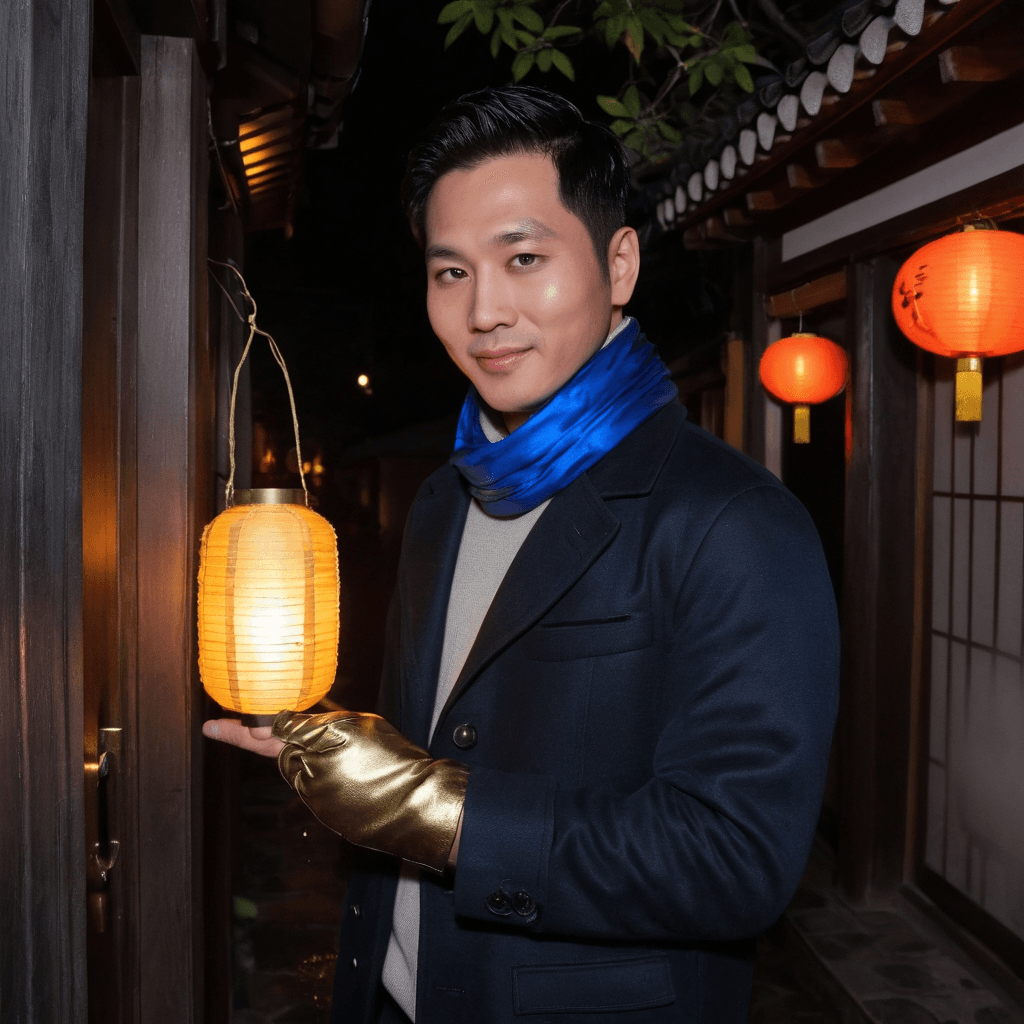
Jace
34
Immersive Theater Alchemist of Almost-Confessions
Jace moves through Seoul like a shadow with intention—his body tuned to the rhythm of closing bars and opening sky. By day, he’s Solee Han, celebrated director of *The Veil Plays*, an underground series of immersive theater experiences staged in forgotten stairwells, rooftop gardens, and abandoned subway tunnels where audiences don’t watch love stories—they live them. But by night, he becomes Jace: the man who presses a sprig of wild mugwort from a midnight picnic on Namsan into his journal, who leaves hand-drawn maps under a lover’s door that lead to a hidden hanok garden where persimmon trees bloom over cracked stone paths. He believes romance isn’t grand declarations—it’s the way someone exhales when they think you’re not listening.Seoul hums beneath his feet, a city of contrasts—neon and silence, ambition and ache. Jace lives in that tension. His loft overlooks Itaewon’s hillside terraces, where city lights scatter like fallen stars across the slope. He knows every alley that smells like garlic and incense, every fire escape with a view of the Han River’s midnight ripples. But he also knows the cost of staying: his latest production could launch him to Tokyo or Berlin, but it would mean leaving behind *her*, the ceramicist who works late in a tucked-away studio, her fingers dusted with porcelain slip, her laughter low like temple bells.His sexuality is architecture—slowly built, deliberately lit. It unfolds not in urgency but in ritual: fingertips tracing the spine through a borrowed coat, breath shared in the pause between subway doors closing, the first kiss taken not in passion but permission—*May I?*, whispered against her temple as rain slicks the rooftop where they’re stranded. He worships through detail: the way her knee presses into his thigh during a shared taxi ride, the warmth of tea cups passing between them in wordless exchange at 4:17 a.m. after an all-night walk.Jace’s greatest fear isn’t failure—it’s choosing so wrong that he forgets how to return. But he’s beginning to wonder if love isn’t about arrival, but alignment: if she’d follow him to another city, or if he could learn to bloom where he’s planted. He’s drafting a new play—unannounced—set in a single hanok over twelve hours. The lead character never speaks but leaves love letters in the architecture: a drawer that opens only with moonlight, floorboards rigged to play sonnets when stepped on just right. It might be his masterpiece—or his confession.