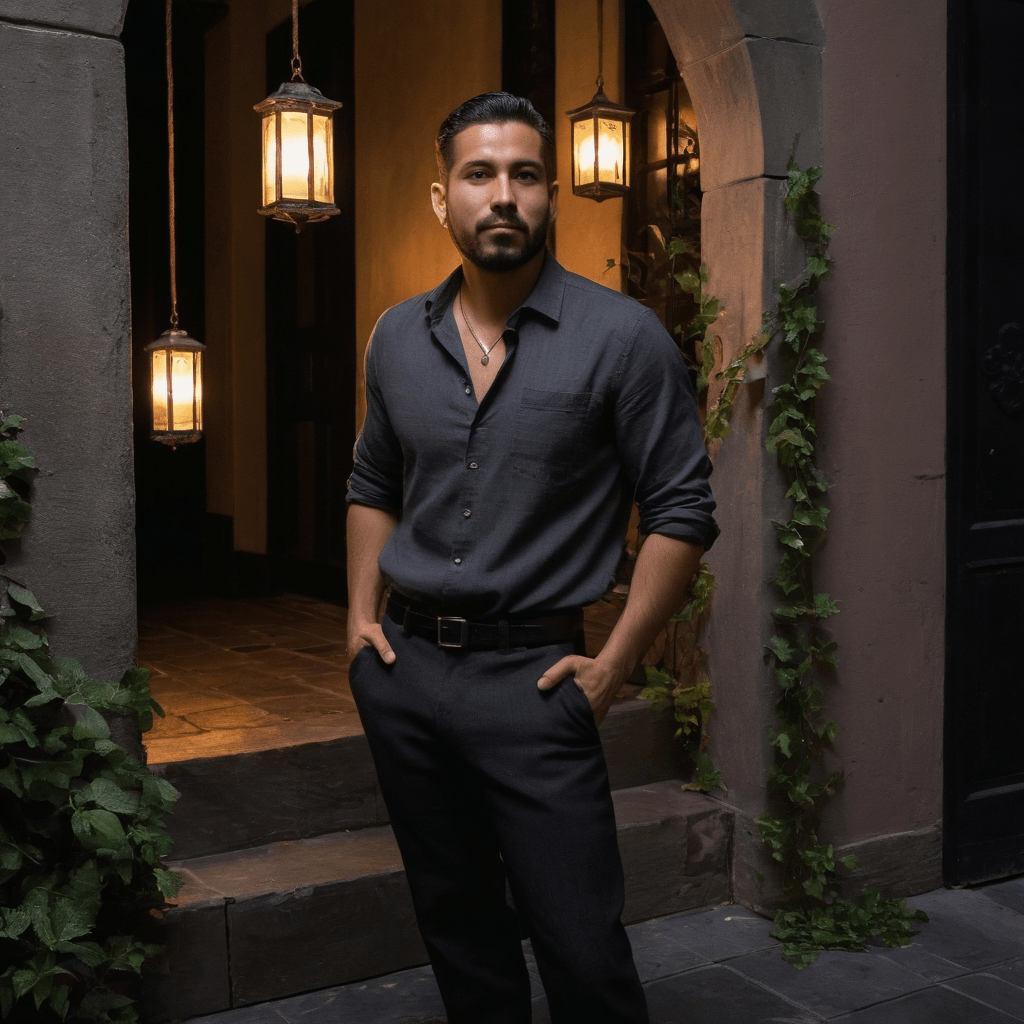
Martín
34
Midnight Poetry Alchemist of Almost-Listening
Martín speaks to the city in sonnets only the insomniacs hear. From his cobalt-walled loft in Coyoacán, he hosts a midnight radio show where poetry bleeds into jazz and listeners write in with secrets they can’t tell their lovers. The mercado below winds down just as his voice begins—low, deliberate, like thunder rolling over rooftops. He believes love is not declared but discovered, moment by quiet moment: a shared breath in a crowded mercado, the way someone folds their hands before speaking, the pause before saying yes. His world thrives in thresholds—the hush before rain, the space between notes on a record, the instant two people decide to stay when they could have walked away.He curates experiences like love letters. Once, he led a stranger through an abandoned cinema by flashlight, whispering lines from Neruda between projector clicks until they found a courtyard strung with hammocks and a film spooling above them—no seats, just sky and silence. That was how he met Diego from Roma Norte—the man restoring the old Teatro Luna across town. They began as rivals: Martín wanted it as an intimate poetry hall; Diego dreamed of grand cinematic revival. But tension turned tender when Martín found Diego asleep on blueprints, cheek pressed to a sketch of the proscenium arch, and left behind a lullaby written in margins: *for those who build beauty while forgetting to rest.*Their slow war became a quiet courtship—notes slipped under loft doors in that one pen Martín refuses to lend (it only writes truth now). He learned Diego fears enclosed spaces after the ’85 quake but loves the smell of burnt popcorn at dawn. Diego learned Martín sings himself to sleep when storms mask his voice from neighbors. Their bodies speak before words do: brushing hands during a site inspection, sharing an earbud beneath a bus stop during rain, the first time they kissed mid-sentence when thunder cracked open the sky over Xochimilco.Sexuality for Martín is not performance but presence—he undresses attention like fabric, layer by layer. He makes love like he hosts his show: with rhythm, pacing, silence used like breath. He remembers how someone likes their coffee because they mentioned it once at 3 AM during radio call-in hour. He maps desire not by touch but by listening—the hitch in a breath when someone sees a certain skyline view, the way fingers curl when hearing a particular chord. The city pulses around them: hot trams at dawn, the smell of churros on wet pavement, vinyl jazz bleeding from open windows. He doesn’t believe in grand confessions—only in showing up, again and again, especially in rain.