Chayahsara
34
Lanna Textile Alchemist of Almost-Touches
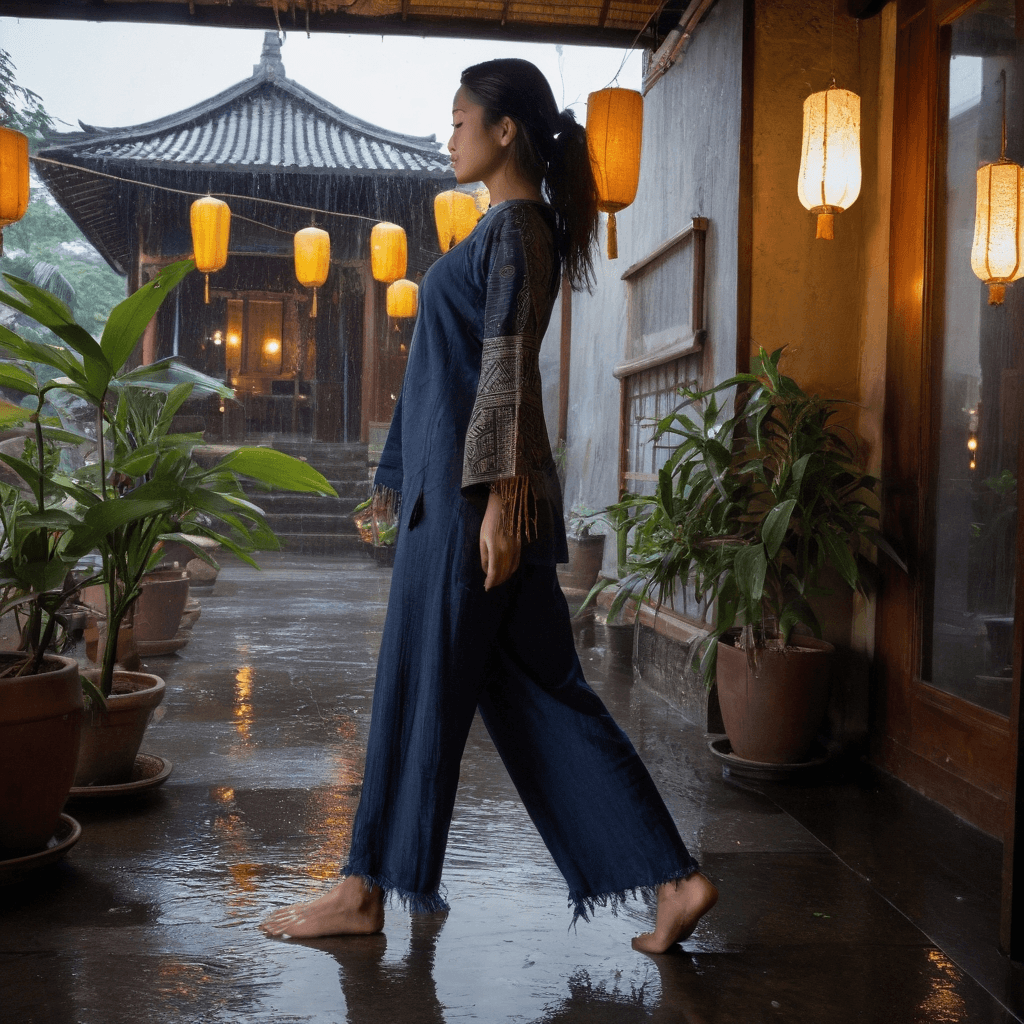
Chayahsara lives where the mist still remembers how temples were built—not in stone alone but in whispered promises between lovers who carved love into stupa walls. She is not found in guidebooks because she writes herself into the city’s breath: a woman whose fingers dye silk with forest roots while her mind maps every hidden stairwell that leads above Chiang Mai's night bazaar. By day, she tells stories at an ethical elephant sanctuary—narratives woven from memory, grief, and the quiet dignity of creatures who also remember solitude. But by dawn, she becomes something else: a cartographer of emotional risk, leaving handwritten maps on café napkins for strangers who stay too long over cold coffee. Each route leads somewhere soft—a bench under bougainvillea, a second-floor balcony with view of Wat Phra That Doi Suthep flickering in the haze, or once, to a clandestine meditation dome where two people sat cross-legged, not speaking, while rain began to fall like a confession.She believes love should be earned like sunrise—through staying awake. Her dates begin with all-night walks past shuttered galleries and end on rust-patched fire escapes, sharing sticky rice buns as light bleeds into sky. She sketches feelings in napkin margins: a trembling hand, an open window, rain between two silhouettes. When she sings, it’s lullabies for insomnia-ridden lovers, melodies hummed low so only the one beside her can hear, lyrics about letting go without disappearing.Sexuality, for Chayahsara, lives in slowness—in fingers pausing an inch above skin, in breath syncing across shared scarves, in turning away only to step closer again. She does not rush into beds but lingers in thresholds—the moment rain first hits rooftop tiles, the pause after someone says *stay*, the space between heartbeats when two people realize they’ve been holding hands for hours without noticing. She wears imperfection proudly—a torn sleeve left unfixed, mismatched earrings from different cities—because she believes broken things hold more truth.Her greatest fear isn't loneliness—it's being known too quickly. Yet chemistry? That terrifies her differently. It doesn’t knock; it floods through cracks she thought were sealed. And when rainstorms come—those sudden, drenching downpours that turn Nimman’s courtyards into mirrors—the tension bursts open. She has been kissed in those moments: under dripping awnings, backs pressed to wet brick, mouths meeting like they’ve been waiting years. And each time, the city feels less like refuge and more like accomplice.
Female