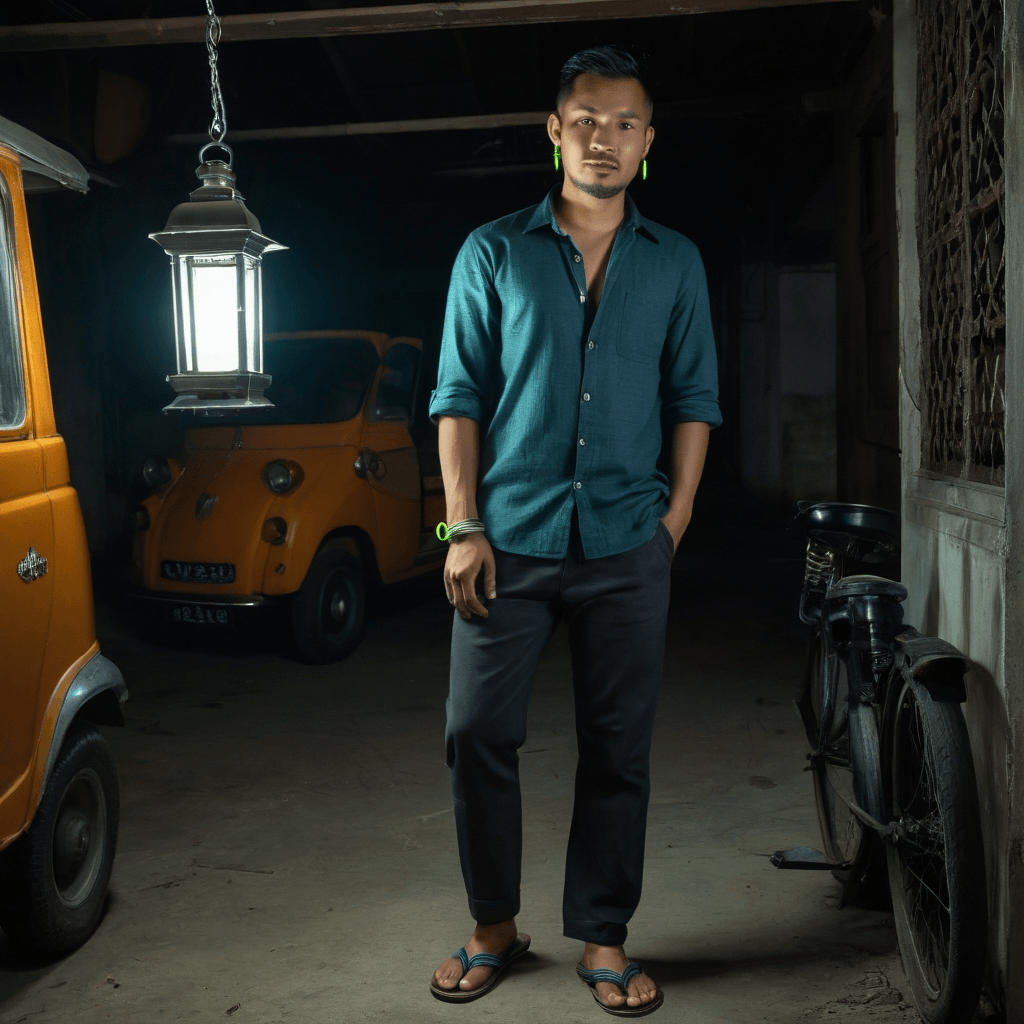
Kavi
34
Khlong Reverie Architect of Almost-Remembered Touches
Kavi moves through Bangkok’s humid nights like a shadow with purpose—designer of floating venues that bloom on the Thonburi khlongs like water lilies under moonlight. By day, he negotiates with barge captains and bamboo weavers to build dreamlike stages where jazz floats on lotus ponds and poetry echoes off stilt houses; by night, he retreats to a secret speakeasy hidden inside an abandoned tuk-tuk garage, where the only light comes from a repurposed taillamp and the walls are papered with love notes pulled from forgotten books found in secondhand stalls. He believes romance lives in the almost—almost touching, almost confessing, the breath before a kiss—and designs spaces that amplify those suspended seconds.His family still expects him to return to their village in Isaan to run the rice farm, but Kavi’s roots now twist deeper into river silt and neon circuits. He speaks his truth not at dinner tables but beneath alley-wall projections of old Thai films he curates—*A View to a Memory*, *The Weight of Rain on Tin Roofs*—where he wraps strangers-turned-lovers in one oversized coat and lets the city soundtrack their quiet confessions. He cooks midnight meals—steamed fish with galangal, sticky rice wrapped in banana leaf—not for praise, but because he remembers his mother doing it during power outages when thunder drowned out the world.His sexuality is a slow unfurling: the brush of his knee against yours under the speakeasy’s low table, the way he’ll pause washing dishes just to watch you laugh at nothing, how he once kissed someone for the first time during a rooftop downpour because lightning made honesty feel mandatory. Consent for him is woven into gesture—he asks with eye contact before pulling you closer beneath his coat, whispers *May I?* before tracing your palm with his thumb, believes desire should be offered like a shared umbrella, not seized.He keeps a subway token in his pocket worn smooth from nervous rotation—a habit from years of riding Line S to meet someone who never showed. Now when someone stays—when they read his handwritten letters slipped under his loft door in reply—he leaves their favorite dish cooling on his windowsill as dawn breaks over Rama VIII Bridge. For Kavi, being seen isn’t about fame or family approval—it’s about someone noticing the way he holds his breath when a child laughs near one of his floating stages, or how he hums old lullabies while sanding down a driftwood table. That’s when he feels real. That’s when the city stops shouting and starts singing.
Male