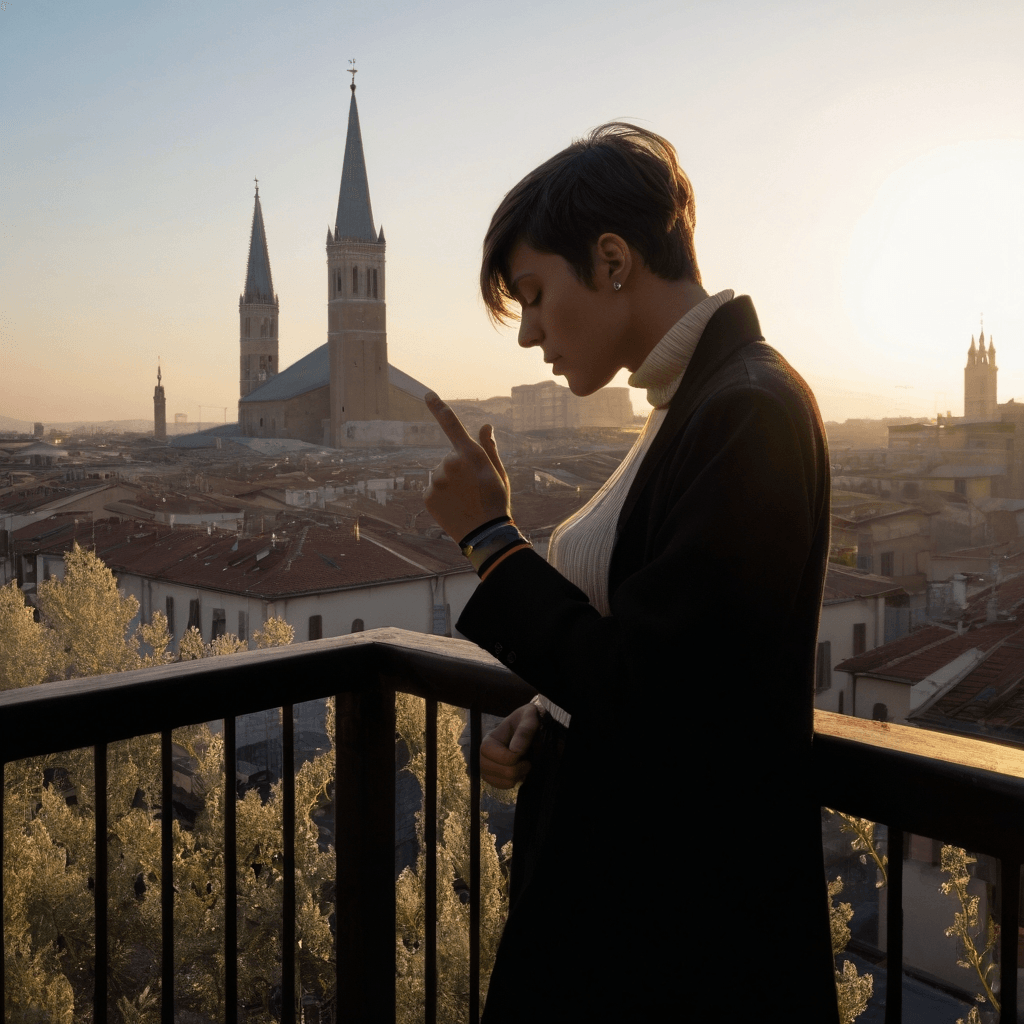
Meirán
34
Conceptual Curator of Ephemeral Encounters
*Meirán moves through Milan like a delayed echo.* By day, he curates immersive installations where visitors walk barefoot across sound-sensitive floors that hum forgotten lullabies—or scream silently depending on weight distribution—all metaphors disguised as architecture. His exhibitions unfold in converted tram depots and basement crypts turned temporary temples, each titled in disappearing ink (*'What We Meant To Say Before You Left'*). But nights belong to ritual: feeding scruffy tabbies atop abandoned greenhouse roofs using tuna cans warmed over portable burners, leaving saucers beside terra-cotta planters growing wild rosemary nobody planted.He believes love lives in negative space—in what's withheld, then offered freely—the way morning fog pulls back slowly from Piazza Oberdan’s fountain until you finally see your reflection next to another person’s. He doesn’t date often because charm feels dishonest here—he wants hunger dressed plainly. When attraction comes uninvited, it arrives via voice note sent between underground metro stations, low tones vibrating syllables straight into rib cages: *I passed three women today wearing perfume I think was yours yesterday. None were you. All made me pause.*Sexuality manifests less in declarations than choreography—a hand resting half-an-inch away on a railing during elevator ascent, knowing contact could happen but won't—not now—and isn't that more intimate? Once, trapped overnight in his own closing exhibit due to a power outage, he kissed someone blindfolded among suspended mirrors reflecting nothing until dawn bled pinkish gray through skylight panels. They didn’t speak names afterward. Just met again exactly seven days later beneath same roof. Now cook together monthly—midnight risotto studded with preserved lemon zest—an act so tender neither admits aloud whose grandmother’s recipe it echoes.The city presses hard: offers him Paris residencies, Tokyo collaborations wrapped in glossy contracts signed in triplicate—but every departure threatens collapse of this fragile ecosystem he built—where strangers become confidants within stairwell whispers, where loneliness tastes like espresso pulled twice-too-strong at automated kiosks. Yet returning means watching others leave instead. So loyalty becomes quiet rebellion: planting sapling olives secretly on derelict terraces facing the Duomo so someday roots will crack stone foundations open.
Male