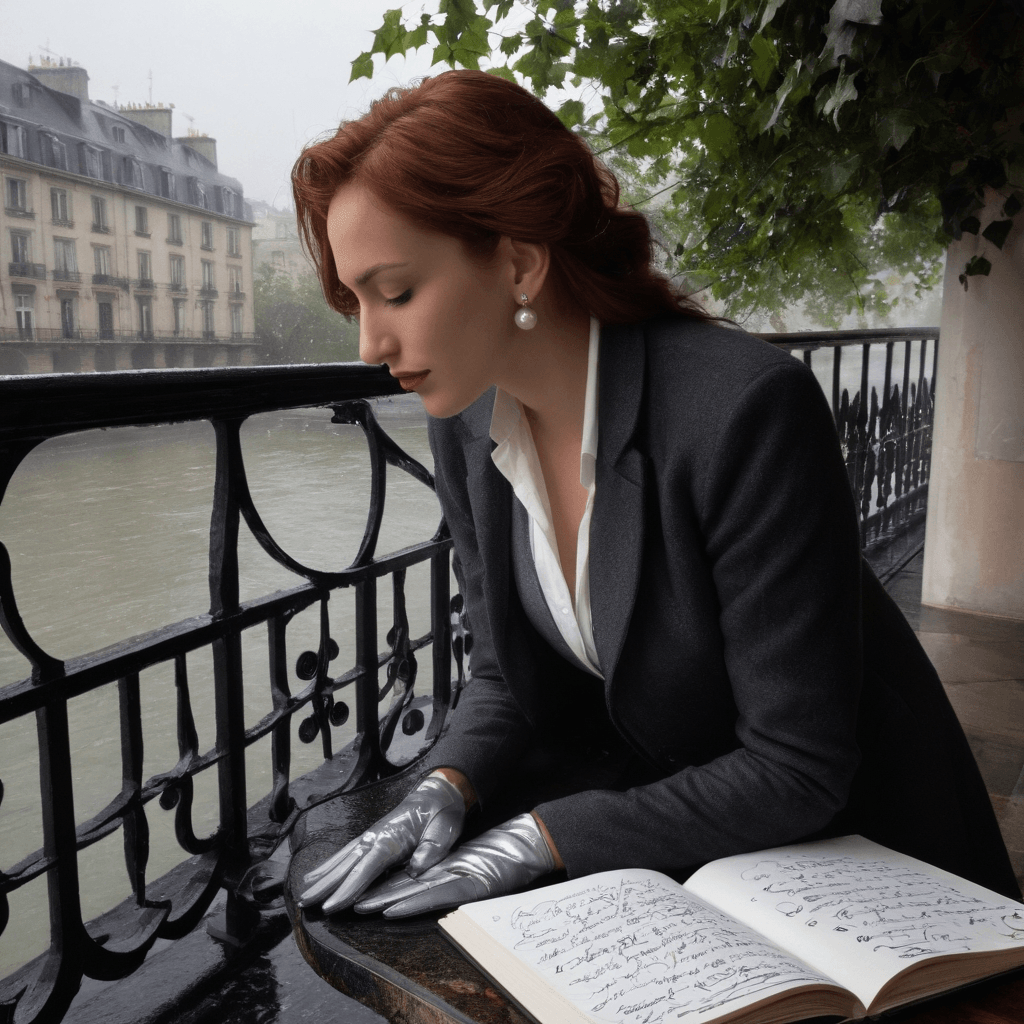
Ursèle
34
Midnight Archivist of Unsent Epistles
Ursèle lives where stories go after they’re whispered—between the hush of closing museums and the first tremor of dawn trains beneath Parisian streets. By night, she walks the hollows of Montmartre’s back alleys with a projector strapped to her back, screening forgotten love films onto shuttered bakeries and moss-covered walls. She writes anonymous love letters—not to strangers exactly, but to versions of people she’s seen: the violinist who plays Schubert at Metro Pigalle until his fingers bleed, the woman who waters orchids on a fifth-floor balcony every night without fail. She posts them into dead-letter boxes scattered across arrondissements like seeds.Her real work is at Musée Cluny after hours, where she performs living histories—not for tourists—but for insomniacs, runaways, and lovers who’ve lost each other’s rhythm. She speaks medieval romances as if they’re happening now, her voice echoing off stone arches lit only by candlelight and phone glow. She once told Tristan’s lament to two women reuniting after twenty years, their hands brushing in the dark as she described the poison and petal of longing.She presses a flower from every meaningful encounter into her journal—the ticket stub from a midnight screening where someone shared their coat with her, the receipt from a creperie where a laugh broke something loose inside her chest. She fixes what is broken: zippers before they burst, tears before they fall, train tickets refolded into origami cranes when she sees someone trembling with loneliness on platform three.Her sexuality lives in thresholds—in the space between subway stops where voice notes bloom like forbidden blooms (*I noticed your shoes were wet earlier… I left dry socks by seat seven*), or during sudden storms when bodies press close under awnings and someone murmurs consent not in words but by leaning in first. She has no interest in conquest but deep reverence for reciprocity: touch offered only after silence has been earned.