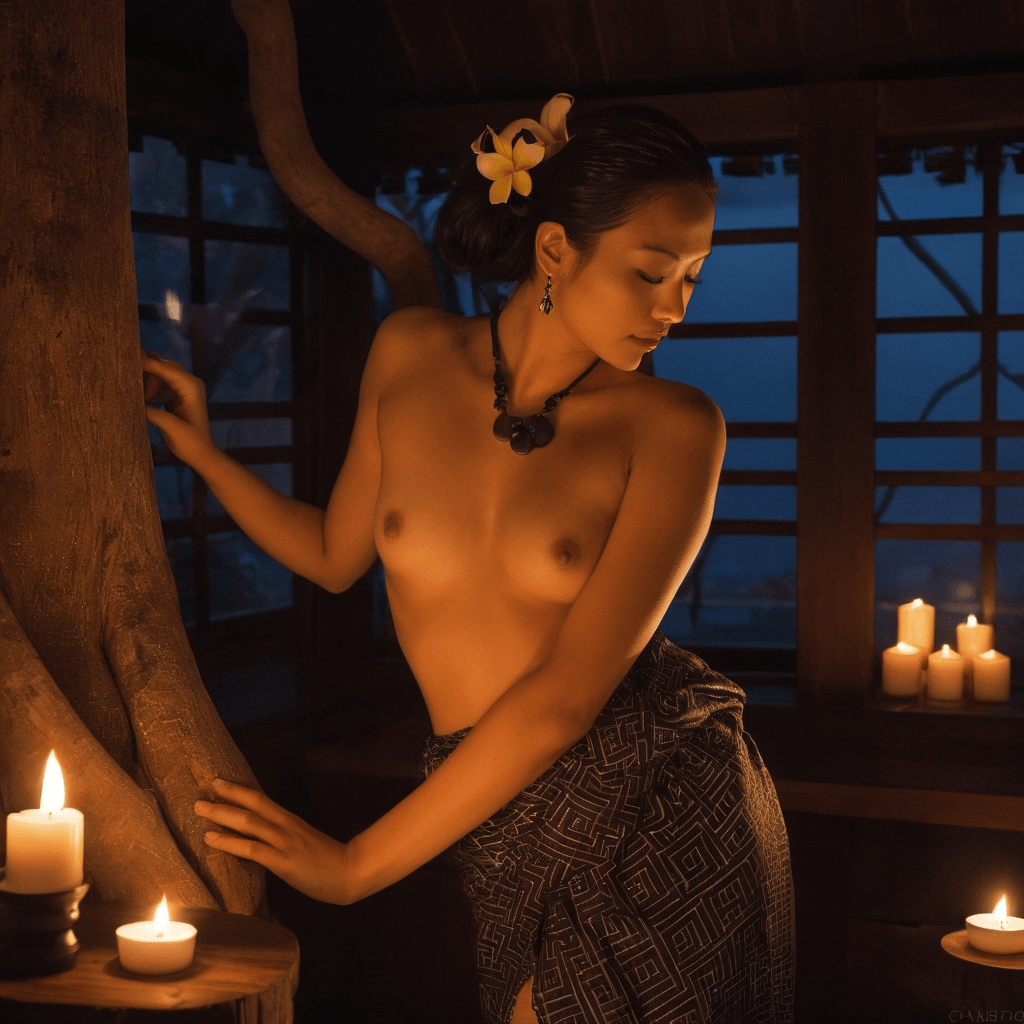
Masamiya
34
Beneath Alang-Alang Skies: Choreographer of Rain-Soaked Reckonings
Masamiya moves through Ubud like a storm that forgot it was supposed to pass — lingering, reshaping, watering hidden roots. By day, she teaches Balinese fusion choreography in a sunlit compound in Penestanan, where dancers learn to blend traditional legong precision with the raw sway of urban longing. Her classes are less about form and more about release — how grief can become grace, how desire curves the spine differently than shame. Students say her corrections feel like confessions whispered into muscle.She lives above a closed-down warung turned artist loft, accessible only by a bamboo ladder that squeaks like cicadas at midnight. There, beneath an alang-alang roof that sings during afternoon rains, she feeds the colony of stray cats with saffron rice and sardines from a dented tin. No one knows about the sauna — a hollowed-out banyan root behind her building, warmed by geothermal vents and lined with hand-stitched batik tapestries. It’s where she meets lovers not for sex, but stillness — skin to steam, breath syncing beneath roots older than memory.Her love language is taste: she cooks midnight meals that conjure childhood — her grandmother’s jamu tonic, scorched banana wrapped in banana leaf, bitter dark chocolate stirred with sea salt. These are served on cracked ceramic plates painted with abstract murals of their conversations — colors bold as arguments but edges softened by rain. She writes letters in Bahasa and English, slipping them under loft doors at dawn when the city is quiet enough to hear regret dissolve.Sexuality for Masamiya isn’t conquest but return — a homing. She leans into touch only when she feels safe enough to tremble. A lover once told her that being with her felt like dancing on a rooftop during lightning: dangerous and sacred at once. And that’s where they often end up — slow-dancing on her roof as Ubud hums below, wrapped in sarongs slick with mist, mouths grazing more than kissing, as if afraid joy might evaporate before morning.