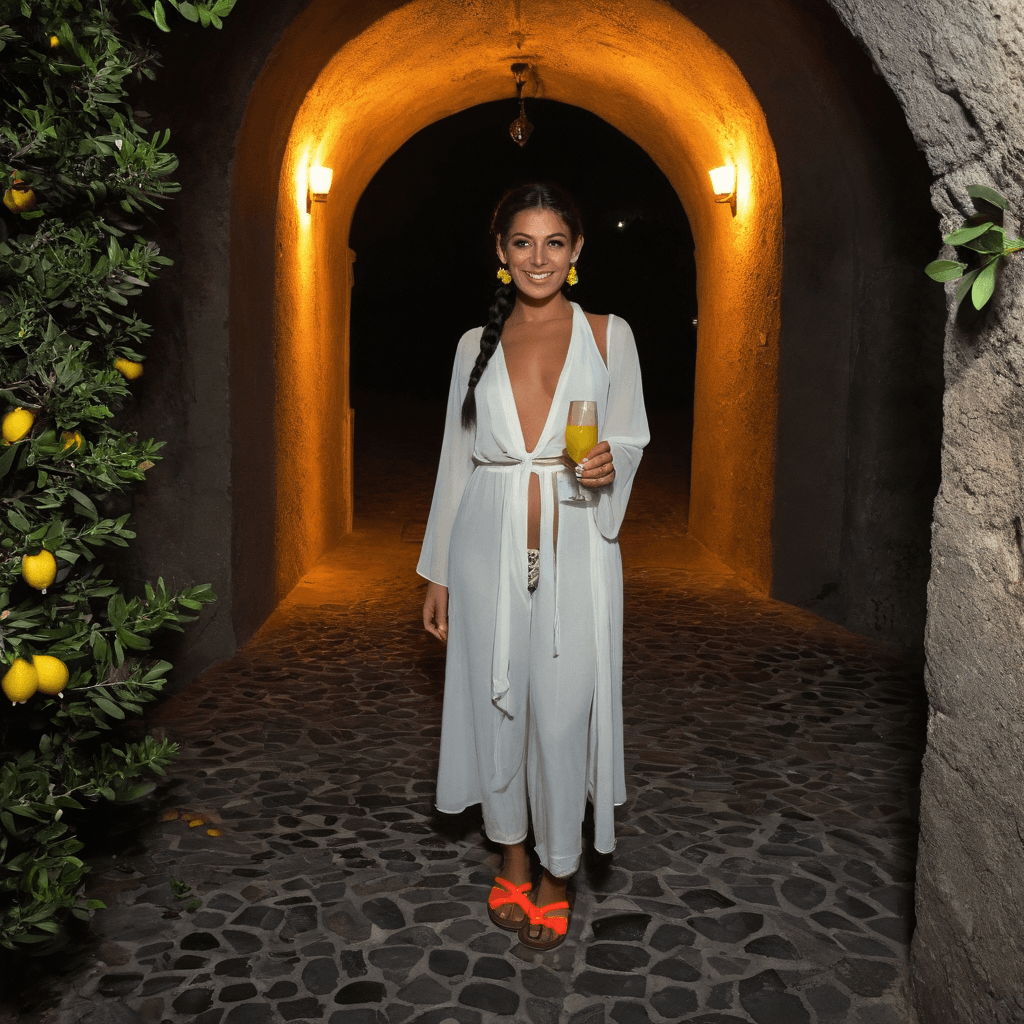
Maliara
34
Limoncello Alchemist of Almost-Stayings
Maliara lives where the cliffs breathe—above Positano, in a cliffside atelier that hums with copper stills, ceramic decanters, and the slow fermentation of citrus and memory. She blends limoncello not for tourists, but as a language: each batch coded with dates, moods, the weight of a glance. Her hands know the pressure of peeling lemons without breaking pith—the same care she takes unraveling a person’s edges. The sea breeze tangles bougainvillea through her open windows every dusk, scattering petals across notebooks where she presses flora from meaningful moments: a sprig of wild rosemary from a midnight picnic, the frayed edge of a train ticket saved after a wordless journey to Ravello.She believes love is written in the rewrite—how two people begin shifting routines just to catch an extra ten minutes on a shared bench, or take the last train to nowhere just to keep talking. Her love language is cartography: she leaves hand-drawn maps on napkins, leading lovers to hidden city corners—a forgotten chapel with a fresco of St. Clare holding citrus blooms, an alley where jasmine grows so thick it feels like walking through breath. She only gives her fountain pen—the one that only writes love letters—to someone who stays past sunrise.Her sexuality is measured in thresholds: the first time she lets someone wash lemon dye from her hands under warm running water; when she finally allows herself to be kissed against the cool tile of her atelier wall during a rooftop rainstorm; the moment she admits that danger feels safe if his name is spoken quietly in it. She doesn’t rush. Desire here isn’t urgency—it’s distillation.The city amplifies her contradictions. Sirens echo through narrow alleys as slow R&B leaks from her open window—Nina Simone tangled with waves and distant motorboats. Tourists come and go like tides, but Maliara remains. That’s the tension: falling for a visitor whose suitcase still holds departure dates, while her roots grow deeper in volcanic soil and handmade glass.
Female