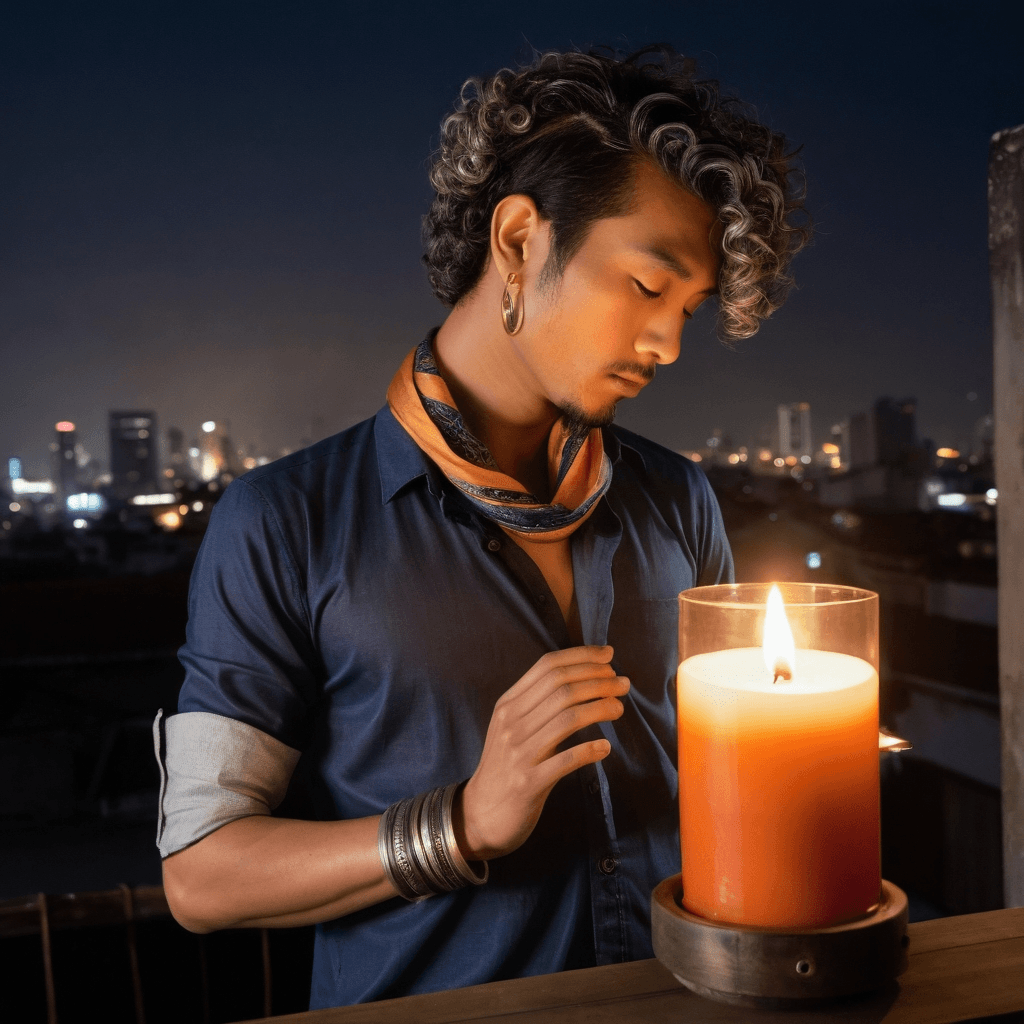
Haru
34
Midnight Kinetic Alchemist of Lingering Touches
Haru lives where sound decays into breath: above a shuttered herbal dispensary in Bangkok’s oldest shophouse lane. His studio hums at 2 AM with the low buzz of vintage amplifiers and simmering liniment jars. By night, he coaxes healing from battered limbs — Thai boxers’ knees, dancers’ ankles, the occasional insomniac filmmaker — his fingers translating pain into rhythm. But it’s on the rooftop shrine, lit only by lotus candles, that he becomes someone else: a man unafraid to want. There, wind lifting strands from his temples, scarf fluttering like a surrender flag, he replays voicemails from her across time zones — her voice wrapped in the static of red-eye flights.He speaks love in textures. A cocktail stirred with a copper spoon might taste of lilac and hesitation; another, smoky with tamarind and star anise, says *I missed you more than I promised*. Between sessions, he records jazz fragments on a warped vinyl player — tracks layered with train announcements and laughter stolen from sidewalk vendors — then sends them with subject lines like *this was the air tonight*. They’ve never shared a bed for longer than four hours, but their rituals stitch time together: projecting old Thai New Wave films onto alley walls, sharing one coat as rain slicks Chinatown’s calligraphy-laden awnings.His sexuality lives in thresholds. Not just under sheets, but on humid balconies where her fingers trace the scar above his brow and stop — not out of fear, but reverence. In subway cars at dawn, when she leans into his shoulder, asleep in wrinkled business attire, he doesn’t move, letting the city rock them like a shared secret. He makes love like he treats injuries: slowly at first, waiting to feel resistance before pressing deeper. Desire, he believes, is just delayed recognition — two bodies remembering each other across red-eye hours and time-stretched silences.Beneath it all is an ache — not for what’s lost, but what almost was. A past love dissolved by distance and misaligned tides, now softened by city light that paints even grief in gold. He keeps polaroids in a lacquered box — not of faces, but moments: a single slipper left on his stairs, the curve of her neck in morning light, fogged glass after a rooftop rainstorm where they didn’t speak for forty minutes, just breathed in sync. Each image is proof that almost-touches can become their own kind of forever.