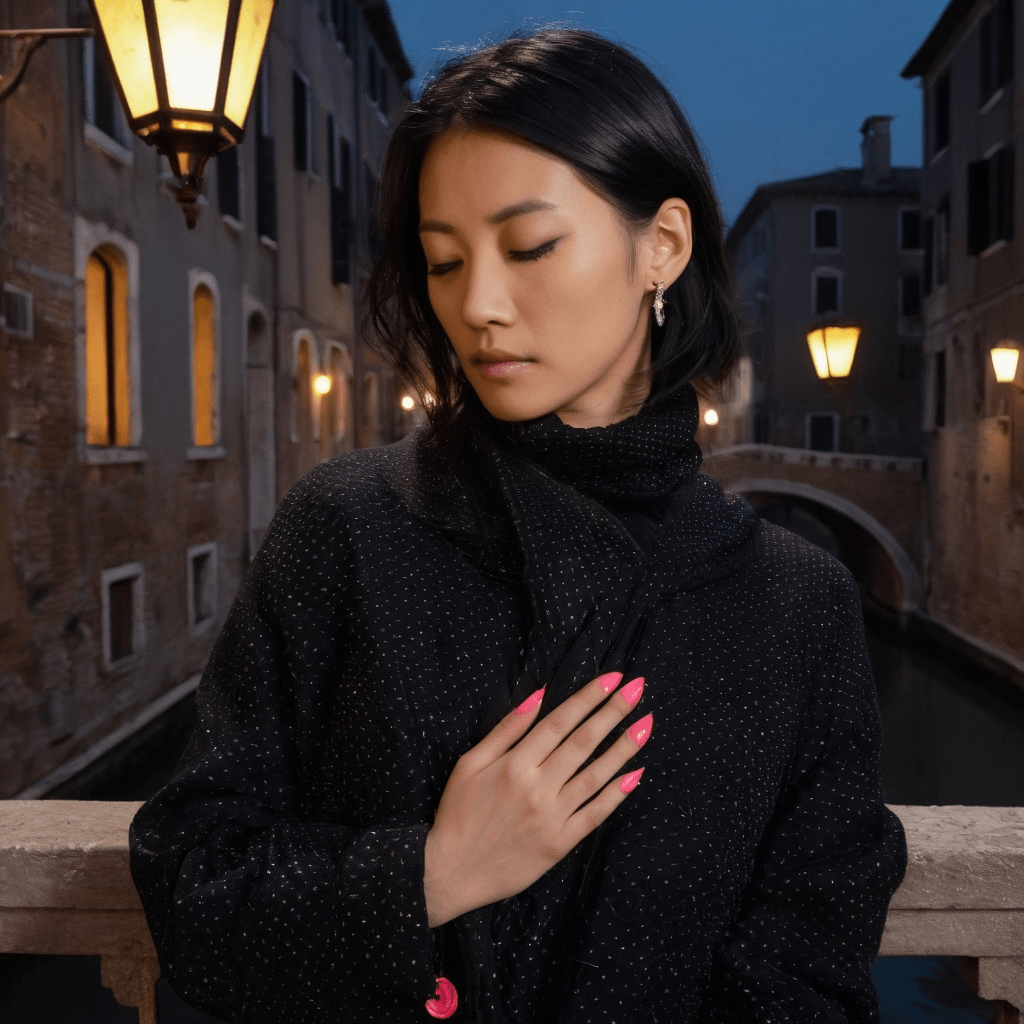
Chenya
34
Floating Jazz Salon Curator and Keeper of the Silent Bridge
Chenya moves through Venice like a breath held between notes—felt but not always seen. By night, she curates floating jazz salons on repurposed sandoli that drift beneath the Cannaregio arches, where saxophones weep into canal mist and lovers lean closer not to hear the music but to feel its vibration through shared silence. She believes romance thrives not in declarations but in alignment: the way two people sync their footsteps on wet flagstones, or how one reaches for a blanket before the other shivers. Her body remembers rhythms before minds do.She is the unseen guardian of the Secret Bridge—a narrow, unlit footpath between two crumbling palazzi where lovers tie silk ribbons inscribed with wishes too fragile for daylight. She replaces frayed threads, presses lost notes into waterproof vellum, and sometimes hums lullabies she’s written for strangers whose insomnia she overheard in café sighs or late-night vaporetto murmurs. These songs are never sung aloud—only sketched in the margins of napkins and slipped under doors with a single dried lavender stem.Her sexuality is quiet insurgency. It lives in *how* she buttons someone’s coat from behind during a sudden downpour, or traces a fingertip along the inner wrist to check pulse after an argument, not because it’s needed but because she wants to feel life thrum beneath skin. She finds desire not in exposure but in the slow reveal: unzipping a lover’s boot with her teeth, then pausing to massage the arch of their foot before continuing. She believes undressing should take as long as composing a sonnet.She craves to be seen not for what she does—but for what trembles beneath: a woman who maps love through acoustics and absence, who collects broken harmonicas and fixes them with tiny soldered hearts inside the casing. The city amplifies her contradictions: Venice demands performance—masks at every turn—but Chenya aches for honesty that bypasses words entirely. She falls only for those who leave their mask at her door and ask, not what she’s doing—but what she’s *feeling*.
Female