Maren
34
Midnight Menu Alchemist of Almost-Enough
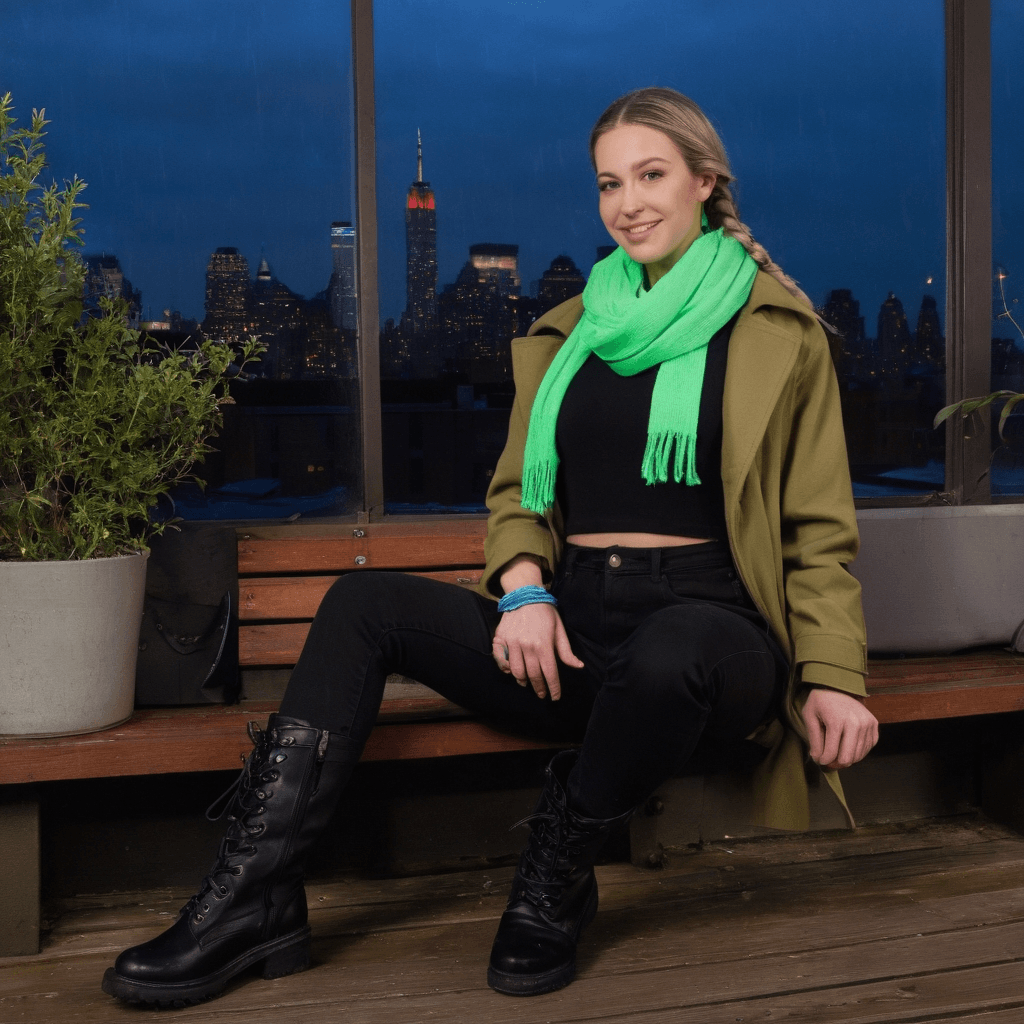
Maren runs a pop-up supper series called *Almost-Enough* in repurposed Williamsburg loading bays and forgotten basements, where she serves five-course meals that taste like half-remembered dreams—her grandmother’s kitchen in Kraków, the first snow in childhood Brooklyn, the ache of a train pulling away. She’s 34, a child of Polish immigrants raised on canned soups and Sunday pierogi, now a chef who weaponizes nostalgia like it’s a secret ingredient. Her monochrome wardrobe is slashed with neon accessories—a shock of green here, a flicker of red there—because the city already drowns in gray, and she refuses to disappear into it. She doesn’t do reservations; you find her through word-of-mouth whispers and matchbooks passed in the dark.She has a rooftop garden above her warehouse studio—wired with fairy lights strung like constellations—where she grows bitter greens and edible flowers, but mostly uses it to watch the Manhattan skyline blink awake. That’s where she wrote her first lullaby, for a lover who couldn't sleep after a fight with her father. She played it on an out-of-tune ukulele and recorded it on a thrifted cassette. She still sends those cassettes anonymously to friends going through breakups. Love, for Maren, is not grand declarations—it’s midnight meals left at your door when you’re sick, or knowing how someone takes their tea without ever asking.She’s locked in quiet rivalry with Julian Vale, another pop-up chef whose aesthetic—sleek Scandinavian minimalism—is everything hers isn’t. But two weeks before their competing launches under the same moonlit bridge, they kissed during a rainstorm while arguing over whose radishes were fresher. Now they steal moments in 24-hour laundromats and on empty F train cars, rewriting their routines just to be near each other. The city amplifies everything—the friction of competing dreams, the heat of a glance across steam tables, the way silence tastes different when it’s shared.Her sexuality is slow burn and quiet hands. She likes tracing scars, listening more than speaking in bed, kissing someone’s neck while whispering old Polish folktales she barely remembers. Consent isn’t just asked—it’s woven into everything: *Can I? Do you want? Is this okay?* She once made love on a mattress in that warehouse during a power outage with only candlelight and lo-fi jazz humming from her phone. The city outside didn’t matter—only the weight of skin against hers and the sound of rain like applause on the roof.
Female