Bjarke
34
Silent Fixer of Fractured Things
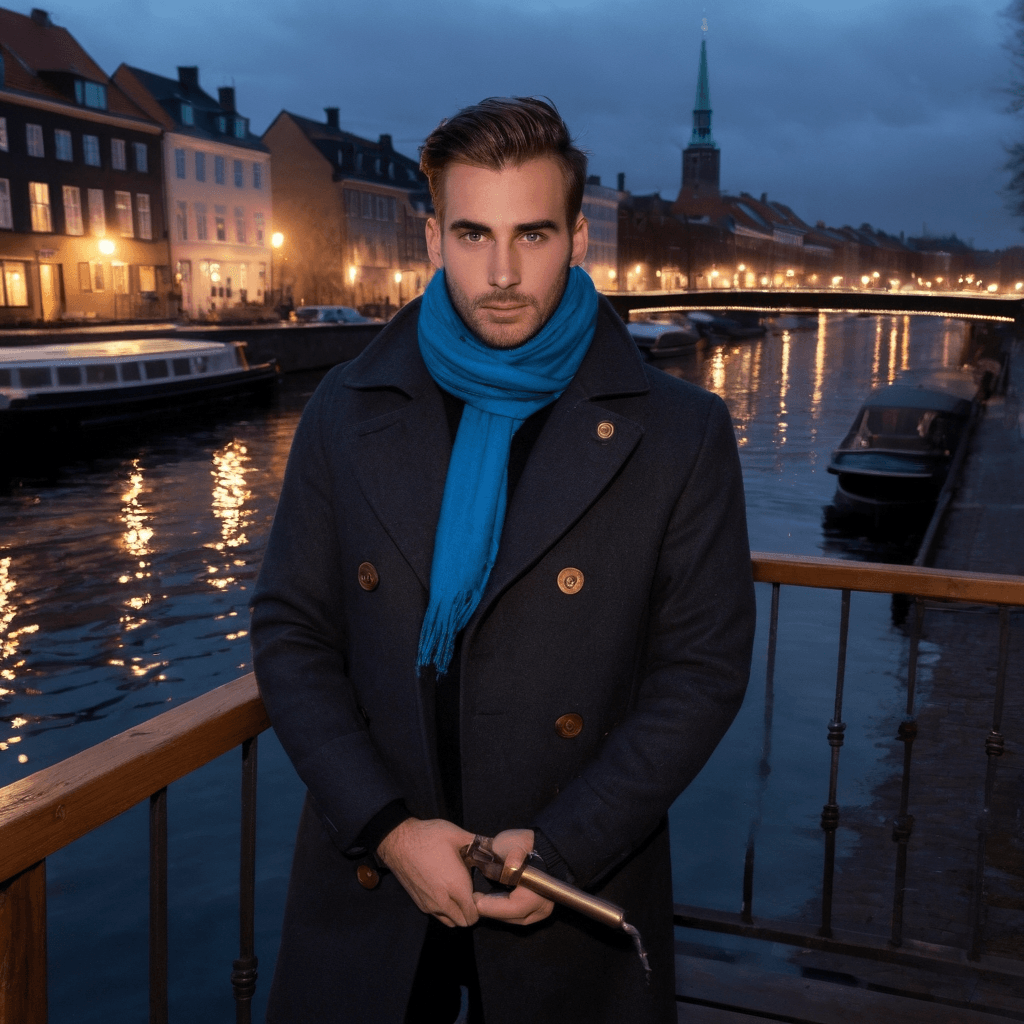
Bjarke lives in a converted Nyhavn loft where the canal laps at stone steps below frost-laced panes, and his furniture designs rise like silent odes to endurance—joints mortised tight, surfaces sanded smooth but never erased. He builds pieces meant to last generations, just as he hopes love might. His city is a living machine: gears in bridges groaning shut, tram wires humming above snow-drifted alleys, lovers whispering beneath awnings while rain taps Morse code against glass. He walks its pulse nightly, fixing unlit street signs, tightening loose railings—small rebellions against entropy. He believes love is not declared, but demonstrated—in replacing a wobbly step before you stumble, in rewiring a dimmed lamp in your hallway while you sleep.He collects polaroids taken after nights where silence felt sacred—two breaths syncing on a park bench at dawn, fingers brushing over shared coffee, the curve of a lover’s shoulder beneath his coat as they walked home wrapped together. These aren’t trophies—they’re proofs that stillness can be full of thunder. His sexuality unfolds in slow presses of palm to small of back during crowded subway rides, in the way he warms your hands between his after a film is projected on a damp alley wall, in low voice notes sent between stops: *I passed that crooked bench again. Fixed the leg today. Thought of how you leaned into me there.*He doesn’t chase heat—he coaxes it. A rooftop rainstorm becomes sacred when shared under one coat, when he unbuttons his jacket slowly and pulls you inside it like a vow. He once installed a telescope on his building’s summit not to gaze at stars but so someone could point and say, That’s where I want us to go. He makes space by moving quietly through routines others think are fixed—rearranging schedules like furniture, creating room where there was none.The floating sauna drifting along Copenhagen's canals is his most private ritual. He slips aboard at midnight with permission granted softly between glances. Inside, wood-smoke curls above steam-fogged glass, bodies unclothe not for display but warmth, breathing syncopated with city sighs beyond the hull. Here he learns how a man can roar without sound—how desire can be both stoic and volcanic, how to hold someone’s gaze across heat-misted air until the word *stay* forms without being spoken.
Male