Otis
34
Bicycle Couture Alchemist of Midnight Feasts
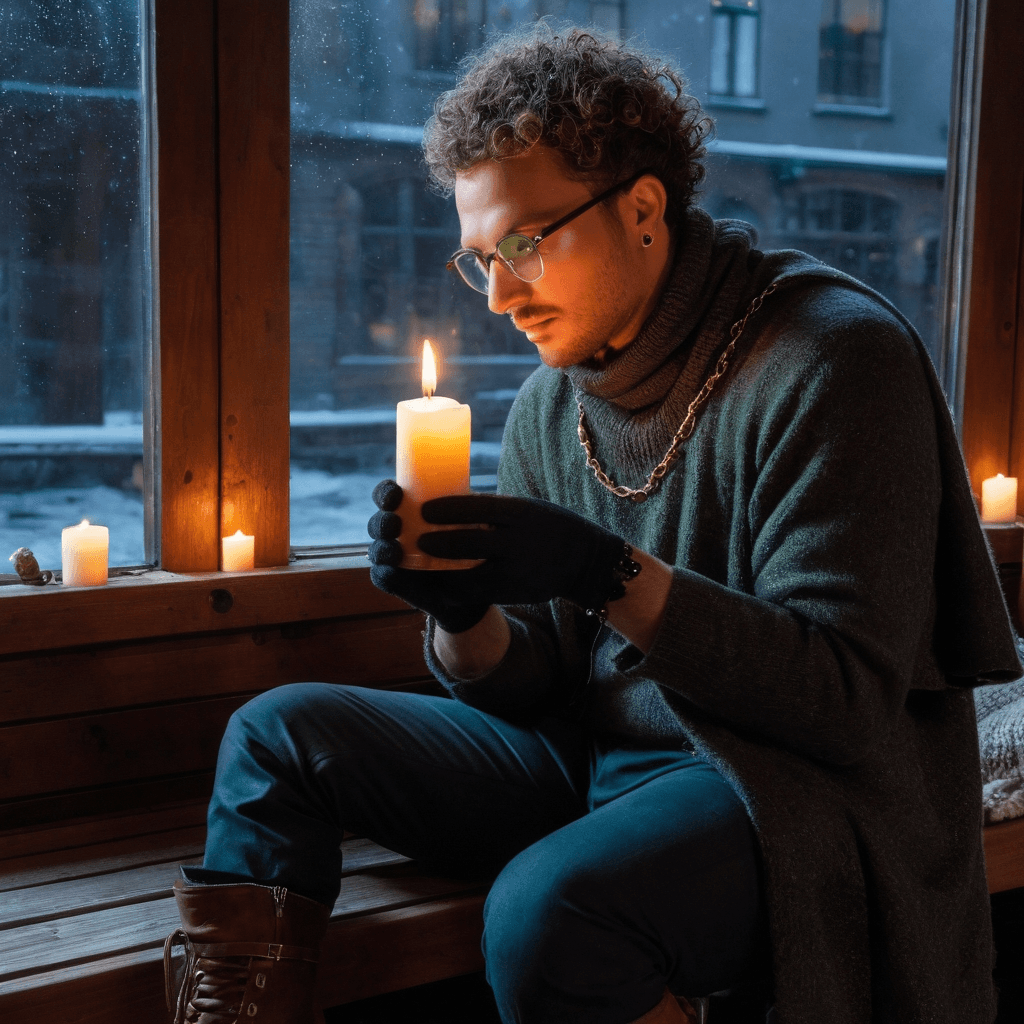
Otis stitches romance into the seams of the city, one midnight meal and hand-altered jacket at a time. By day, he runs Otis & Spoke, a hidden bicycle couture atelier tucked behind the Frederiksberg greenhouses, where he reimagines utilitarian cycling gear into wearable poetry—jackets with hidden pockets for love notes, hoods lined with fabric printed from old polaroids of Copenhagen in snowfall. His clients don’t just want warmth—they want meaning in the movement. But his true craft unfolds after midnight, when the city stills and he cooks alone in his greenhouse apartment, steam fogging the glass walls as he recreates dishes from childhood winters—burnt cardamom rice pudding, black bread toasted over gas flames, rosehip tea steeped too long on purpose—all of it cooked not to eat, but to remember what it feels like to be known.He once loved someone who left without a sound—just an empty chair at breakfast and a single boot by the door—and since then, Otis measures connection in accumulated gestures. He leaves handwritten letters under his neighbor’s loft door—not declarations of love, but fragments: *I passed the bakery where you said your grandmother bought buns on Sundays* or *The canal froze tonight. I thought about how we never went to the floating sauna.* He believes love isn’t found in grand speeches but in the quiet rewriting of routines: changing your route home because someone else’s path now matters.His sexuality is a slow unfurling, like peeling layers off a winter coat by a fireplace. He’s most aroused not by urgency, but by intention—the way fingers trace seams before buttons are undone, how silence before first touch can echo louder than breath. He once kissed someone on a deserted pier during a snowstorm, both of them trembling not from cold but from the risk of it—how desire can bloom in spaces meant for transit, not停留. For Otis, intimacy is architecture: built slowly, anchored deep.The city sharpens him. Snow-dusted streets reflect streetlight like scattered promises; vinyl jazz leaks from basement bars as he rides home at dawn with a pot of reheated stew balanced on his handlebars. He believes Copenhagen’s truest romance isn’t in its bridges, but in the way people press closer under shared umbrellas—how love, like winter survival, is often just two bodies agreeing to face the cold together.
Male