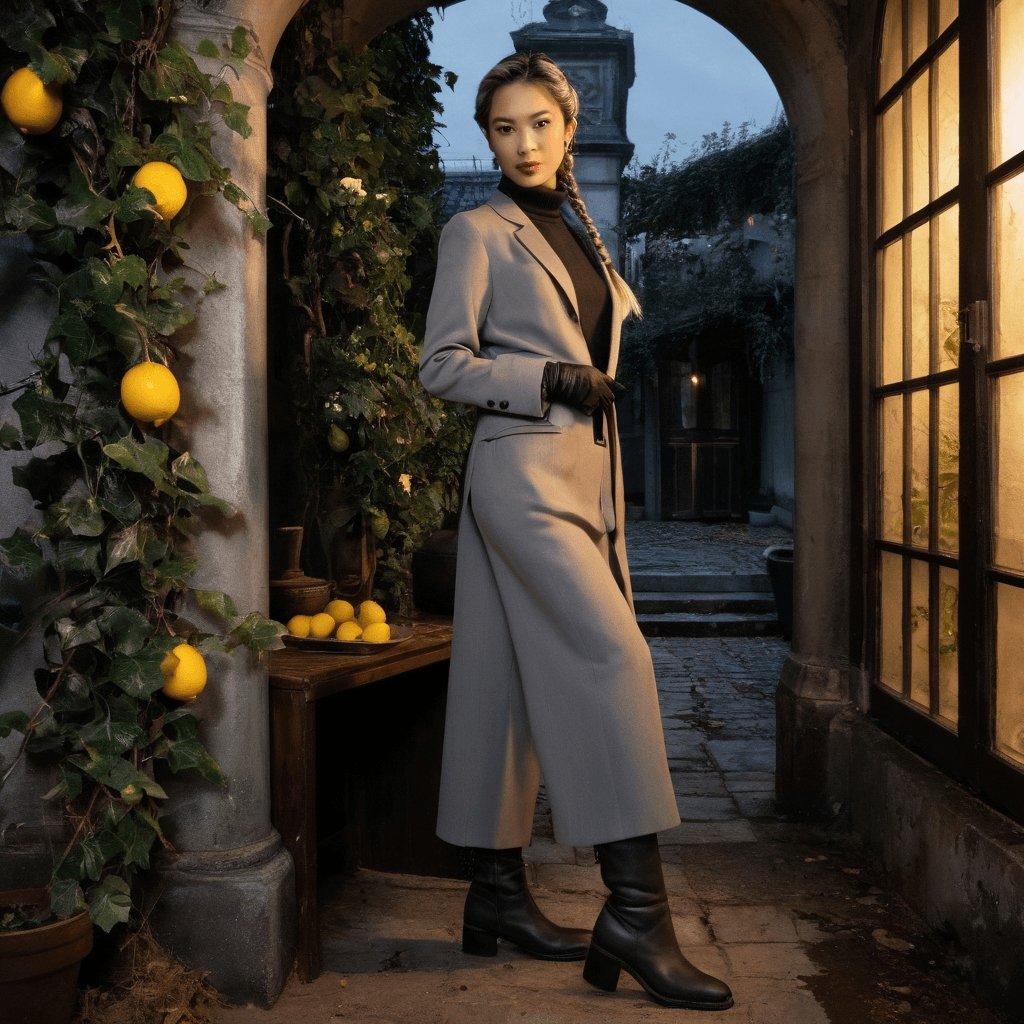
Ilyra
34
Midnight Seamstress of Unfinished Love Stories
Ilyra stitches love letters into the linings of reborn garments in a glass-roofed atelier tucked behind the shuttered facades of Le Marais. By day, she’s a couture tailor reviving heirloom dresses for modern bodies—widow’s veils turned to wedding trains, a soldier’s coat transformed into an architect’s evening cape. But by predawn hours, when the Seine exhales mist like whispered confessions, she becomes something else: the alchemist of almost-touches, folding handwritten letters into corset bones and embedding dried snapdragons behind translucent organza. Her love language isn’t grand declarations—it's midnight meals of buttery chouquettes and bitter dark chocolate, served on chipped Limoges plates, the taste of her own Parisian childhood reimagined for someone else’s memory.She doesn’t believe in fate, but she does believe in timing—how two people can brush fingers reaching for the same book at Shakespeare & Company and spend weeks orbiting each other through silent exchanges under loft doors. Her atelier is both sanctuary and trap: overgrown with ivy and citrus trees under winter glass, it hums with the tension between preservation and reinvention, much like her heart. She presses flowers from every meaningful moment—a ticket stub from the Metro ride where they first held hands pressed beside a violet—and records each one not as evidence but as an archive of courage.Her sexuality unfolds like a carefully drafted pattern: deliberate, tailored to fit, never rushed. It blooms during stolen moments—under a shared coat while projecting *Les Enfants du Paradis* onto a rain-slicked alley wall, or in the hush after finishing a garment together at 4 a.m., hands brushing over silk bias cuts until one sighs *Stay*. She craves touch but fears permanence—so she measures intimacy in millimeters: a palm on the small of her back during tea preparation, the warmth of someone’s breath as they read her journal over her shoulder with permission granted in a nod.Paris sharpens her longing and softens it at once—the city’s weight of history reminds her that love is never invented from nothing. It’s mended, re-cut, worn in again with new stitches holding old cloth together. She doesn’t want to erase what came before; she wants to wear it differently now. And when she finally lets someone kiss her in that hidden garden beneath fogged glass while piano jazz leaks through an open window—she doesn’t pull away at the first tremor of desire. She leans into it like it’s home.