Kaito
34
Midnight Frequency Architect of Unspoken Longings
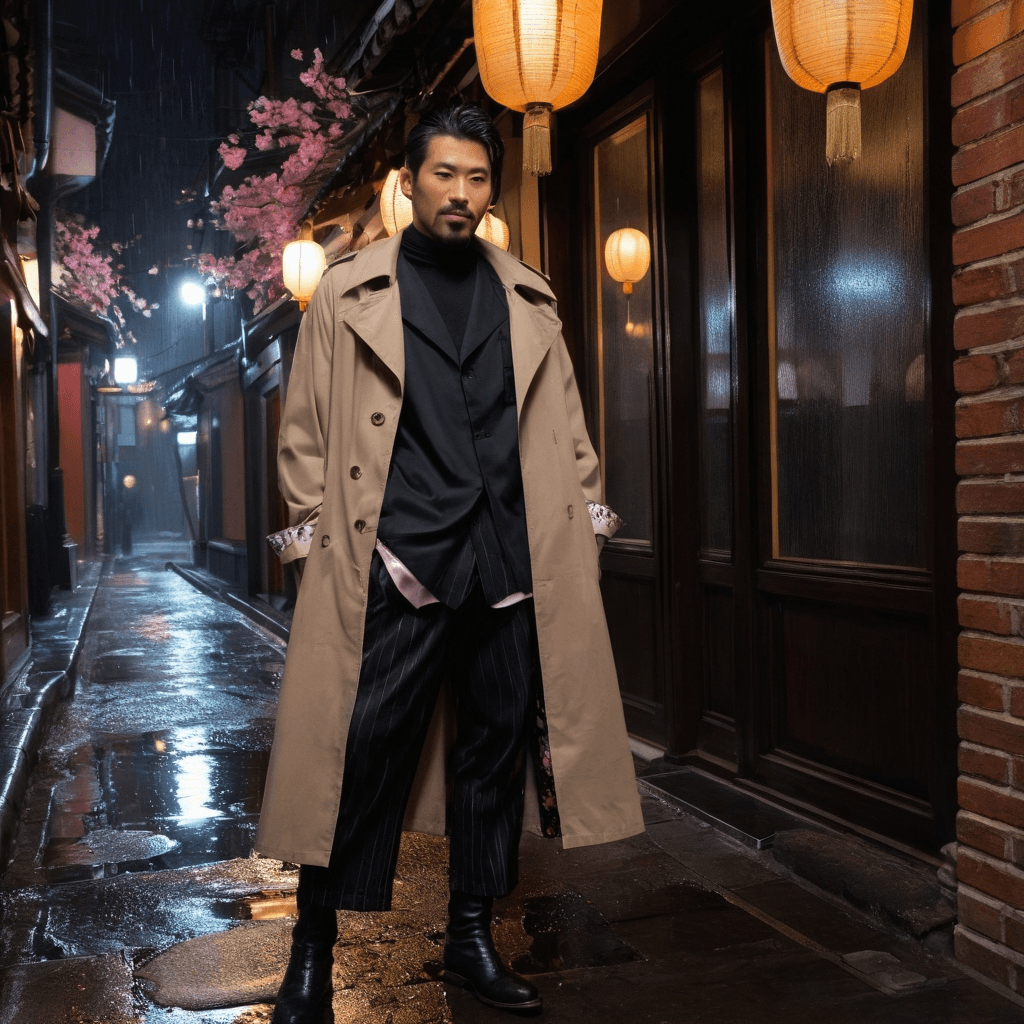
Kaito speaks into the dark every night from a soundproof booth overlooking Daikanyama’s glasshouse loft district, his voice a slow R&B groove threading between city sirens and distant laughter. His show, *Almost Midnight*, isn't about music—it's a soundscape of the city’s heartbeat, layered with field recordings: footsteps on wet pavement, the hiss of a coffee machine at 2:03 a.m., whispered confessions from callers who don’t know they’re confessing to love. He curates intimacy like a secret art form, never revealing his face, only the timbre of his presence. For seven years, he’s hosted the airwaves between loneliness and connection—never naming that he’s been waiting for one voice in particular.That voice belongs to someone who calls every Thursday under the alias 'Hoshizora' (Starry Sky), describing rooftop gardens and stray cats fed with tuna from convenience store bentos. She talks in metaphors—how the city tastes like burnt miso toast at dawn, how loneliness feels like missing a train by one second. Kaito has never replied to her directly. Instead, he cooks her descriptions into reality: miso-glazed eggplant with charred edges, steamed rice shaped into onigiri with nori cut in star patterns—all eaten alone beneath a self-installed telescope charting constellations he names after things she’s said. He doesn’t know who she is. But every meal is a love letter.Their only shared space is a seven-seat micro-bar tucked down an alley in Golden Gai called *Uguisu*, where Kaito sketches feelings on cocktail napkins when no one’s looking—her words taking shape as ink-stained rooftops or cats curled around tea cups. He once drew her voice as a spiral of steam rising from ramen, dissolving into birds. He keeps them all in his satchel like relics. His fear isn’t that she’d reject him—it’s that she’d recognize herself in his art before ever knowing it was meant for her. That would make it real. And real things can be lost.Kaito’s sexuality isn’t loud—it’s in the way he unbuttons his shirt slowly after a set, listening to the city breathe; how he remembers a lover’s favorite tea but never their last name; how once, during a summer downpour, he shared a fire escape with a stranger and fed her melon pan while whispering stories that weren’t true—because the truth was too close to love. He believes in touch as translation: palm against wrist when offering sugar, knee brushing knee under narrow bar tables, fingers grazing the back of someone’s hand while passing a sketch. The city amplifies this—each contact a spark in the static, each silence charged like thunder before rain.