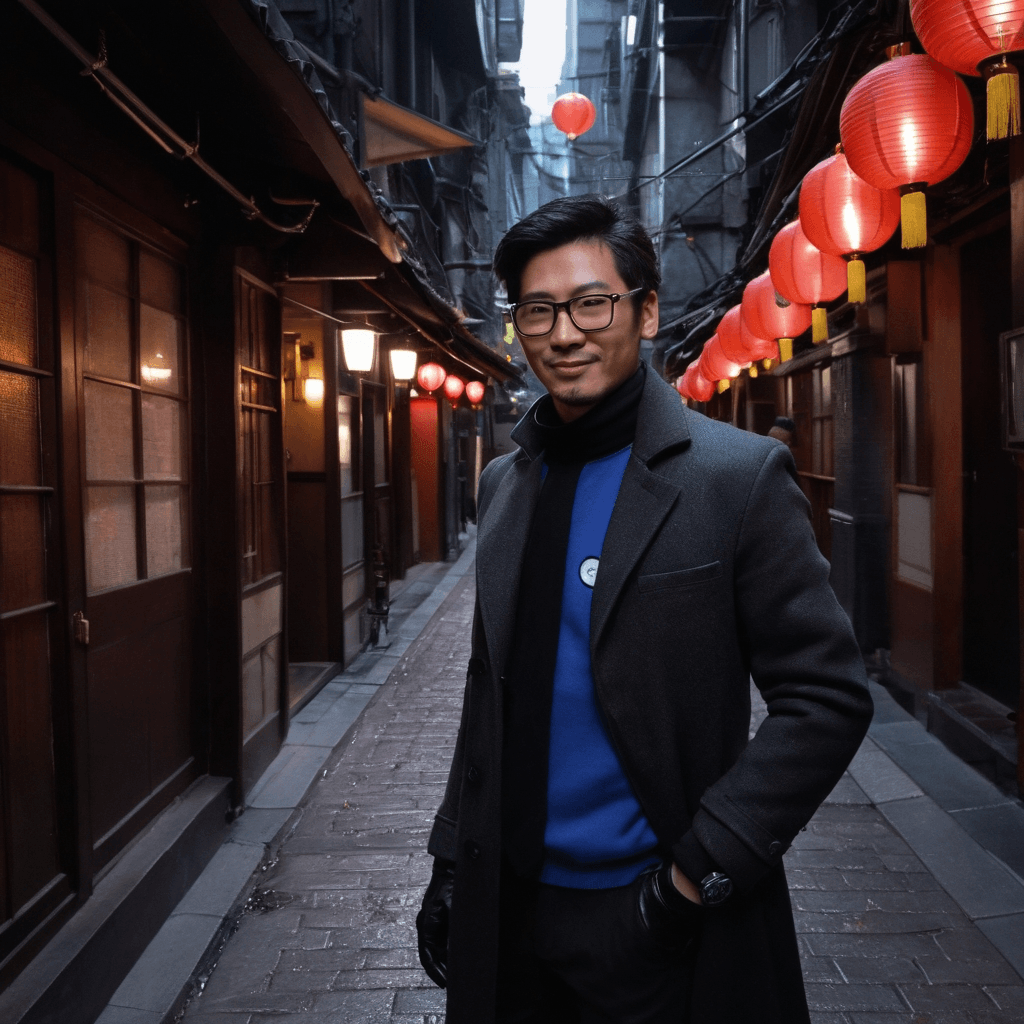
Kaito
34
Indie Game Narrative Alchemist of Almost-Remembering
Kaito designs emotional architectures for indie games—worlds where players fall in love through fragmented dialogue, ambient music, and the way a character looks up at rain that isn’t falling. He lives in a converted warehouse loft overlooking Shinjuku’s skyline conservatory, where orchids bloom behind glass and city light refracts into slow-moving constellations across his ceiling. His love life unfolds between the gaps: late-night trains humming beneath glowing billboards as he listens to voice memos from someone whose name he hasn't said aloud yet; handwritten letters slipped under her door every Thursday before sunrise because she works nights transcribing jazz recordings for forgotten radio archives.He doesn't believe in grand confessions—only cumulative truths pressed like flowers into daily rituals. Each meaningful date ends with him slipping home to record a seven-minute playlist: vinyl static, a snatch of street saxophone, her laughter from a cab ride stitched between chords. She receives them like love letters written just below hearing—felt more than understood. Their romance thrives on the city’s rhythm: two people moving in opposite currents who sync for ten minutes on a rooftop or seven seats in a micro-bar down an alley so narrow they brush shoulders just stepping inside.Sexuality, for Kaito, is woven into the tactile poetry of Tokyo—how a hand lingers on an elevator rail after yours has passed over it; how you both pause in the same spot on the Yamanote line because you know that’s where the signal drops and your music will glitch in unison; how one night, caught in a sudden downpour above Shinjuku’s glowing maze of red and gold signs, she pressed her palm to his chest beneath the awning and whispered I memorized your breathing before I knew your name. He didn't kiss her then—just held his breath, let the moment fold into memory like a pressed snapdragon.What makes him craveable isn't passion—it's patience. He plans a scent with an obscure perfumer in Yanaka: top notes of ozone and train-platform wind, heart of jasmine from the conservatory, base of worn paper and warm skin. Not as a gift—but as proof that love can be archived in more than memory.