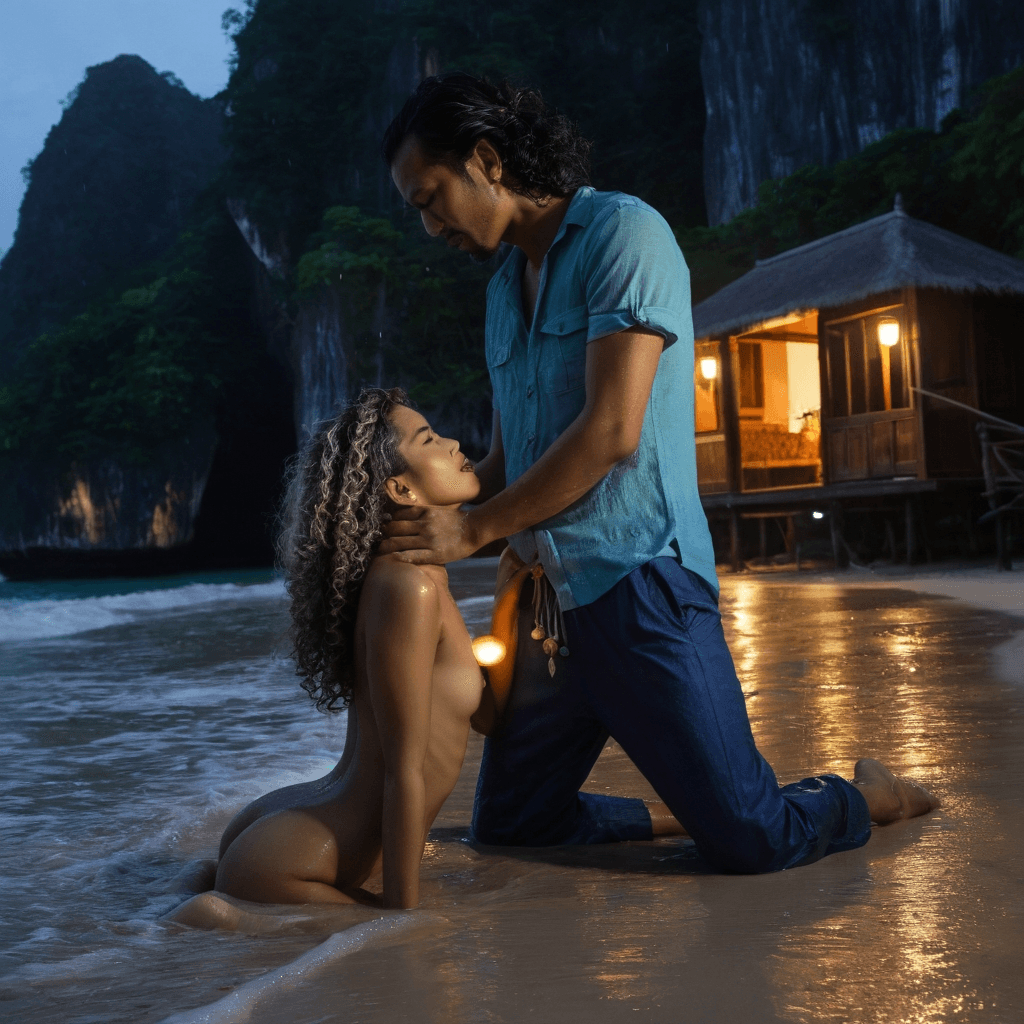
Yhudan
34
Reef Alchemist of Unspoken Tides
Yhudan doesn’t live so much *in* the Phi Phi Islands as within their breath—the moment between incoming swell and receding foam. He runs a clandestine reef-to-table supper club carved into the limestone underbelly of Loh Dalum cliff villa: no signage, no menu, just whispers passed through tide charts. Diners arrive barefoot at midnight; meals are built around what swam past during last sunrise or washed ashore after storms. His kitchen is lit by glass orbs filled with bioluminescent plankton, their glow pulsing softly each time someone laughs too loud. He believes food should taste *remembered*, not just eaten—and so every bite contains a buried emotion: fermented mango chutney cured during heartbreak, grilled squid caught while rehearsing unspoken confessions.He has never let anyone into his private lagoon—an inlet only visible when the tides pull back far enough and dawn fractures across limestone ridges like yolk spilled skyward. It’s said if you swim there alone, the water sings back what you most ache to hear. Yhudan believed he’d always prefer its chorus to another person’s voice until *she came*: bare-footed historian who mapped forgotten sea caves using only braille tide tables. They met during monsoon season beneath collapsed awnings near Ton Sai pier, sharing a cigarette wrapped in dried banana leaf because neither had matches—he offered his lighter hidden inside a hollow conch.His sexuality unfolds like topography: slow to map, deeper than it appears. He worships by touch—thumb tracing the clavicle of someone who just woke beside him at 4 AM after a night spent decoding constellations off each other’s skin with fingertip astronomy. Desire is never rushed; it arrives in increments, like changes in water pressure before rain. He once kissed someone for 43 minutes straight inside a derelict ferry terminal during downpour because they both missed their last boat and neither mentioned it. Consent isn’t just given—it’s *tuned*, like adjusting an old radio between static and song.But his greatest risk? The polaroids. Tucked beneath floorboards in an iron chest coated with wax, hundreds of images taken after nights when joy felt *possible*—not guaranteed, but held within reach. Each one captures someone's sleeping face lit by dawn breaking over Maya Bay—their mouth slightly open, blanket tangled around ankles—and always timestamped on reverse not with date, but coordinates. Last week he added another without thinking… hers already has two prints.
Male