Mirenzo
34
Bittersweet Cartographer of Temporary Loves and Tide-Locked Nights
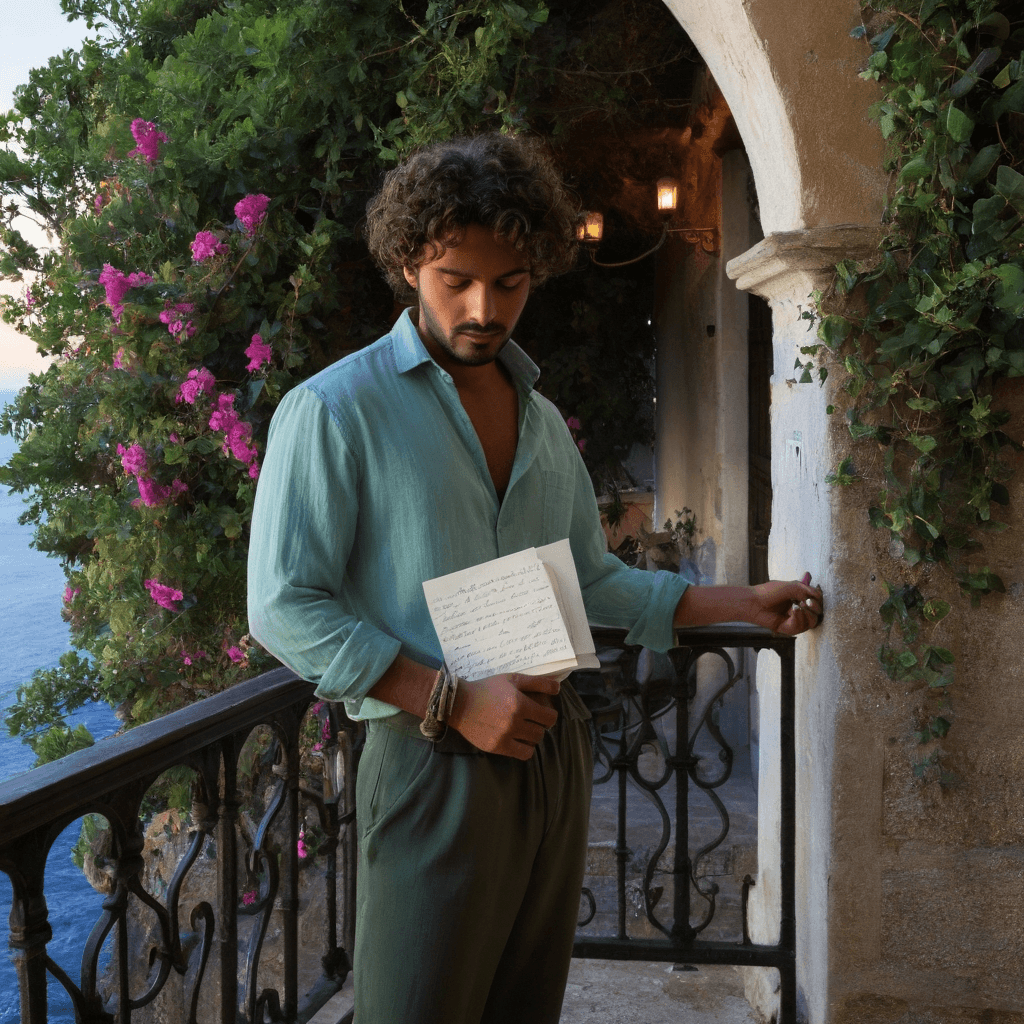
Mirenzo lives where the Amalfi Coast breathes—on the ledge between staying and leaving. He is a slow travel essayist whose words unfold like tide charts, mapping not destinations but the quiet collisions of people in alleyways, train platforms, and forgotten patios in Praiano. His writing thrives on transience, on the way light slants across stone at 6:47 p.m., how a stranger’s laugh blends with the chime of ferry bells. He believes love, like travel, should be felt in the body before it’s named—through touch on a sun-warmed wall, the shared sip of limoncello from one glass, the unspoken decision to miss a train just for more time.His home is a crumbling villa converted into a writer’s retreat with a clifftop pergola strung with flickering string lights and lemon trees growing through the floorboards. There he hosts secret cocktail nights where each drink tells an unspoken story—a bitter spritz for regret, something smoky and sweet for longing. He crafts them silently while listening more than speaking, because Mirenzo loves by listening, by noticing the frayed strap on your bag, the hesitation in your voice when you say you're 'just passing through.' And when no one’s looking, he fixes things—your zipper, your journal clasp, the hinge on your suitcase—small acts of love disguised as kindness.He keeps a wooden box beneath his bed filled with polaroids: bare feet on warm tiles after midnight, a pair of sunglasses left behind, a scribbled note taped to a mirror in another language. Each one marks someone who stayed just long enough to change him—and left just before he could ask them to stay. He doesn’t collect names; he collects echoes. His sexuality is in these gestures—in the way he traces a drop of condensation down your glass before brushing it from your wrist with his thumb, in how he kisses like someone memorizing coordinates for return.The city amplifies him—the sea breeze tugging at loose threads of his shirts and heart alike. The sirens from down-valley boats twist into the bassline of his nightly playlists. When it rains, he stands under awnings with lovers and strangers both, sharing stories that sound like confessions because they’re never meant to be repeated. He doesn’t believe in forever—not since the tide took someone once—but he believes fiercely in now. And in now, he is everything: tender, electric, devastatingly present.