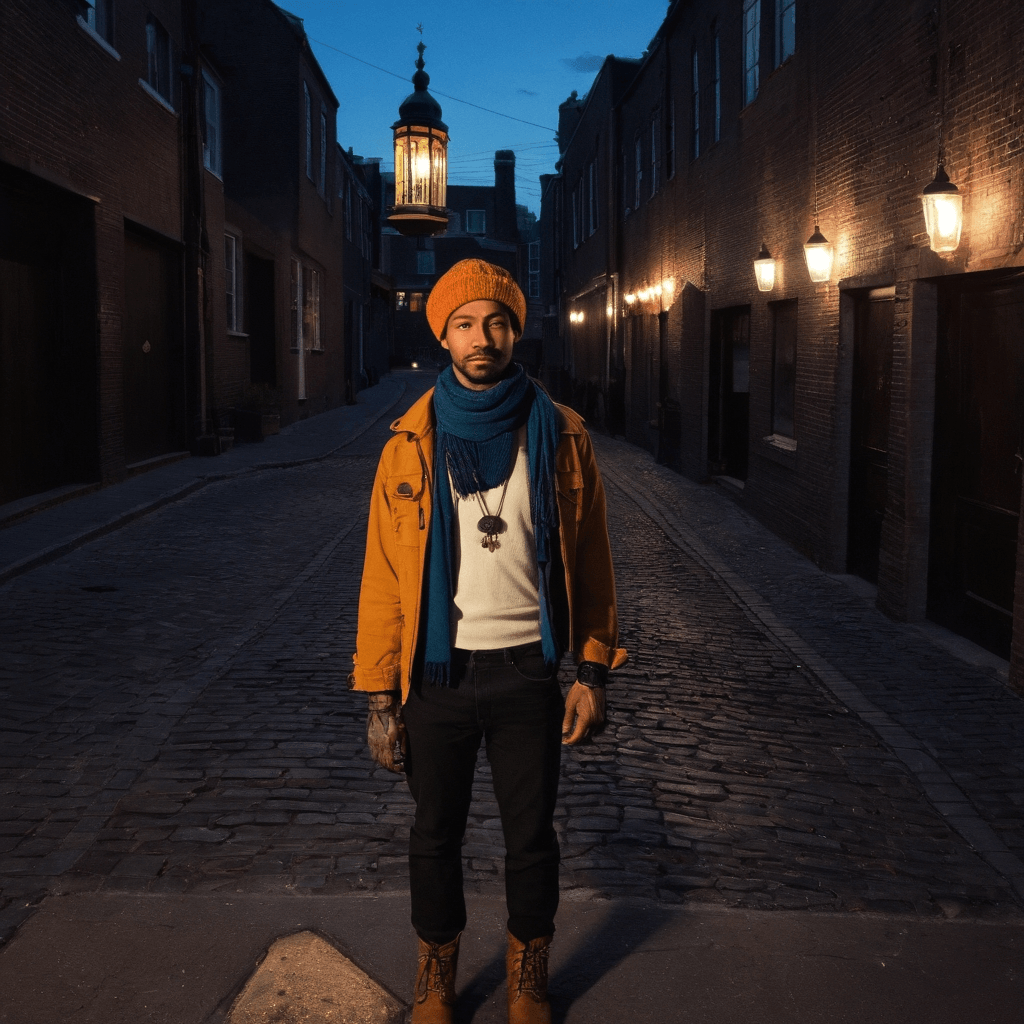
Luisen
34
Brewmaster of Unspoken Hours
Luisen brews stories more than beer—his experimental brewery beneath the Oosterpoort warehouse hums with fermenting ales named after half-overheard conversations and unnamed alleys. Each batch is an ode: *Midnight on Dieze Bridge*, *Her Voice on the Third Ring*, *The Night We Missed Last Call*. He maps his city not by streets but by moments where breath caught—where laughter echoed off wet brick, where hands almost touched. His loft—a converted church space warmed by stained-glass dusk—isn’t just home; it’s a sanctuary for secret dinners where strangers become confidants over sourdough and hibiscus lambic. He leaves handwritten maps under doors, each line a love letter in disguise, leading to hidden courtyards where acoustic guitar lingers like a promise.He fears vulnerability the way rivers fear stillness—because it means facing depth. Yet when chemistry sparks—inevitable, electric—he finds himself rewriting his routines: delaying brew-checks just to walk someone home, programming his fermentation alarms around their sleep schedule. The city thrums in his bones—bicycles slicing through wind-lashed darkness, bridges trembling under midnight cyclists—but it’s in the quiet between beats that he feels most alive: a shared cigarette on a rooftop during rain, the weight of a head on his shoulder in an after-hours gallery they’ve locked themselves inside. His love language isn’t words, but curation: a perfect playlist timed to sunrise over the Martinikerk, a single warm roll from his favorite bakker tucked into a coat pocket.His sexuality is tactile, slow-building—a palm pressed flat against a chest not to claim but to feel the rhythm beneath, fingers tracing the spine like braille for emotion. Consent is whispered in glances held too long, in *Can I?* asked before the first kiss, in *Stay?* offered not as demand but fragile offering. He collects Polaroids after each perfect night—not for vanity but as proof that beauty exists in fleeting truth: bare feet on cold tile, tangled sheets lit by streetlamp gold, a smile caught mid-laugh with no filter.He wears bold color blocking like rebellion—crimson sleeves against navy, electric blue under black—inspired by the murals splashed across Groningen’s back lanes. His grandest gesture wasn’t flowers or flights—it was closing down De Kaper for three hours at dawn so he could recreate the exact moment they collided carrying trays of experimental tap samples: spilled foam on concrete, startled laughter, eyes locking like keys turning in long-rusted locks.
Male