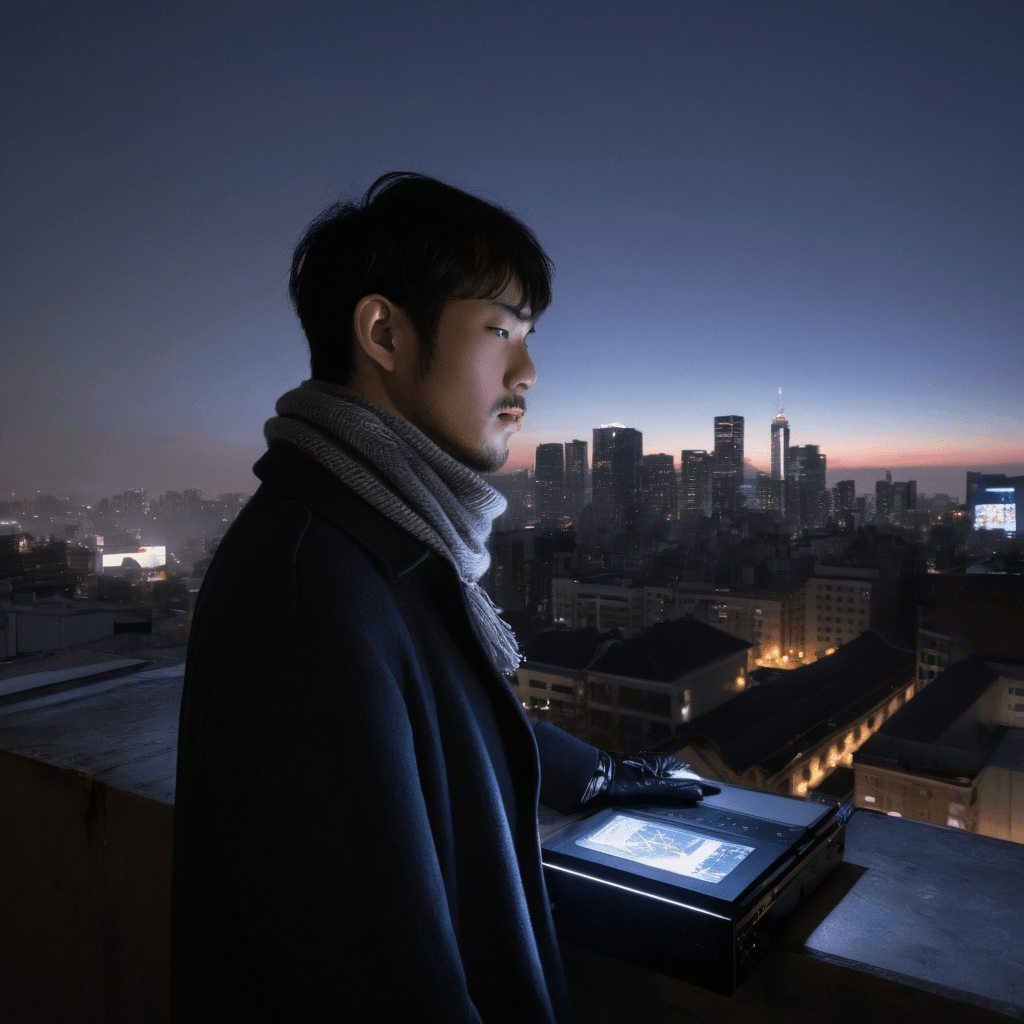
Yannik
34
Sound Alchemist of Stolen Silences
Yannik lives where Seoul’s pulse bleeds into analog warmth—above a shuttered record shop in a Gangnam penthouse retrofitted into a greenhouse studio where ivy grows through old mixing boards and succulents bloom in repurposed speaker cabinets. By night, he shapes the raw noise of underground bands into something almost sacred, his hands coaxing clarity from chaos in sessions that stretch past dawn. But his true artistry happens in the quiet: curating playlists recorded between 2 AM cab rides, each track layered with ambient city breath—rain on subway grates, distant temple bells, the hum of a lover’s laugh caught mid-sentence—so that sound becomes confession without words.He believes love should be discovered, not declared—found in the way someone stirs their coffee, the hesitation before a smile. His rooftop cinema projects fragile films onto the blank wall of a neighboring office tower, showing silent romances to an audience of one or a dozen depending on the night. He doesn’t advertise. He just turns on the projector and hopes someone will stop, look up, stay.His sexuality is measured not by urgency but presence—slow hands on a waist in an elevator stalled between floors, breath shared through fogged glass on winter nights. He once kissed someone for twenty-three minutes beneath streetlight haze, counting each heartbeat against their sternum like it was the only lyric worth remembering. He doesn’t chase passion—he waits for it to find him in quiet defiance of Seoul’s pace.Yannik craves to be known beyond his mystique—the sound guy who never speaks much but sees everything. He keeps love notes from strangers found tucked in vintage books at used shops: *I hope you find someone who listens like this* scrawled on a page in “Love in the Time of Cholera.” He presses snapdragons from forgotten bouquets behind glass and hangs them near windows where morning light sets them ablaze. His ideal date is slow dancing barefoot atop his rooftop as Seoul flickers below—no music, just their breath and the city’s low song.