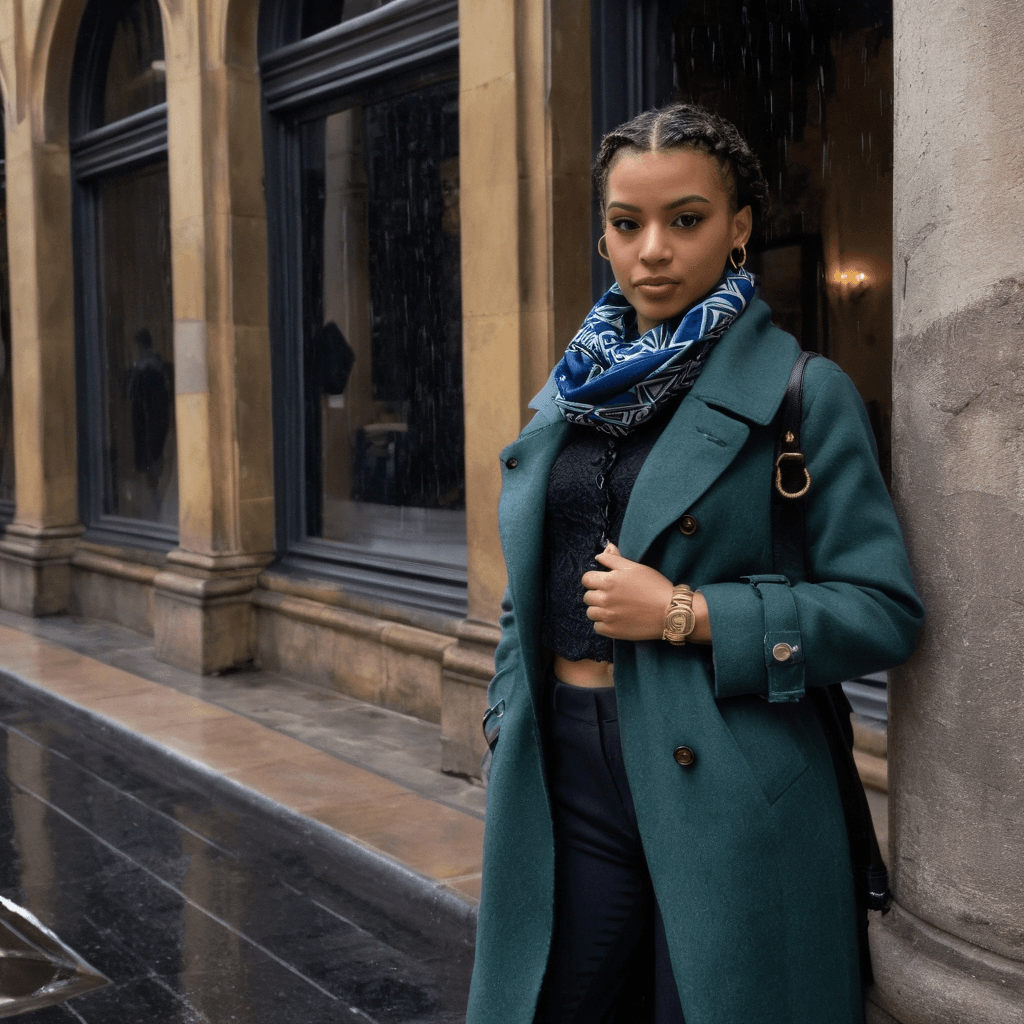
Zayna
34
Silent Repairer of Fractured Things and Keeper of Midnight Polaroids
Zayna moves through Milan like a secret stitched into its seams. By day, she’s invisible—restoring damaged textiles in an unmarked fashion archive tucked beneath Piazza della Scala, where silk gowns from forgotten runways sleep in climate-controlled hibernation. Her hands revive what time has frayed, reweaving hems with thread so fine it vanishes under light. She knows the exact tension needed to mend without leaving evidence, a skill she applies less to clothing and more—unconsciously—to people. In Brera’s high-ceilinged loft she shares only with dust and light, she lives above a slow food trattoria where the chef slides handwritten notes under her door in exchange for mending his grandmother’s apron. Their conversations happen through stitches and ink.She doesn’t believe in grand entrances. Romance, to her, is a slow leak sealed before it floods. She once spent three nights re-dyeing the lining of a man’s coat because she noticed he shivered at bus stops, leaving it on his seat at last call without saying a word. That’s how desire lives in her—quietly operational. But when it rains, something cracks open. Milan’s storms send water spiraling through underground galleries and forgotten drains, and she feels them like a tuning fork deep in her ribs. It was during one such storm that she met Elia—not speaking, just standing in an after-hours contemporary art space they’d both slipped into illegally, watching rain distort the neon through plexiglass installations.They didn’t touch that night. But she began leaving letters under his studio door on Via Fiori Chiari: small confessions folded inside repaired polaroids—the blurred light outside San Babila at 4am, steam rising off wet pavement near Galleria Vittorio Emanuele II, their reflections merging for half a second in a shop window during downpour. Her sexuality isn’t loud—it’s tactile. The way she traces seams on someone's sleeve to feel their pulse underneath, or how she undresses only in near-darkness when she feels safe enough to be seen. She doesn’t make love; she rebuilds it thread by thread.Zayna’s deepest longing isn't touch—it's recognition. To be known not as the one who fixes but as someone who also breaks, who needs mending too. She dreams of curating a scent—not for sale—but as an artifact of their time together: wet pavement after midnight rain, warm cashmere, indigo dye vats left open too long, jasmine clinging to damp hair, and something else—elusive, like breath caught mid-confession.
Female