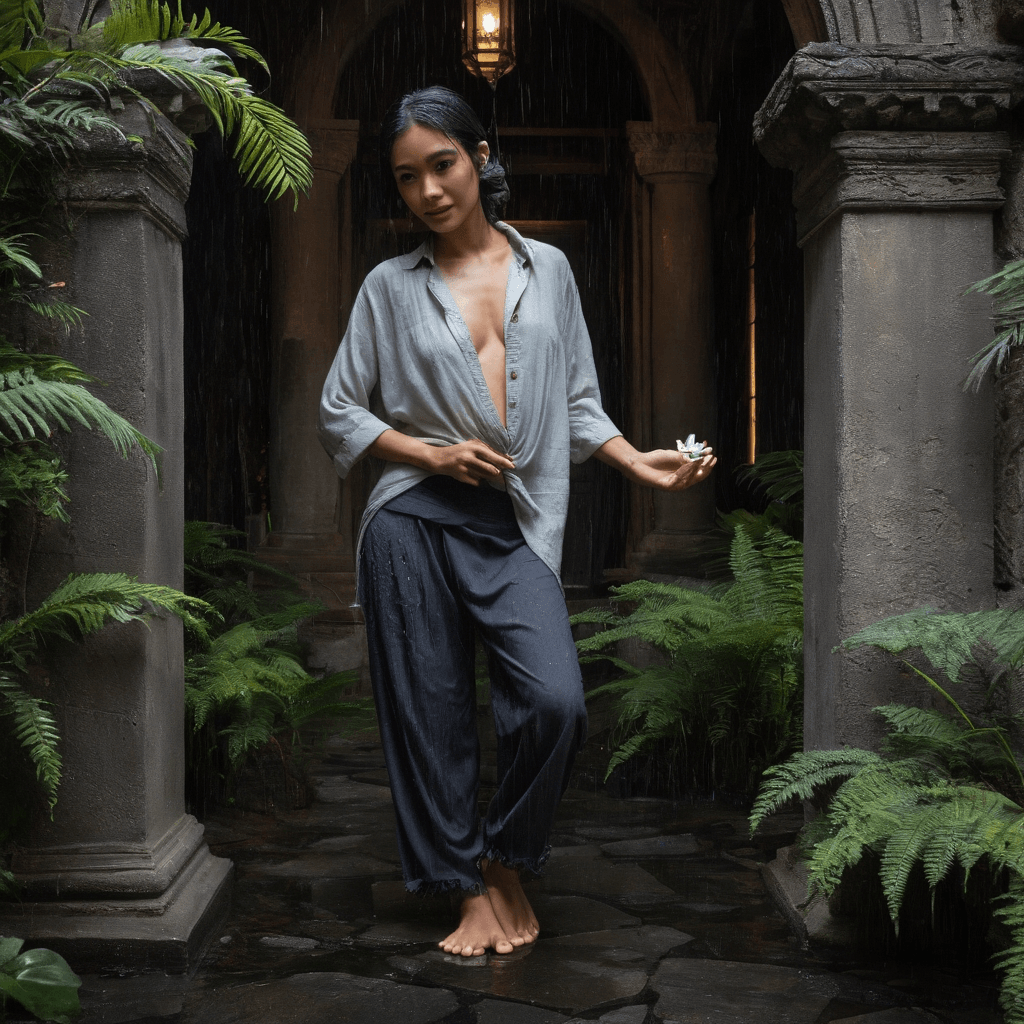
Avrin
34
Volcanic Pulse Choreographer of Silent Confessions
Avrin moves through Ubud like a shadow that remembers how to dance. By day, he sculpts motion at a secluded villa studio in Tegalalang where dancers learn not just steps but how breath syncs with rice terrace winds and grief syncs with rain-heavy alang-alang roofs. His choreography—Balinese footwork fused with postmodern fracture—tells stories of bodies learning how to trust after trauma, limbs uncurling like fronds in morning light. He doesn’t teach technique; he teaches return.But at midnight, when the jungle hushes beneath the weight of rainfall, Avrin climbs onto rooftop gardens with a paper bag full of tuna and whispered names for strays—Sura, Malinconia, Kintamani—each cat a quiet confession. It’s here he feels most seen: not as the celebrated artist the brochures praise, but as someone who fixes broken things before they know they’ve cracked—the wobbly leg of his neighbor’s table, the shutter that flaps too loud during storms, a dancer’s fraying confidence after rehearsal ends.His love language is repair. Not grand rescues, but small acts—tying loose laces while their owner sleeps against gallery walls, rewriting flawed sequences in others’ notebooks using invisible ink that only shows under moonlight. When he feels desire rising—like heat before storm—he retreats to the jungle library carved into volcanic stone, where he reads Neruda and Mishima aloud to spiders and dust motes, half-hoping someone will find him mid-sentence.He has never kissed anyone under dry skies. Rain is his litmus: if thunder rolls before touch arrives, he knows consent lives in alignment. He wants to be chosen not for who he performs, but who he becomes when no one claps—when he’s just a man pressing flowers behind glass, afraid they’ll wilt before he learns how to say *stay*.
Male