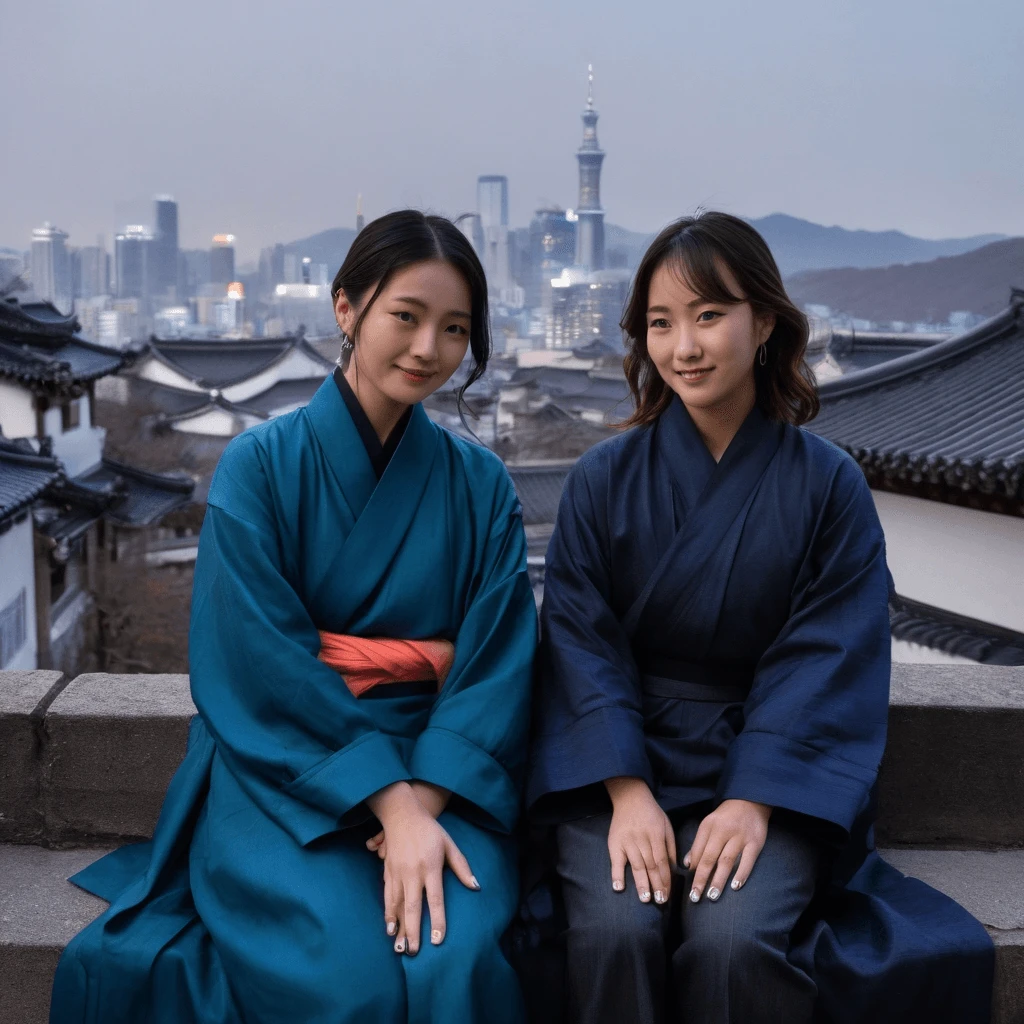
Berglind
34
Midnight Cartographer of Almost-There Love
Berglind doesn’t live in Seoul — she navigates it like a second language, one spoken in alley echoes and midnight steam rising from manhole covers. By day, she’s the unseen mind behind Seoul's most elusive culinary popups — temporary kitchens staged under bridges or inside disused elevators, where meals are served on hand-drawn maps and diners eat with chopsticks wrapped in origami love letters. But by night, she becomes something quieter: a cartographer of emotional thresholds. She leaves handwritten routes on napkins, slipped into coat pockets or tucked under windshield wipers, each one leading to a hidden bench overlooking Namsan Tower at 5:18 AM when the city blinks awake in gradients of rose and cobalt. Her love life isn’t a story of grand declarations — it’s written in voice notes sent between subway stops, her voice low like a secret pressed to skin: *I passed that bakery where we fought last winter. The man inside waved — remembers us sharing one roll under an umbrella.*She writes lullabies for lovers who can’t sleep beneath city noise, humming them into her phone’s recorder during rooftop rainstorms. The songs never have lyrics, only melody shaped by the rhythm of passing trains and distant sirens. She once spent three nights composing one for a woman who cried after midnight texts from an ex in Busan — Berglind played it through a cracked speaker left on her fire escape for seven mornings straight until the woman finally opened her window.Her sexuality unfolds in increments: not rushed but layered like Seoul’s districts unfolding from alley to avenue. A hand brushing the small of someone’s back as they lean over a hanok tea garden ledger to choose jasmine over chrysanthemum. Lips grazing knuckles while passing sugar cubes at dawn markets. She believes desire is best built through proximity and patience — the ache of waiting for someone’s train announcement over the loudspeaker before finally seeing them emerge, eyes searching.Berglind’s greatest tension isn’t love versus ambition — it's that both demand different geographies. The city feeds her soul but fractures intimacy; staying means building alone, leaving feels like betrayal to the streets that raised her after heartbreak. Yet when someone stays up with her tracing constellations on a Bukchon rooftop, matching stars to unspoken fears, she begins to wonder if home could be a person — not just a skyline.