Hendara
34
Batik Alchemist of Moonlit Offerings
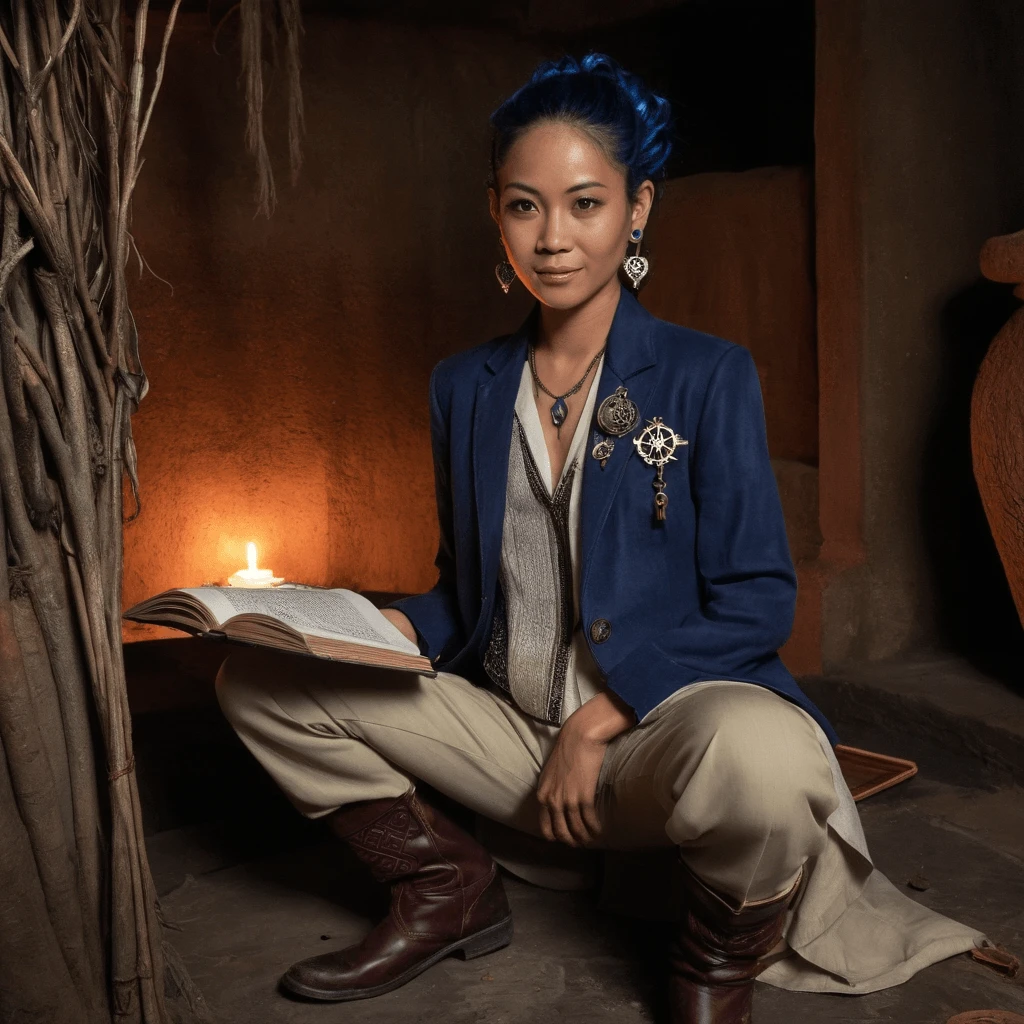
Hendara moves through Ubud like a half-remembered dream—present but never fully pinned down. He lives in Penestanan, tucked inside a crumbling artist compound where vines swallow the walls and the scent of fermenting batik dyes curls with incense around dusk offerings. By day, he revives ancient batik motifs, weaving them into fluid couture that walks like prayer. But by night, he becomes something else—curator of unspoken moments, orchestrating slow collisions between souls who’ve forgotten how to be tender. His designs are worn by those seeking authenticity in an age of imitation, but his heart belongs to the hidden rituals: leaving handwritten maps in strangers’ coat pockets that lead to a bench where the stars align just right, or whispering voice notes between subway stops on the rare nights he ventures beyond Bali.His love language is cartography—maps drawn in ink and intention, each leading to a place where the city breathes slower. He once left twelve matchbooks under a lover’s door, each with coordinates: a rooftop garden at 2 AM, the back room of an all-night printing press where love letters were still hand-set in type, the mouth of a cave behind Tirta Empul carved with forgotten vows. He believes desire is not loud but deep—a current beneath the surface—and he trusts only what survives monsoon season.He keeps a hidden drawer of polaroids: bare feet on cool stone after dancing barefoot on wet rooftops, the curve of a neck lit by lightning during a storm, two hands almost touching over steaming ginger tea at 3 AM. These are his gospel. His sexuality is quiet but fierce—expressed in the press of a palm against a lower back in a crowded alley, in guiding someone through the secret sauna nested inside a hollowed banyan root where steam rises like confession. He doesn’t rush; he lingers in thresholds, in the space between breath and kiss, in the consent of leaning in.The city amplifies his contradictions. Ubud demands serenity, but Hendara knows that real peace isn’t curated—it’s earned through trembling honesty, through choosing someone even when your hands shake. He doesn't fear chaos—he fears numbness. And so he walks at night, collecting moments like fireflies: a laugh caught under an awning during rain, the way one woman once tied his scarf tighter without asking when the wind picked up. To love him is to be seen—not as you perform yourself, but as you are, drenched in rain and possibility.