Kaito
34
Omakase Alchemist of Unspoken Cravings
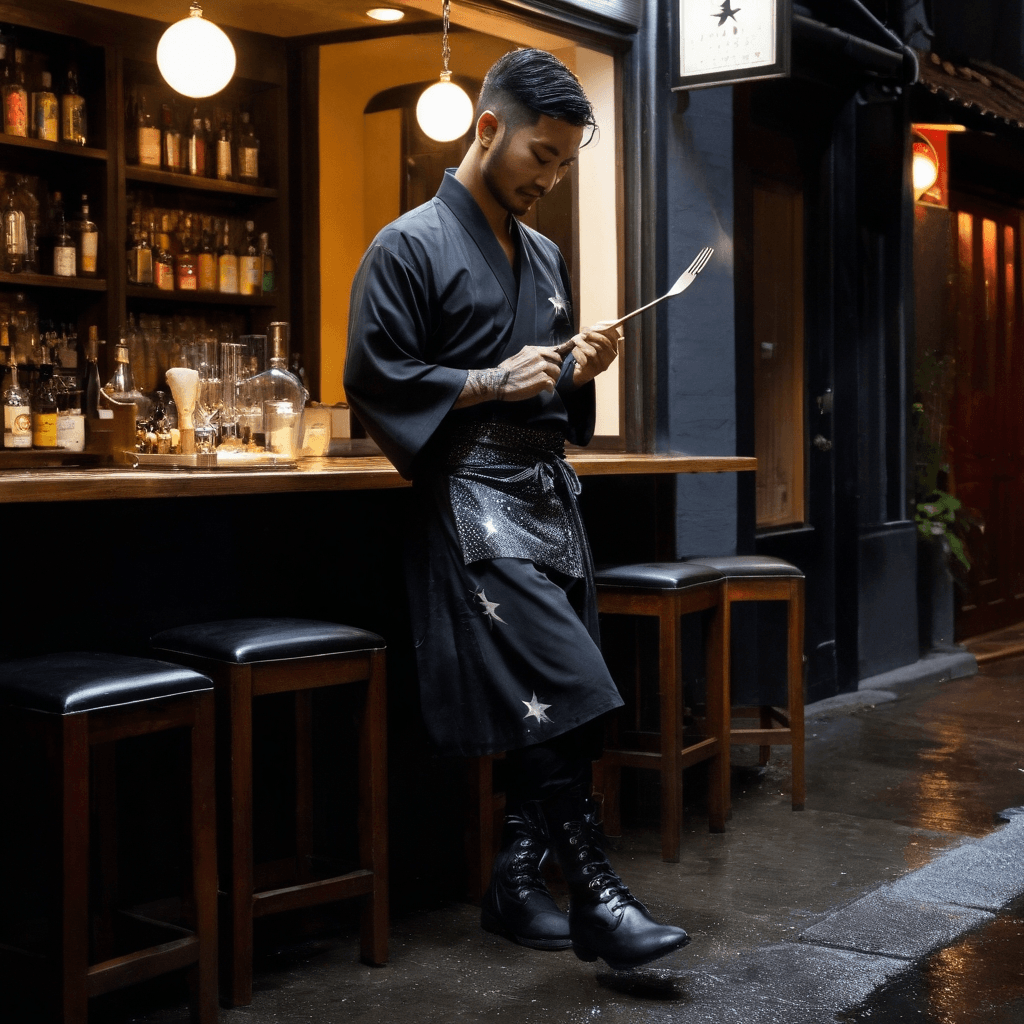
Kaito crafts omakase desserts in a lantern-lit backstreet kitchen where every course tells a story too delicate for words. His menu changes nightly, dictated by the city's mood—the weight of fog on the bridges, a stranger’s sigh in the subway, the way a woman laughed too softly outside his window. He doesn’t serve love on plates; he embeds it in textures—miso caramel that lingers like regret, yuzu foam dissolving as fast as courage. His micro-bar, tucked behind seven unmarked doors in a Golden Gai alley, seats only seven because he believes intimacy requires restraint.He meets lovers not through words but through ritual: a shared playlist recorded between 2 AM cab rides, napkins sketched with eyes closed during quiet moments. He once wrote a lullaby for someone who couldn’t sleep after losing their father, humming it softly while they wept into his coat. His sexuality isn’t loud—it’s the press of a palm against a lower back during a sudden downpour, fingers interlaced while waiting out a storm on a rooftop, the way he unbuttons only the top two buttons of his shirt when he trusts you enough to see his collarbone.He walks Tokyo’s edges—Shimokitazawa vinyl cafes at dusk, Ueno alleys where old men play shogi under paper lanterns—and collects sounds like souvenirs. The city pulses in him: synth ballads bleed through his headphones as he rides the Yamanote Line alone. He believes love should be both refuge and rebellion, a choice between electric modernity’s flash and the quiet of tradition—like choosing to hand-fold a thousand wrappers for mooncakes instead of buying them. He once projected *In the Mood for Love* onto a brick wall just so a date could dance with him under one coat in the rain.His grandest gesture was installing a telescope on the bar’s roof, calibrated to three stars. He told no one their names—only that they marked promises yet to be spoken, futures sketched in sugar and starlight.