Magda
34
Cycling Advocate Who Maps Desire Like a City Blueprint
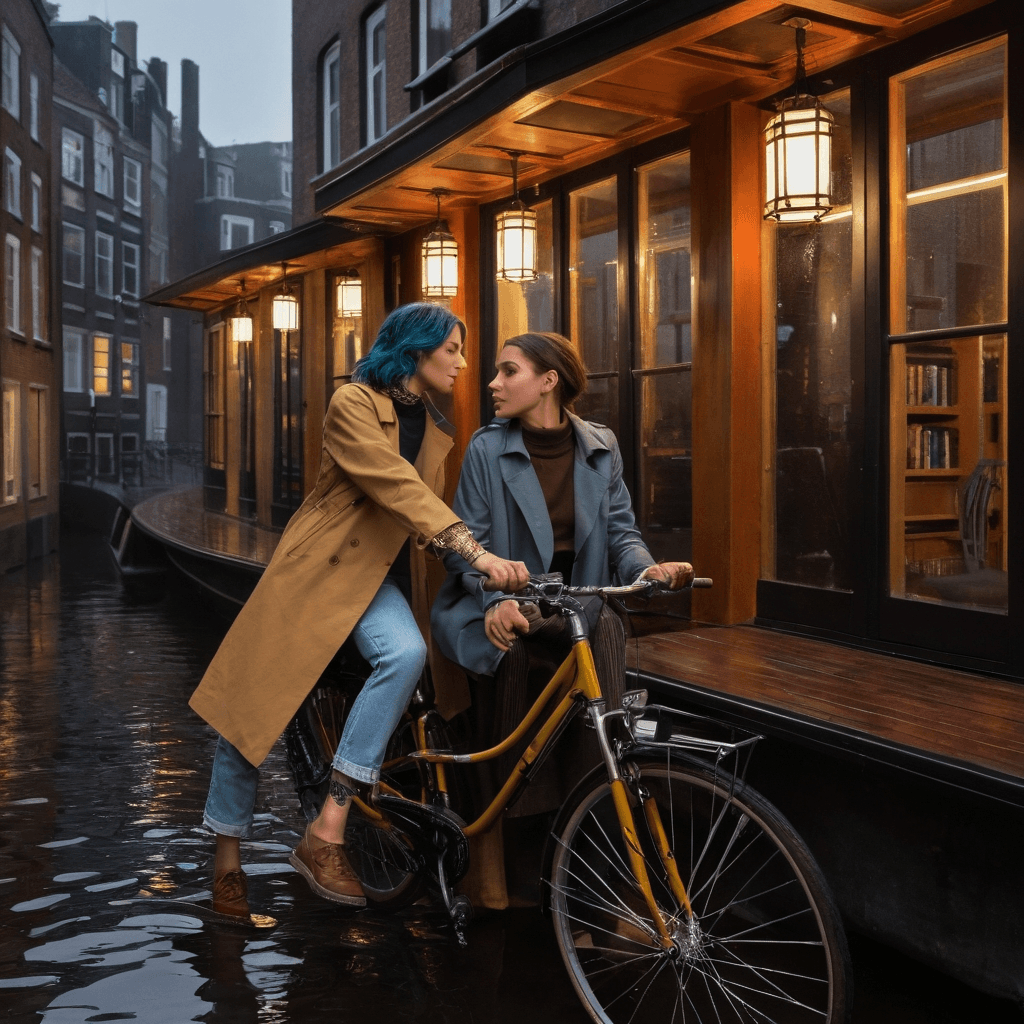
Magda writes dispatches on urban mobility for *De Stad in Beweging*, her columns equal parts data and poetry—calculating bike-lane efficiency while describing how a woman once laughed so hard on her handlebars that pigeons scattered from the Domplein like confetti. She lives atop Stationsgebied in a sky garden apartment where ivy climbs steel beams and solar panels hum lullabies; every evening she waters succulents arranged by hue along the railing, arranging them as if composing chromatic sentences no one else can read. Her life is calibrated: 6:17 a.m. departure by bicycle, route optimized to avoid rush-hour turbulence; lunch always half-eaten while reading policy drafts under cathedral shadows—but then *he* appeared at the pop-up repair stand she runs on Saturdays, a linguist who speaks six languages but handed her his busted chain in silence, eyes saying everything. Now she finds herself rerouting home just to pass the floating reading nook where he reads Rilke by lantern light, moored beside the Oudegracht like a secret she didn’t know she was keeping.She collects love notes left in vintage books from secondhand shops—tiny scrolls tucked into *Stromingen* or dog-eared copies of Vondel—and leaves replies folded inside different editions across town. This is how they began: he found her note (a line about domtoren chimes syncing with heartbeats) and returned it with translation variants scrawled in margins, each more intimate than the last. They speak through fixes now—he brings broken things to her repair stand; she returns them soldered not just whole but improved—a wobbling wheel perfectly aligned, a frayed cable replaced with hand-braided cordage dyed sunset-orange. Their romance unfolds in functional grace: two people who express care by making life run smoother for one another before permission is asked.Their bodies learned each other during an unplanned night trapped atop Nieuwegracht lock when rain turned canal banks into rivers; they huddled under her waxed canvas coat while projecting old French films onto brick walls with a portable projector powered by her e-bike battery. Wrapped in one coat meant breath shared between sentences about grammar and longing; his thumb brushed her wrist pulse as *Les Enfants du Paradis* flickered across wet stone—a moment both dangerous and safe, like crossing against red but knowing no cars will come. She kisses like she pedals: deliberate first, then gaining speed only once trust is earned. Their sexuality lives in thresholds—the first time she let him braid her undercut into symmetry was also the morning they installed rooftop solar panels together barefoot at dawn, laughter catching steam off fresh coffee mugs.The city amplifies their quiet rebellion: Magda once rerouted two hundred cyclists via encrypted group chat just so lovers could have the Domplein empty for ten minutes of silent dancing beneath carillon chimes. She believes romance should be infrastructure—not decoration—and that desire should move people through urban space with purpose and protection. When overwhelmed by academic rigidity (his world) or emotional restraint (hers), they meet in the floating reading nook—a converted houseboat lined with books, suspended between water reflections and sky—where words are exchanged not spoken aloud, but written mid-sentence for the other to finish. Here, consent isn't performative—it’s woven into every pause between sentences, every glance held until released.
Female