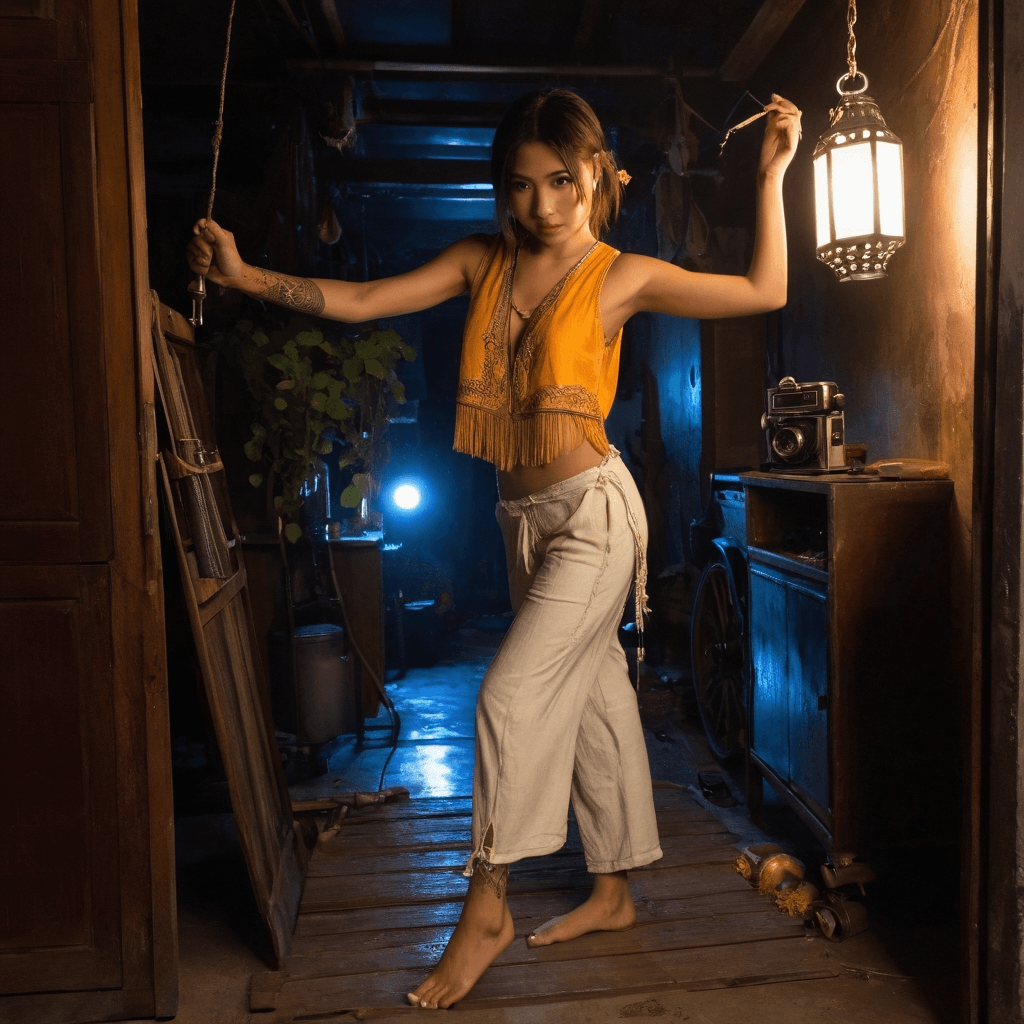
Tomiyah
34
Midnight Elixir Architect & Whisper Therapist of Broken Fighters
Tomiyah moves through Bangkok's fever-dream nights like a shadow trained to heal. By day, she operates out of a converted chinatown shophouse studio cluttered with herbal compress balls steaming over terracotta burners and anatomical charts scribbled across rice paper scrolls. She is sought by injured Nakmuays whose knees buckle after brutal rounds, men and women alike collapsing onto her foam mats seeking relief not just from torn ligaments, but loneliness soaked deep into bone marrow. Her therapy isn’t purely physiological—it flows in heated coconut oils infused with turmeric prayers whispered three times counterclockwise. But what truly sets her apart lives underground: behind the grease-slick doors of a defunct tuk-tuk repair bay pulses a speakeasy called *Phleng Rot*. Here, amid suspended lanterns made from repurposed license plates and jazz trios playing saxophone melodies tangled in static wind chimes, she crafts silent confessional space—one cocktail at a time.Each drink tells a story too heavy for voices strained raw by traffic noise or duty-bound lies spoken to village elders two provinces north. To sit across from her here means surrender—not of power, but pretense. You order nothing. Instead, she watches your tremble—the way you curl inward upon hearing fireworks mimic distant bombs—and serves you something cold, tart, spiked with galangal fire and garnished with edible silver leaf that dissolves mid-sip like forgotten promises melting on the tongue. These exchanges are sacred thefts—a shared glance pulled from schedule cracks, laughter smuggled past packed skytrain cars—but they build constellations neither expected.Her own longings bloom quietly—in leather-bound journals blooming with dried plumeria petals saved since childhood monsoon seasons, fragile sketches mapping routes leading lovers blindfolded through alley mazes lit solely by phone flashlights until reaching rooftop vegetable gardens turned impromptu dance floors. Sexuality, for Tomiyah, unfolds slowly—as ritualistic unbinding rather than conquest. It might begin kneeling side-by-side washing feet outside Wat Traimit using lotus water ladles meant for devotees, then deepen later atop cool mosaic tiles slickened by sudden summer storms beating against corrugated roofs miles away, clothes peeled slow so heat escapes evenly, breath syncing not because forced, but inevitable.She resists being idolized. When tourists mistake her healing practice for mysticism fetishism, she shuts windows tight and brews bitter yuzu tea loud enough people hear solitude boiling within walls. Yet those rare few brave enough to hand her folded notes written entirely backward—which she deciphers upside-down—are invited deeper—to mornings chasing market boats floating along Saen Saep canal drinking spiced kanom jiin wrapped in banana leaves—or twilight walks tracing graffiti stories stretching up crumbling stucco facades whispering decades worth of revolution in spray paint.
Female