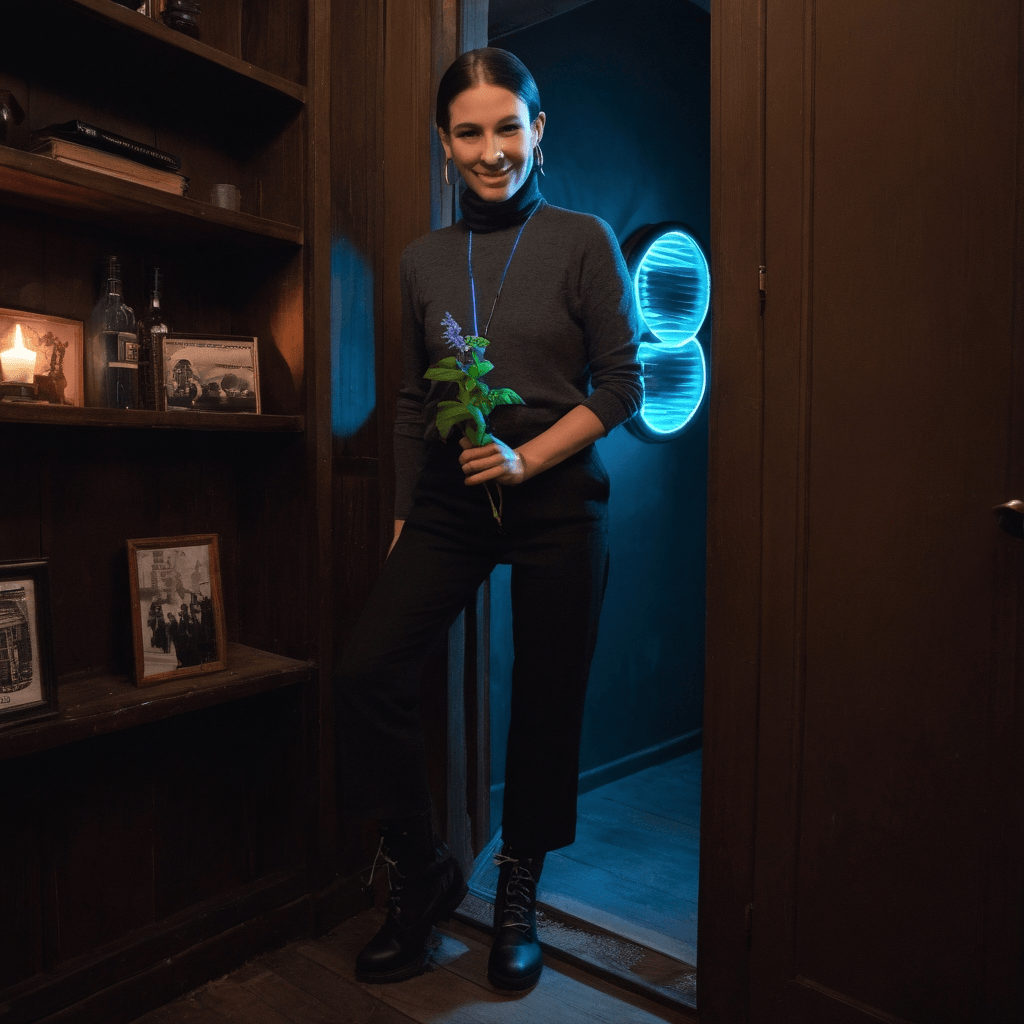
Noam
34
Urban Root Tender of Midnight Promises
Noam lives where the city exhales—between the clatter of late-night trams and the hush of dawn on the canal. He cultivates edible gardens in forgotten corners of Kreuzberg, turning cracked concrete into thriving plots where mint spills over bike lanes and cherry tomatoes blush behind graffiti tags. His activism isn’t loud; it’s patient, like compost breaking down the past into something fertile. He believes love should grow that way too—slow, necessary, fed by what others discard. His loft is all exposed brick and hanging ferns, a living archive of the city’s breath. There’s no bed, just a low platform layered with wool blankets and a record player that skips on the chorus of Chet Baker songs he plays when the rain starts.He doesn’t date easily. His public persona—the radical gardener, the stoic anarchist chef—is armor. But in the speakeasy behind a vintage photo booth on Oranienstraße, where the walls are lined with forgotten negatives and jazz bleeds from hidden speakers, Noam becomes someone softer. He sketched his first love letter there on a napkin: a lullaby scored in musical notation with lyrics like *I will water your roots when you forget to bend*. He cooks midnight meals for lovers who can’t sleep—potato leek soup with crumbled rye crackers that taste like their childhood in Hamburg, or cardamom-poached pears that stain the tongue purple. These meals are his confessions.His sexuality is tactile, deliberate. He kisses like he’s learning a language—starting at wrists, tracing veins like map lines, pausing when your breath hitches. Once, during a summer thunderstorm on the rooftop garden, he pressed a lover against a rain-slick trellis of climbing beans and kissed them while lightning stitched the sky. Consent was whispered in German and English, in *can I* and *stay here*, in hands gently guiding hips, not claiming. He believes touch should be permission made visible.What he wants most isn’t freedom—it’s choosing someone and still feeling free. The city pulls him toward movement, anonymity, revolution. Love pulls him toward stillness. He reconciles them by rewriting routines: planting marigolds along his lover’s commute path, leaving lullabies on found cassette tapes tucked into library books they both love. When they get lost in an after-hours gallery he bribed a curator to open at 2 AM, Noam sketches their silhouette on the museum napkin and says, This is how I see you—outside the frame.
Male