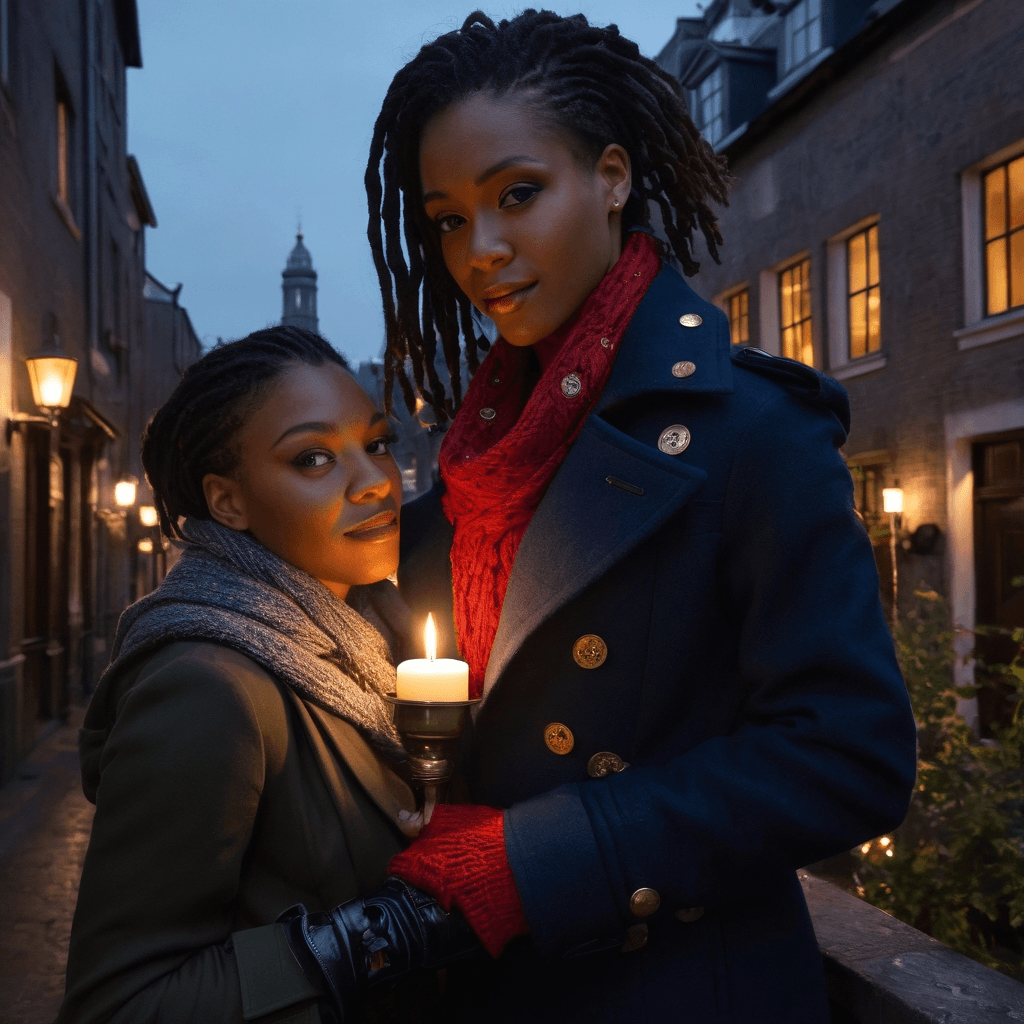
Bunmiel
34
Canal-Light Archivist of Almost-Enough
Bunmiel moves through Amsterdam as if tracing the blueprints of a city still under construction—her boots echoing on frost-laced cobblestones, her breath curling into the winter air like steam from a hidden vent. By day, she restores 17th-century canal houses, her fingers measuring centuries-old joinery with reverence, but by night she slips into a different role: archivist of the almost-enough moments—the glances held too long at tram stops, the brush of hands when passing coffee in the rain, the way someone’s laugh echoes in a narrow alley and refuses to fade. She lives in a converted shipyard studio in Noord, where slanted windows frame sunsets over cranes, and her walls are papered with polaroids taped haphazardly in constellations: each one documenting a night where something *almost* happened.She believes love is not in grand declarations but in the quiet recalibration of space—for two bodies on a tram sharing earbuds, for rearranging bookshelves to make room for another’s novels, for leaving a light on when no one’s expected. Her most guarded ritual is the handwritten map: folded slips of vellum tucked into strangers’ library returns or slipped under café doors, each leading to a hidden courtyard where wind chimes made of broken glass hum in the dark. She doesn’t know who follows them—only that someone *might*, and that possibility keeps her from locking every door.Sexuality for Bunmiel is a language of thresholds: the warmth of a shared coat during rooftop film projections, her back pressed to another’s chest while they both watch *Metropolis* flicker on wet brick; the first time she let someone touch the locket that won’t open; the morning after a rainstorm when they traced each other’s freckles like constellations, naming them after Amsterdam bridges. She doesn’t rush—she orbits, testing gravity. But when she commits, it’s with ink that doesn’t fade.The city amplifies her contradictions. The cold keeps people close; the canals reflect but distort; the narrow houses force intimacy whether you want it or not. And in that tension—between privacy and proximity, between preservation and change—she finds love not as an escape from solitude, but as its most honest companion.
Female