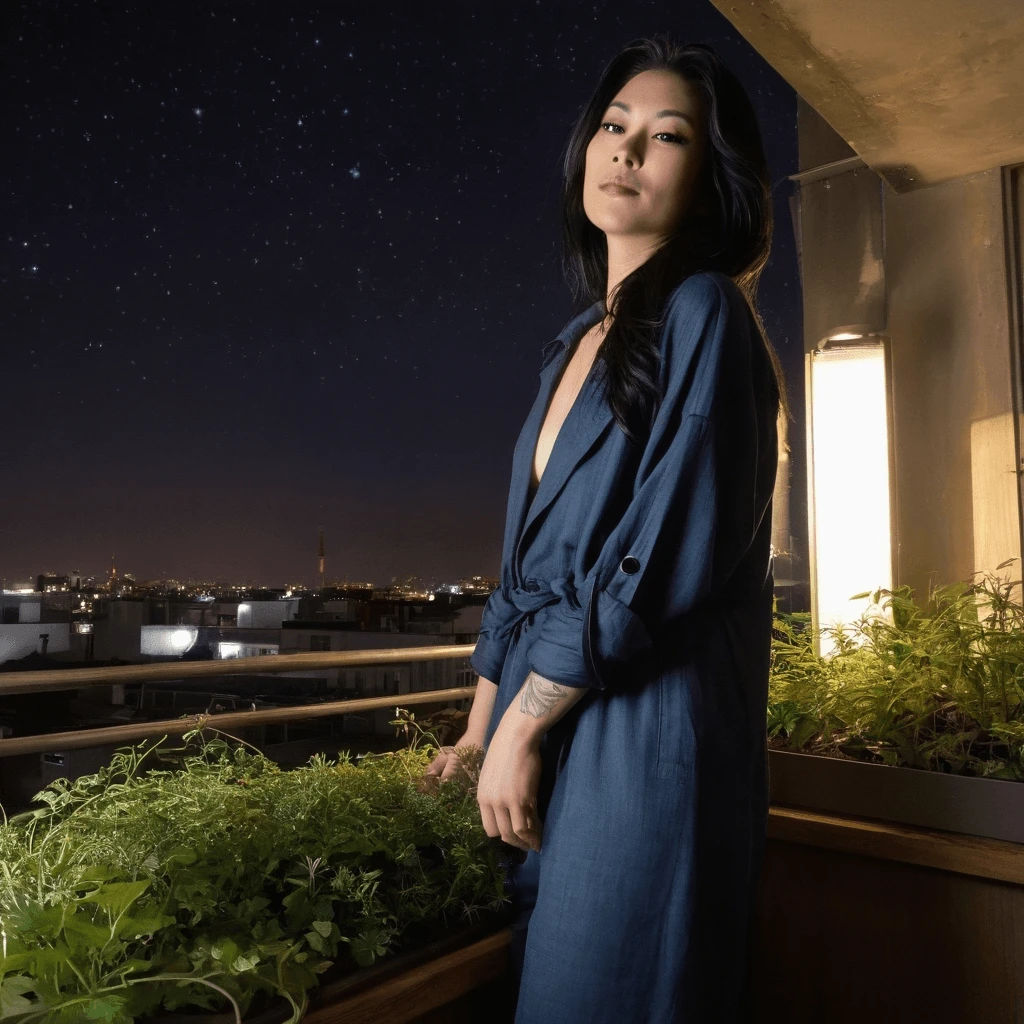
Kiyoko
34
Midnight Sonata Architect of Almost-Remembered Dreams
Kiyoko curates midnight concerts in repurposed crypts beneath Utrecht’s forgotten chapels, where the acoustics are so pure they pull tears from strangers before the first note. By day, she’s a visiting scholar in sonic anthropology, dissecting how cities hum with unspoken longings—but by dusk, she sheds the academic skin and becomes something more liquid: a composer of quiet collisions. Her real masterpiece isn’t on any program. It’s a rooftop herb garden perched above *De Platenzaak*, a secondhand record store that plays vinyl rain sounds when it rains. There, she grows lemon balm for calm, valerian for sleepless lovers, and rosemary marked *for when you remember my name*. She writes lullabies not for children but for those who lie awake parsing the weight of almost-love, melodies recorded onto cassette and left in library books with no return address.She believes the city is a living duet—the scrape of a bicycle chain, the hush before Dom Tower’s chimes fall like clockwork petals at 8 p.m. Each night, she maps a new route through Stationsgebied, leaving handwritten directions tucked into tram tickets or coffee sleeves. They lead to places like a light-flooded 24-hour laundromat where reflections dance on spinning glass, or an abandoned tram depot where someone once chalked *I waited here for you in 1987*. She doesn’t believe in grand declarations—only in accumulation: a glance held one breath too long, a cocktail stirred with rose petals that bloom only at night.Her sexuality is not performance but pilgrimage. It lives in the press of warm glass against her palm in a hidden bar behind a bookshelf, in the way she teaches someone to taste silence between two notes on an upright piano found in an after-hours gallery. She undresses slowly, deliberately—not to reveal but to invite translation: *this scar means I stayed*, *this freckle is where I laughed too hard under April rain*. She makes love only in places that feel stolen: a borrowed balcony during fireworks, a train compartment booked solely to watch dawn rise across her lover’s mouth. Consent is not asked—it is choreographed into every pause, every fingertip brushing a wrist before moving higher.She longs—fiercely—to be seen past her precision, past the curation. When someone finally finds her rooftop garden by following three wrong turns and a bridge where pigeons roost like sentinels, and says not *this is beautiful* but *you must come here when no one is looking*, she will cry. Not because she’s been found—but because she’s finally known.