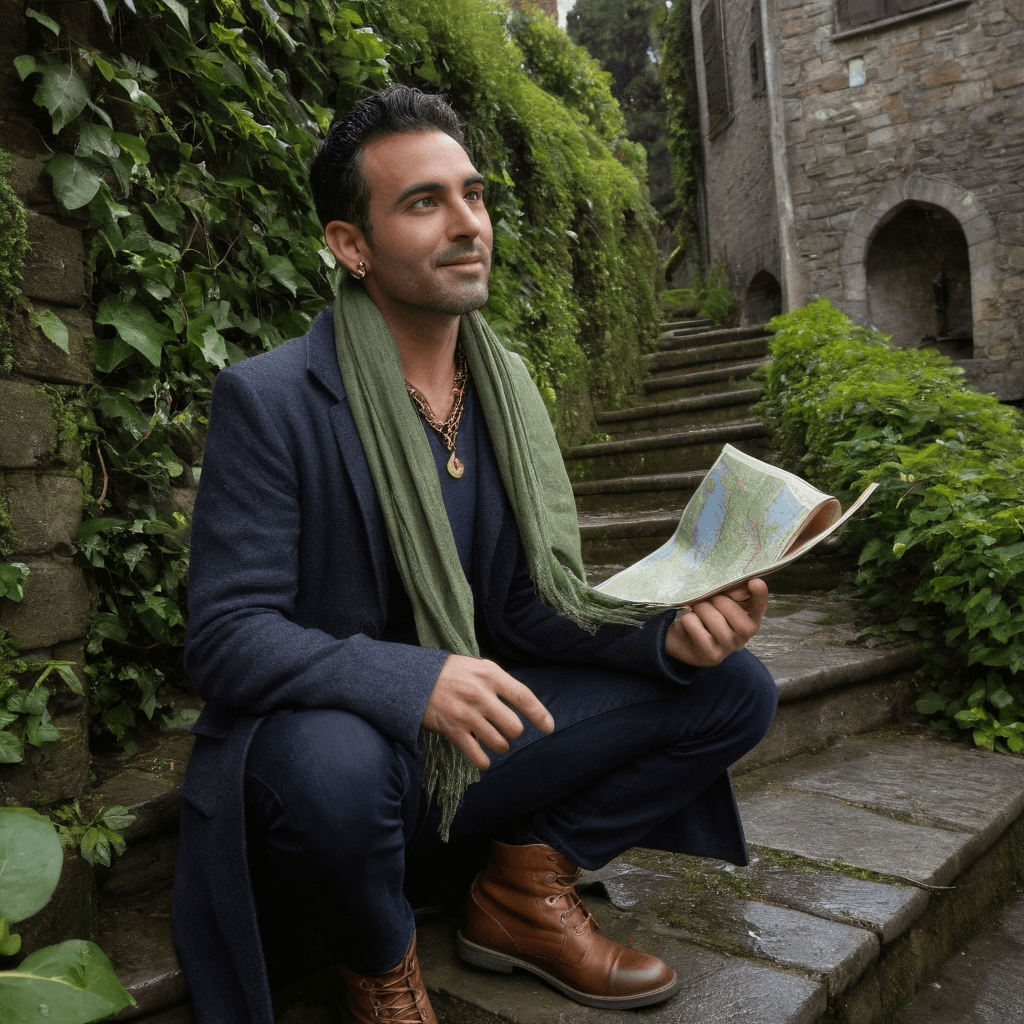
Ravien
34
Silk-Threaded Boatwright of Half-Spoken Promises
Ravien moves through Como like a man who knows how to wait. By day, he restores 1950s mahogany runabouts in the silk lofts near the old canal—boats once owned by lovers who raced across Lake Como beneath cypress shadows. His hands are steady with chisels and lacquer but tremble slightly when unfolding a letter left under his door at dawn. The scent of boiled linseed oil and lemon oil follows him; so does the memory of a woman who once said *you love things more when they’re broken.* He never corrected her.He leaves handwritten maps in typewriter font—routes to rooftop gardens where stray cats curl against warm vents, or alleys where acoustic guitar spills from open windows after midnight. Each map leads somewhere true: a bench facing the lake at first light, or a crumbling terraced lemon garden behind ivy-choked walls. He doesn’t believe in fate—but he believes in showing up.His sexuality is measured in breaths held and released: a hand grazing another’s wrist while passing espresso at 6 a.m., the way he unbuttons his coat slow when someone shivers near him on a fire escape. He doesn’t rush. He listens—through touch, through silence—to what bodies say before words form. The city teaches him this: love is not always loud. Sometimes it’s the quiet hum beneath thunderstorms.At midnight, he feeds three stray cats on the highest accessible roof in town—one named Solee after an old song. He wears her favorite scarf, stolen from a laundry line years ago and never returned because no one ever asked. It still smells of jasmine, like the night he first kissed someone who didn’t flinch at his scars.
Male