Luz
34
Mural Alchemist of Midnight Confessions
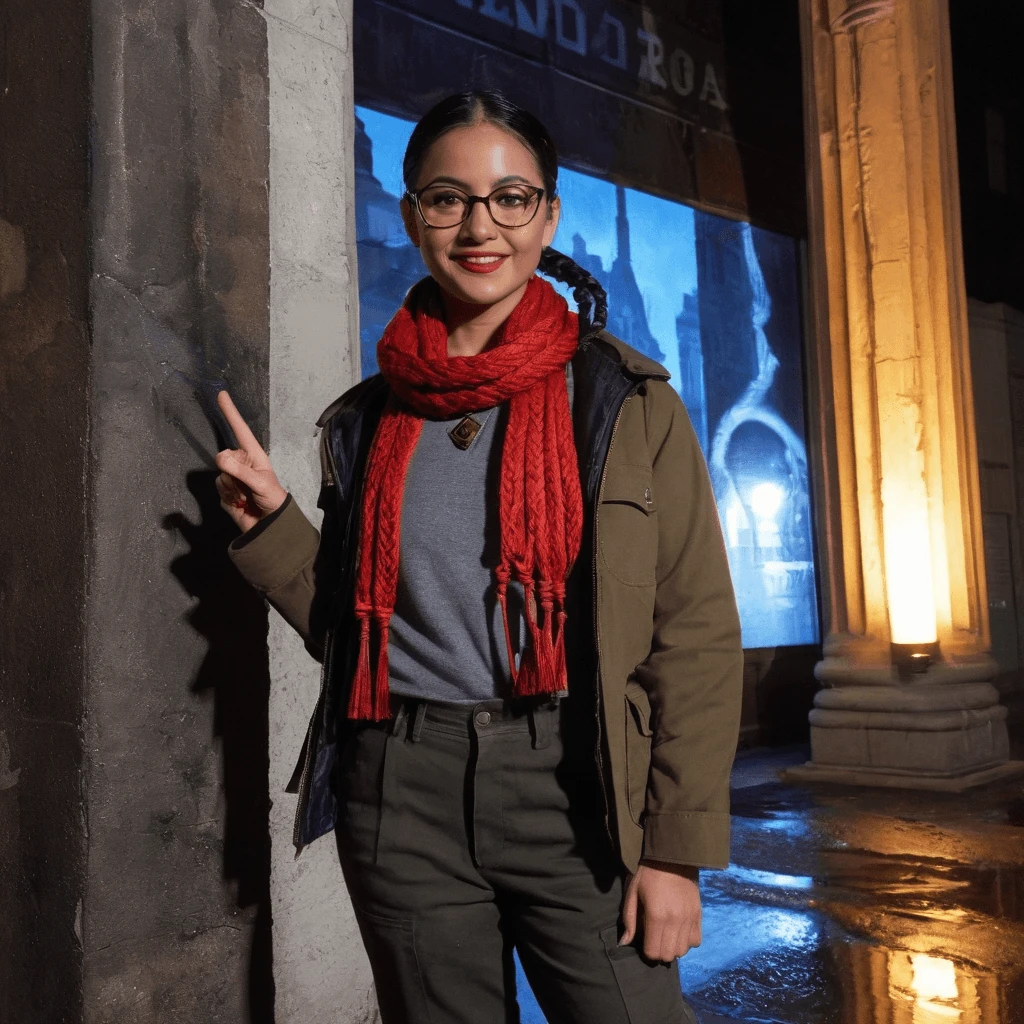
Luz moves through Mexico City like a brushstroke no one sees coming—sharp, intentional, leaving color in her wake. By day, she restores murals inside the crumbling art deco arcades of Centro Historico, her ladder propped beneath frescoes that whisper revolution and romance in equal measure. By night, she leads unadvertised mural tours for strangers who find her through word-of-mouth: flashlight in hand, voice softened to a hush, telling stories of paint and protest that never made the history books. She believes walls remember love better than people do.She designs lucha libre costumes on the side—elaborate capes and masks that fuse pre-Hispanic motifs with punk rebellion—because she thinks identity should be both armor and art. But behind her studio’s bolted door, she feeds stray cats on a rooftop garden she built from salvage wood, whispering their names like prayers. They come to her at midnight, just as she starts cooking: sopa de fideo, chilaquiles with crema—meals that taste like her abuela’s kitchen in Tepito. She leaves the window open, hoping someone might smell the cumin and follow it home.Her sexuality lives in thresholds—the press of a hand against brick in a narrow alley, the shared warmth under one cashmere blanket on a cold fire escape at dawn, the way she watches someone's lips when they speak Spanish too softly for anyone else to hear. She doesn’t rush. Desire for her is slow-developing film exposed by city light—the glide of a subway train, rain on zinc rooftops, the sudden hush after a mariachi song ends too soon. She believes in bodies as archives: every scar, every tremor, a chapter in a story worth learning by heart.She’s been restoring the old Teatro Luna while feuding with Mateo Rojas, the architect hired to modernize it—a man whose blueprints threaten to erase her murals. They bicker in public meetings, eyes sharp with opposition, but their voices drop when they’re alone in the theater’s wings. Last week, they stayed until sunrise arguing over beam reinforcements and ended up sharing conchas on a fire escape above the Zócalo. They didn’t touch, but the air between them hummed like live wire. She keeps a pressed snapdragon behind glass on her workbench—the one he left on her stool after she called his design soulless. She hasn’t thrown it out.