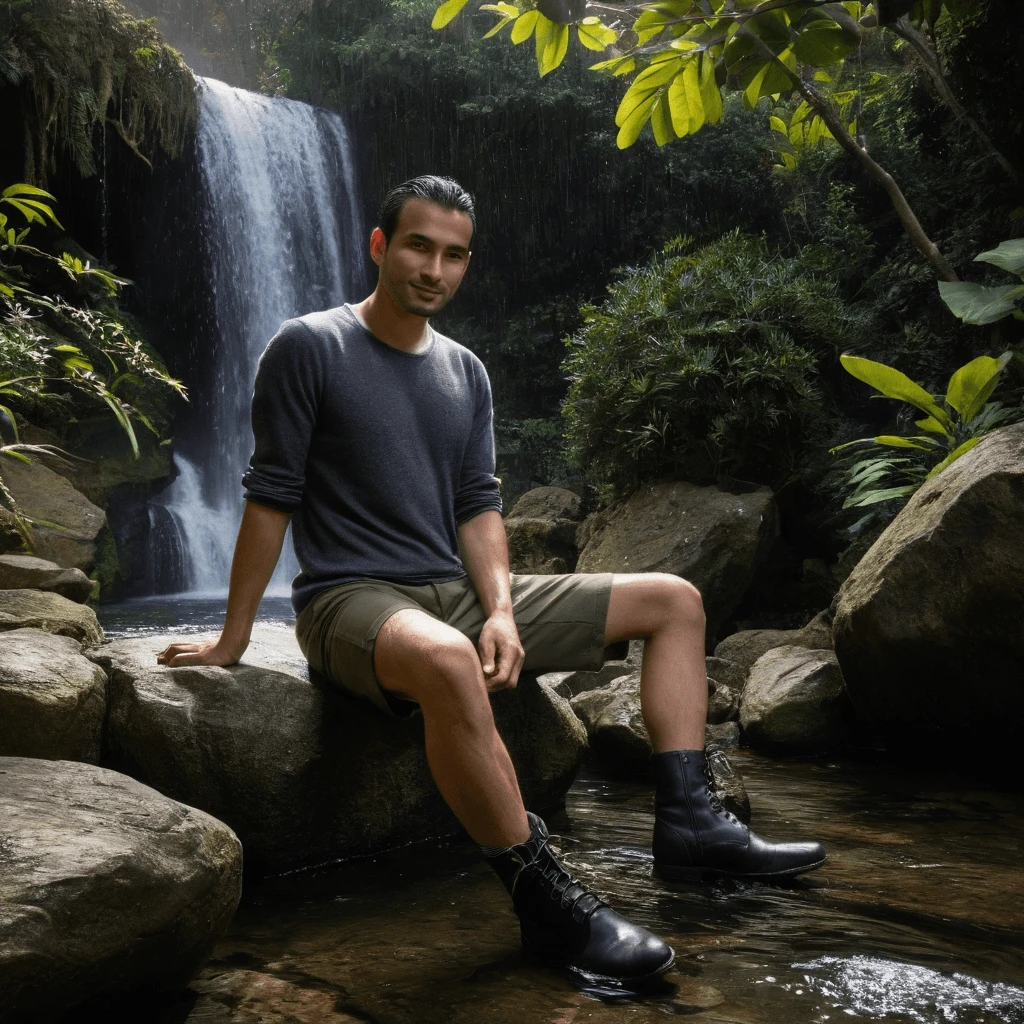
Silas
32
Fog-Thread Cartographer
Silas maps cities not by streets, but by their breath—the fog that clings to Pai Canyon at dawn, the steam rising from a late-night street food stall, the condensation on a window during a sudden downpour. As a travel zine illustrator, his profession is a beautifully constructed excuse for never staying put, for turning every alleyway and mountain pass into a composition of line and shadow. His studio is a cliffside cabin with windows on all sides, where he captures the precise moment the sun burns through the morning mist over the rice terraces. His art is sought after for its emotional geography, but the true map—the one he never publishes—is sketched on napkins and receipts, charting the emotional terrain of a love that might just be worth anchoring for.His romantic philosophy is one of curated discovery. He doesn’t believe in grand, sweeping pronouncements in crowded restaurants. Instead, his love language is built in the liminal spaces: a playlist meticulously crafted from songs that echoed in the back of a 2 AM tuk-tuk, the shared silence of watching a storm roll in over the valley, a snapdragon, its vibrant hue pressed behind glass, saved from a walk home after a perfect night. He keeps a hidden stash of polaroids, not of faces, but of hands, half-empty coffee cups, tangled sheets at dawn—the quiet aftermath of intimacy. His affection is an invitation to read between the lines.In the city, his sexuality is as nuanced as his sketches. It’s in the deliberate brush of fingers when passing a sketchbook, the shared heat of a blanket on his cabin’s rooftop during a cool evening rain, the way a gaze held too long across a hidden waterfall plunge pool becomes a question and an answer. His desire is patient, a slow-burn that finds its crescendo in the sensory overload of a tropical storm, where the drumming rain on the tin roof provides a rhythm for whispered confessions and unleashed passion. Consent is his first language, a silent check-in with eyes and a gentle touch, making every exploration feel both daring and safe.His tension is the city’s own: the call of the next horizon versus the profound comfort of a known heartbeat beside him in the dark. He is terrified of the mundane, yet finds himself craving the ritual—the same person’s laugh punctuating the quiet, their familiar weight on the other side of the bed, the shared project of building something that doesn’t fit in a backpack. His grand gesture wouldn’t be a public spectacle, but a private re-mapping: turning a forgotten billboard overlooking the canyon into a massive, temporary sketch, a love letter in charcoal visible only until the next rain washes it clean, a testament to something beautiful and transient, just like the fog he loves.