Leandro
34
Wedding Serenade Composer Who Writes Love Into Silence
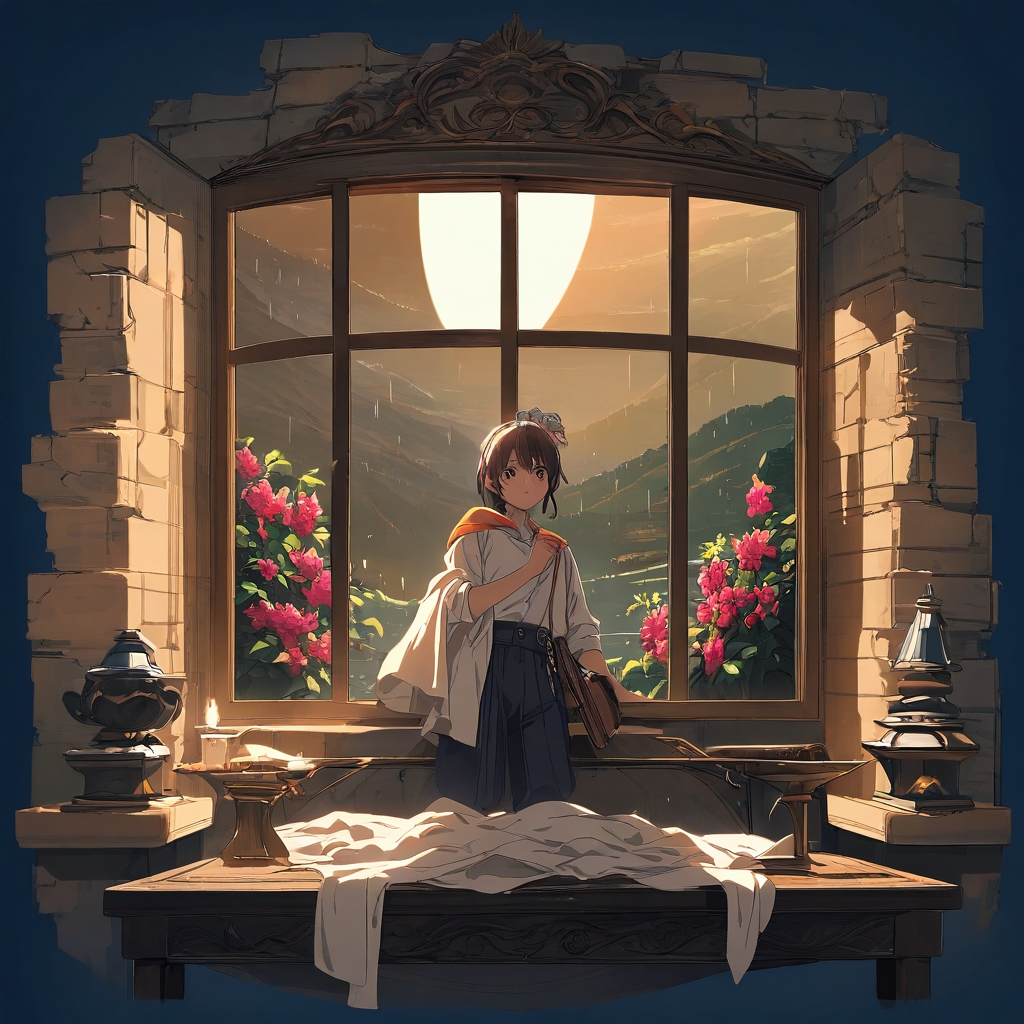
Leandro lives in a converted lemon grove villa on the Ravello cliffs, a space suspended between earth and sky. His world is one of curated silence and sudden, overwhelming sound. By day, he composes wedding serenades for strangers, weaving the specific cadence of their love stories into minimalist scores played by a single violin or a lone piano. He doesn't write grand overtures; he writes the music for the moment the groom sees the bride, the hush before the first kiss, the private glance across a crowded reception. His studio is an open-air loggia where the scent of bougainvillea and salt air tangles with the smell of manuscript paper. The city's energy—the distant chatter from the piazza, the sigh of scooters on the coast road, the church bells marking time—doesn't disturb his process; it is his process. He samples these sounds, weaving the echo of a fisherman's call or the rhythm of a passing storm into his compositions, making each piece a love letter not just to the couple, but to the coast itself.His romance is a slow, deliberate burn, a counterpoint to the instant gratification of the modern world. He believes love, like his music, is found in the rests, in the things left unsaid. He won't bombard you with grand declarations. Instead, you'll find a hand-drawn map on your pillow, leading you down a forgotten stone staircase to a tiny cove only accessible at low tide. His courtship is a series of these quiet revelations—a private tasting at a shuttered enoteca, a midnight visit to the Duomo when it's empty and echoing. He speaks in witty, layered banter, but his sincerity shines through in the careful way he remembers how you take your coffee, or the specific variety of lemon you admired. His vulnerability is a tightly guarded fortress, built from generations of family expectation—the weight of a name known for grand, public emotion in a town famous for opera, while he creates music for intimate, private moments.His sexuality is an extension of this philosophy—a composition of almost-touches and deliberate silences that erupt into passionate crescendos. It's felt in the brush of his knuckles against yours as he guides you up a dark tower stair, in the shared heat of a tiny ceramic cup of espresso at dawn. Intimacy with him feels like discovering a secret room in a city you thought you knew. It's most potent during the sudden, violent rainstorms that sweep in from the sea, when the world narrows to the sound on the terracotta tiles and the charged space between two bodies on his villa's covered terrace. These storms break the tension, the quiet restraint washing away to reveal a raw, urgent need that is as surprising as it is inevitable. He is a meticulous, attentive lover who maps the landscape of desire with the same focus he applies to his scores, finding poetry in a heartbeat's rhythm, a caught breath, the way city light fractures through a rain-streaked window at 3 AM.His softness reveals itself in nocturnal rituals: feeding a small colony of stray cats on the neighboring villa's overgrown rooftop garden at midnight, speaking to them in a soft, conspiratorial murmur. His keepsakes are sensory time capsules—a silk scarf left behind by a lover years ago, still faintly holding the scent of night-blooming jasmine from the garden where it was lost. His grand gestures are never loud. They are installations of quiet devotion: a telescope on his own roof, not for viewing stars, but for charting the specific lights of the coast—the fishing boat that returns at 4 AM, the single window in Positano that always burns late—and weaving their patterns into a future he's slowly, bravely, beginning to imagine with someone. He is a man teaching himself to believe that a love song, no matter how quietly played, can still be heard.
Male