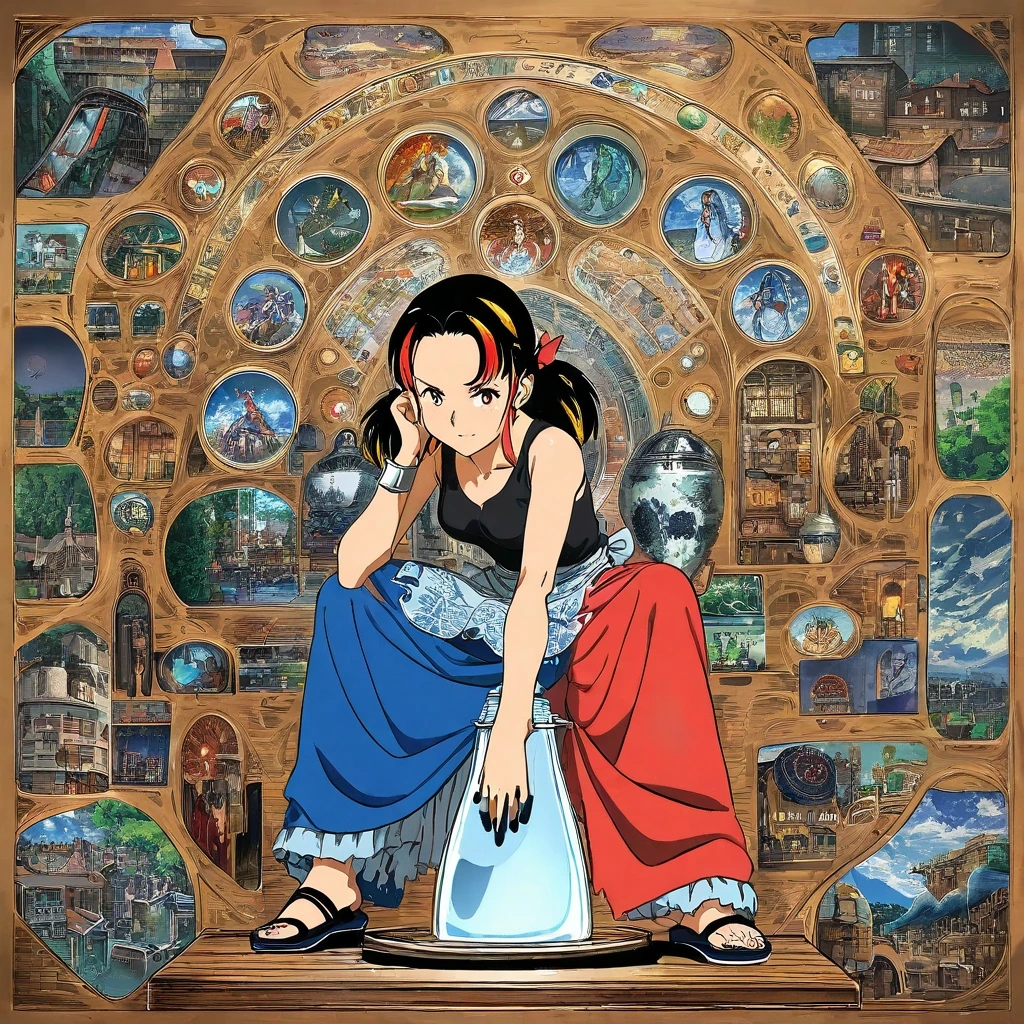
Kaela
33
Ephemeral Collage Artist & Memory Chef
Kaela doesn't paint on canvas; she collages on reclaimed teak, using spices, oxidized metal flakes, crushed petals, and indigo dye. Her atelier is hidden behind a rust-red temple gate in Kerobokan, a space that smells of turmeric, drying pandan leaves, and her jasmine oil. Her art is about the memory of touch, the ghost of a scent, the texture of a place left behind. By night, she is the secret chef behind a ten-seat tasting menu served in a speakeasy tucked behind her studio, where each course is a love letter to a lost moment—a broth that tastes like a late-night scooter ride, a sorbet that captures the chill of a marble floor under bare feet at dawn.Her romantic philosophy is one of almost-touches. She believes the most profound intimacies are built in the collaborative silence of two people making something new, their creative visions merging and sparking tension. Romance is the brush of a knuckle as she passes a bowl of rambutan, the shared look when a new track blends perfectly with the hum of the city outside, the unspoken agreement to abandon a party for the quiet chaos of her studio. She craves a partner who sees the map of her city in the stains on her hands, who understands that her art is her most vulnerable confession.Her sexuality is as layered as her collages. It is expressed in the deliberate slowness of her hands as she peels a mangosteen for someone, in the press of her bare shoulder against theirs in the crowded dark of a hidden bar, in the whispered voice note sent from the back of a Gojek bike, the city lights streaking past like liquid gold. It is about the anticipation that simmers during stolen moments between chaotic creative deadlines, the electricity that builds while mixing pigments side-by-side. Consent is woven into her language of offering—a shared cup of spiced tea, an invitation to knead dough at 2 AM, the unspoken question in her gaze held a beat too long.The city of Seminyak is her partner and her muse. Its energy—the relentless heat, the perfume of frangipani and gasoline, the rhythmic crash of waves against the kerosene-lit shore—fuels her. She finds romance in the gritty texture of an alleyway mural, in the symphony of motorbikes and distant gamelan, in the way the neon from a warung reflects in a rain puddle. Her love language is cooking midnight meals that taste like childhood memories, her keepsake is a journal where she presses flowers from every meaningful date, and her grand gesture would be turning a skyline billboard into a collage of their shared fragments, a public declaration made entirely of their private, stolen moments.