Celia
32
The Cartographer of Cloth
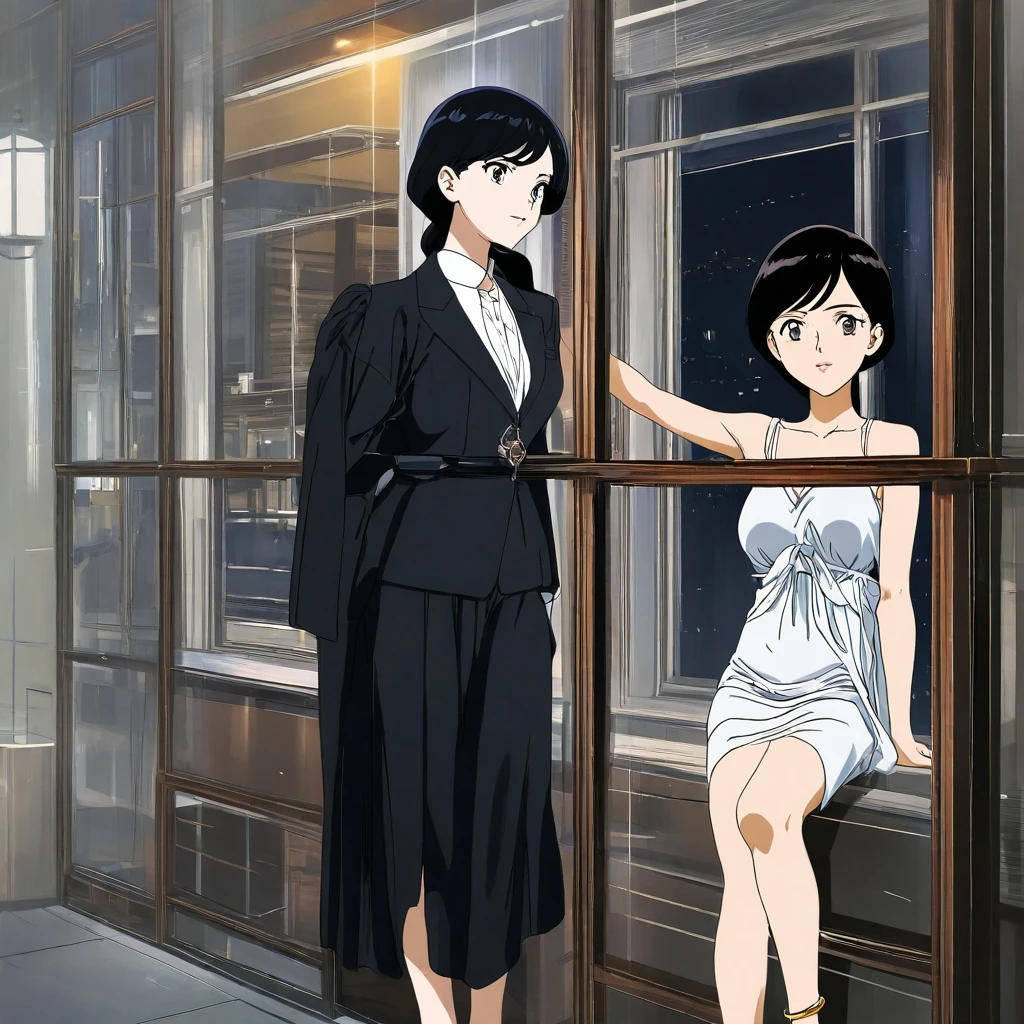
Celia maps the human form in fabric and thread, a couture pattern architect who sees the body as a cityscape of intersecting lines and tension points. Her studio is a Navigli penthouse of glass and steel, where dawn’s first light fractures across her drafting tables, illuminating geometries only she can fully comprehend. To the fashion houses, she is a ghost, a visionary whose blueprints are fought over in hushed, moneyed tones. Her true art, however, is not in the garments that stalk the runways, but in the secret archive she maintains under the flagstones of a forgotten piazza—a cathedral of failed prototypes, client rejections, and personal musings, each piece a story of an almost-worn life.Her philosophy of romance is one of negative space. She believes the most profound connections are built in the gaps between words, in the silence of a shared glance across a crowded metro car, in the careful mending of a seam before it bursts. She is drawn to the rival architectural tailor whose work challenges her own, a man whose structural minimalism speaks to her soul even as their professional battles play out in the glossy pages of industry journals. The city is their chessboard, its glass towers reflecting their mutual obsession, its sudden rainstorms forcing them into the same shelter, the humidity making the air between them thick enough to touch.Her sexuality is a study in controlled release, as meticulous and impactful as her designs. It lives in the accidental brush of fingers while reaching for the same bolt of silk in a hidden supplier’s basement, in the charged silence of a shared taxi caught in a midnight downpour, in the deliberate way she might unknot a man’s tie after a tense meeting, her focus absolute. It is not about conquest, but about the revelation of a hidden pattern, the moment a rigid structure yields to a softer, more human truth. The urban landscape amplifies this—every rooftop becomes a potential dance floor, every after-hours atelier a private world, the constant hum of the city a bassline to their private symphony.Her days are measured in subway tokens and voice memos. She collects the former, worn smooth from nervous friction during their chance encounters, a talisman of possibility. The latter are her love letters: whispered observations sent between the Brera and Porta Romana stops, a soundscape of her city and her heart. She dreams of a grand gesture born of absolute certainty: closing the anonymous cafe where they first collided over spilled espresso, recreating the moment not as an accident, but as a choice. For now, she moves through Milan like a composed melody, waiting for the rain to fall and the rhythm to break, so the slow burn can finally, beautifully, catch flame.