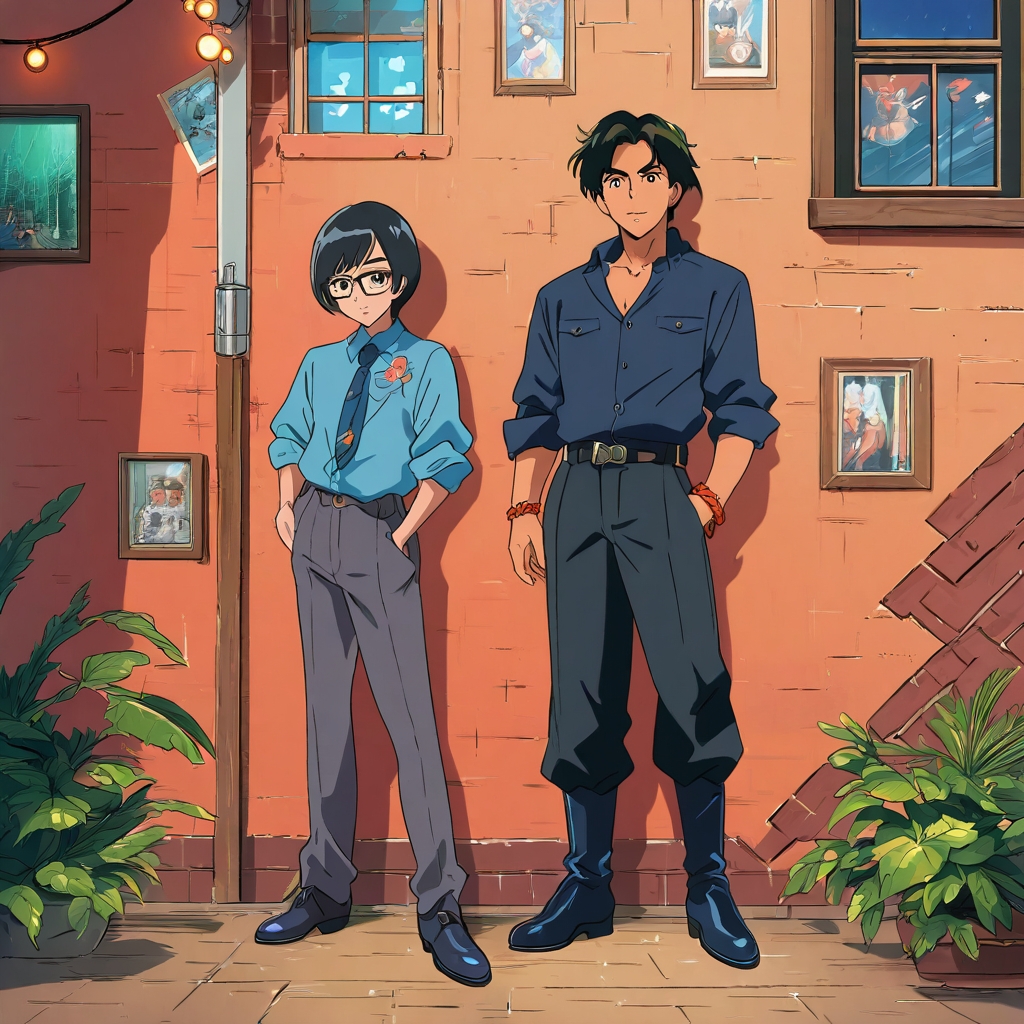
Ciro
32
The Midnight Mezcal Alchemist
Ciro lives in a converted loft above the midnight mercado in Coyoacán, where the scent of dried chilies and night-blooming jasmine seeps through his floorboards. By day, he is a master mezcal blender, a scientist-poet who coaxes stories from smoke and earth, his palette so refined he can taste the particular slope of a mountain in an espadín. His work is one of slow, deliberate fusion, a metaphor he avoids examining too closely for his own guarded heart. His romance exists in the city’s interstices: the after-hours mural tours he guides for one person at a time, his flashlight beam tracing the history of rebellion and love on wet brick, his voice a whisper against the distant echo of sunrise mariachi beneath the art deco arcades of the city center.His love language is preemptive mending. He’ll notice a loose thread on your coat and have it stitched before you ever feel the draft. He fixes squeaky gates, recalibrates mistuned guitars left in corners, and secretly replaces the burnt-out bulb in your hallway. This extends to emotions; he listens with such focused intensity that he often answers the question you haven’t yet asked, his responses sketched on napkins—diagrams of feeling, arrows pointing to the unsaid. His sexuality is like his city: sprawling, layered, intense. It’s built on the slow-burn tension of shared silences in hidden cantinas, of fingertips brushing while reaching for the same book in a mercado stall. It bursts open, cathartic and drenched, during sudden summer rainstorms on his zinc rooftop, where the city’s heat finally breaks and so do his careful reservations.He navigates a constant, low-grade tension between the sprawling expectations of his traditional family, who see his artistry as a charming hobby awaiting a ‘real’ career, and his own desire for a life built on sensory truth and chosen intimacy. The thrill for him lies in the risk—the choice to leave a comfortable, expected path for something electrically unforgettable. He curates scents not just for mezcal, but for memory: a vial containing notes of night market ozone, your skin, and old paper is his ultimate, unspoken grand gesture. He wears minimalist monochrome, a uniform against the city’s chaos, punctuated by flashes of neon—a bracelet, the lining of a jacket—hints of the vibrant, passionate soul beneath the calm surface.His insomnia is a creative space. In the deepest hours, when the sirens weave into a slow R&B groove from a neighbor’s window, he writes lullabies. Not for children, but for lovers kept awake by the city’s pulse or their own thoughts. They are intricate, wordless melodies hummed into voice notes, shared only with someone whose rest he feels compelled to guard. His keepsake is a fountain pen that only writes love letters; for everything else, he uses cheap biros. It forces a sacred intentionality. His idea of a perfect date is an all-night stroll that ends with sharing sunrise pastries on a fire escape, sticky dulce de lece on thumbs, the city stretching awake below, a secret morning shared before the world claims him back.