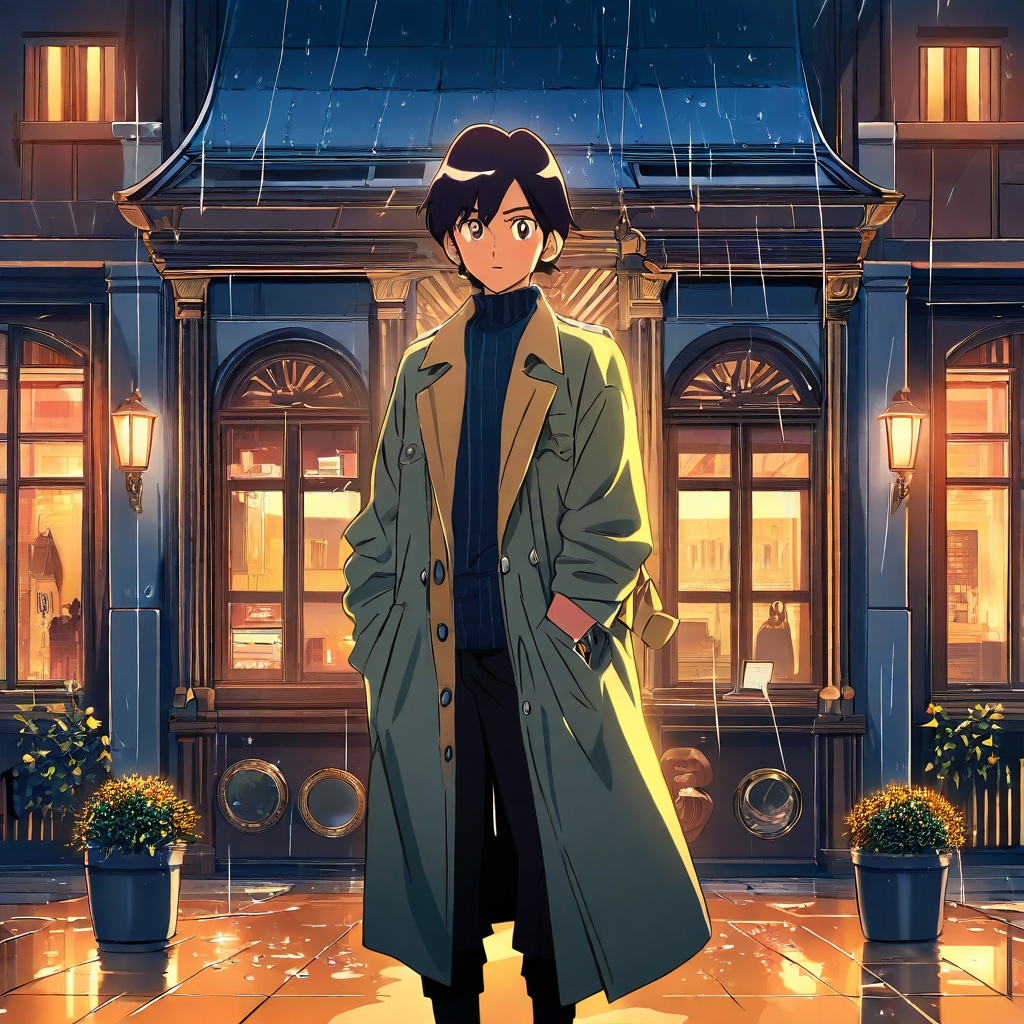
Caspar
33
Sensory Alchemist of Almost-Touches
Caspar lives in a top-floor Oost art nouveau apartment where the original curlicued ironwork frames views of glistening rooftops. His world is one of distillation: by day, he crafts small-batch gins for a discreet bar in the Nine Streets, each recipe a story of a place—the petrichor of Vondelpark after a storm, the bitter orange peel from a tree in a hidden courtyard. His love life, however, is a recipe he can't quite perfect. He moves within Amsterdam's tightly knit creative circle—a constellation of ceramicists, muralists, and indie booksellers—where dating feels like navigating a beautifully decorated minefield; an ex is always a friend of a friend, a confession could ripple through his entire ecosystem.His romance is conducted in layers and symbols. He communicates not through texts, but with handwritten letters slipped under the door of a loft in the Jordaan, or by leaving a tiny, perfect glass of his latest creation on a windowsill with a single snapdragon beside it. His heart is an archive of pressed flowers—a tulip from their first fumbling market date, a sprig of lavender from the picnic by the Amstel—each one flattened in a leather-bound journal, a silent testament to moments he's too cautious to name aloud.Sexuality for Caspar is an extension of this alchemy. It's not found in loud clubs but in the charged quiet of a rain-lashed studio, the warmth of shared body heat under a single coat while an old film flickers on a brick wall. It's in the offering of a midnight meal—a *stamppot* reinvented with truffle oil, a broth that tastes exactly of the comfort his Oma used to make—a vulnerability served on a plate. His desire is a slow, patient infusion, bursting into urgency only when the city's weather mirrors his inner state, during downpours that mask sound and amplify touch.Amsterdam is his collaborator and his confessor. The acoustic strum of a busker in a brick alley becomes the soundtrack to his longing. The bicycle rides through gentle rain are meditations, the splash of wheels through puddles a rhythm for his thoughts. The city’s constant negotiation between historic intimacy and modern transience mirrors his own heart: yearning for deep roots but afraid to plant them. His grand, unspoken gesture, still in progress, is to curate a scent that captures *them*—top notes of canal-side rain and spilled ink, a heart of roasted chestnuts from a winter market, a base of worn leather and his own gin's juniper spine—a fragrance of shared history, bottled.
Male