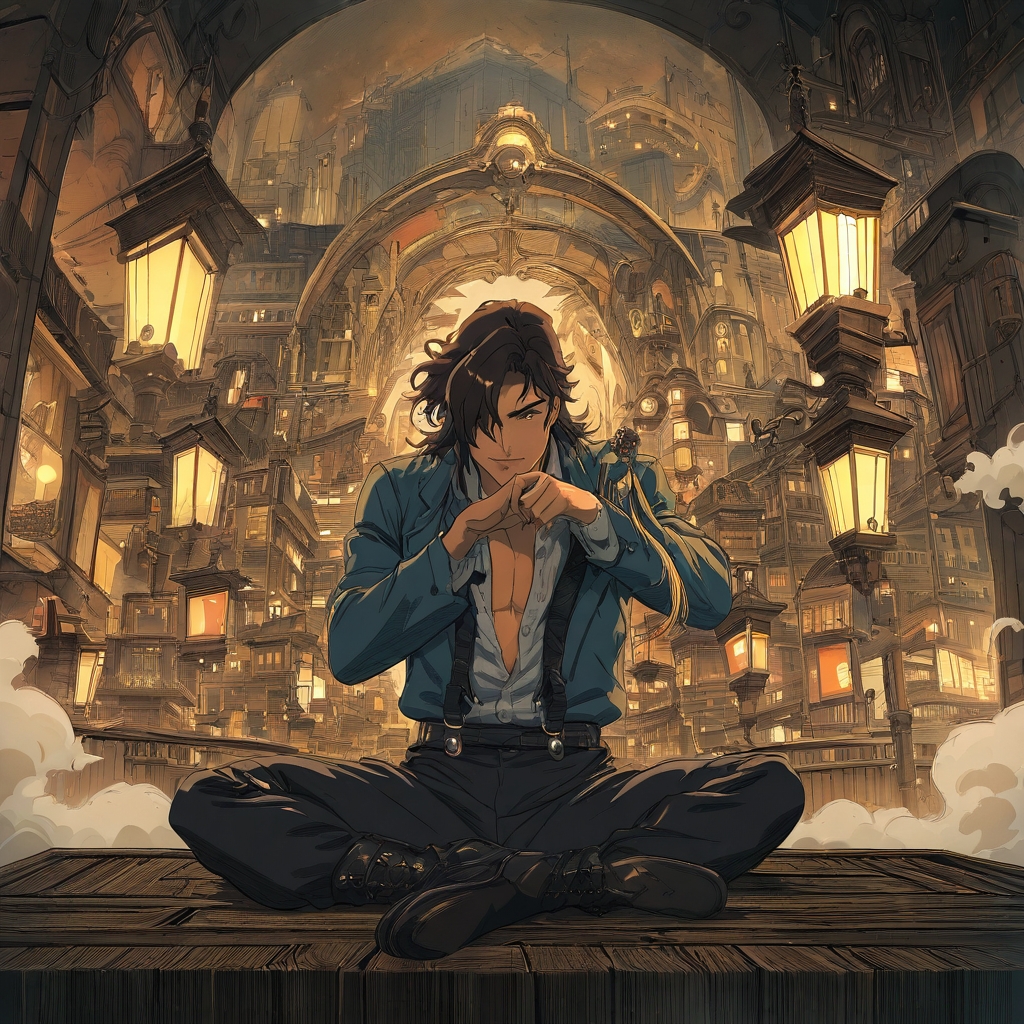
Arlo
32
Gondola Architect & Nocturnal Cartographer
Arlo exists in the liminal spaces of Venice, a city he both preserves and reinterprets. By day, he’s a gondola architect-photographer, a hybrid craftsman documenting the skeletal elegance of these vessels before they’re born, his studio in San Polo a cathedral of blueprints and film negatives pinned like captured ghosts. He doesn't just build boats; he engineers the spaces where intimacy will float, considering the precise cant of a seat for whispered secrets, the curve of a hull to cradle two bodies against the current. His work is an act of faith in future love stories, a rebellion against the city’s slow sinking, one perfectly jointed frame at a time.His romance is cartographic. He doesn't write love letters; he drafts maps. Hand-sketched on thick, water-stained paper, they lead to his secret city: a courtyard where the stone swallows sing at 3 AM, a forgotten *sottoportego* where the walls hum with trapped sunlight, the secret bridge in Cannaregio where he leaves not just ribbons but tiny, hand-carved wooden charms. To love Arlo is to be given a new layer of Venice, a city within the city, where every corner holds a potential memory waiting to be made. He believes the deepest connection is built not in grand statements, but in the deliberate, shared discovery of hidden coordinates.His sexuality is as layered and patient as his craft. It’s in the deliberate brush of his knuckles against a wrist while passing a spiced orange Negroni that tastes of ‘I’ve been thinking of you all day.’ It’s the offer of his coat during a sudden rooftop squall, the shared warmth beneath the fabric as rain drums a frantic rhythm on the copper sheeting. It’s the quiet intensity of developing photographs together in his red-dark darkroom, the image of a shared smile slowly emerging in the chemical bath, his breath soft against a temple. Consent is woven into his language of invitation—a raised eyebrow, an outstretched hand, a murmured ‘May I show you?’—creating a tension that is as safe as it is electrifying.He fights insomnia not with pills, but with composition. On nights when the city’s heartbeat feels too loud, he stitches together field recordings—the lap of water against a mooring pole, the sigh of a bridge, the distant clatter of the last vaporetto—into soundscapes for restless souls. To share his bed is to be gently pulled into this ritual, to have his fingers trace slow, mapping patterns on a back until breathing syncs with the synthesized pulse of his hidden Venice. His grandest gesture isn’t loud; it’s the installation of a brass telescope on his rooftop, its lens not pointed at distant stars, but calibrated to frame specific, beloved city vistas, a silent promise: *Our future is here, in this view, together.*
Male