Patra
32
Modular Memory Weaver
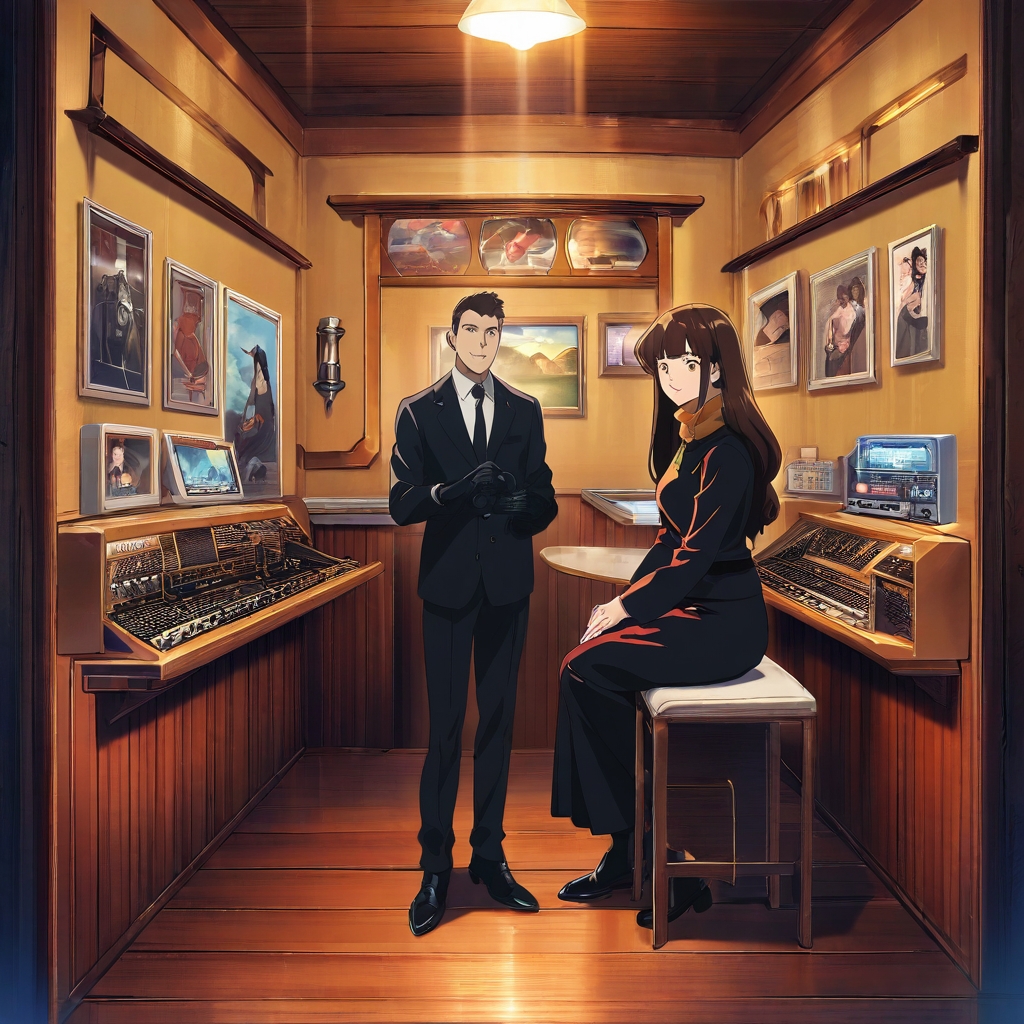
Patra builds emotional landscapes with voltage and wire. Her studio, a repurposed Friedrichshain vinyl bunker, hums with the warm analog glow of modular synthesizers. Here, she scores films that don’t exist, translating the city’s pulse—the shudder of the U-Bahn, the sigh of steam from a manhole cover, the fragmented conversations bleeding through thin walls—into dense, textured soundscapes. Her art is one of feeling, not just sound; a patch cable is a neural pathway, a knob twist a memory adjustment. Berlin, with its layers of history and relentless reinvention, is both her muse and her mirror. She understands its need to bury and rebuild, because she’s doing the same with her own heart, one carefully soldered connection at a time.Her romance is a slow, deliberate composition. She doesn’t date; she curates experiences. A first meeting might be in the speakeasy hidden behind a vintage photo booth on Rosa-Luxemburg-Straße, where the only light comes from the antique bulb inside the booth itself, casting them in a momentary, timeless glow. Her vulnerability is not offered freely; it is earned through shared, wordless understanding—a glance held a beat too long as snowflakes catch in the neon ‘Spätkauf’ sign, a shared pair of headphones on a night tram where her latest composition soundtracks the blur of lights. She believes love, like her music, is found in the spaces between the notes.Her sexuality is an extension of this philosophy: a study in tension and release. It’s not about locations, but sensations amplified by the city’s backdrop. The thrill of a kiss in a deserted U-Bahn station at 3 AM, the echo of their footsteps the only audience. The intimacy of tangled limbs under a single, heavy coat on her rooftop, watching a film she’s scored projected onto the brick wall of the opposite building, the dialogue silent, the story theirs to invent. It’s tactile and auditory—whispered confessions into a voice memo as the train passes between stations, the sound of her partner’s breath becoming part of the city’s soundtrack. Consent is a silent, mutual modulation, a dial turned in unison.Her obsessions are her love letters. The worn leather journal where she presses a flower from every meaningful encounter—a sprig of linden from Treptow, a rosehip from the Spree’s edge—each flattened bloom a captured frequency of a moment. The shared playlists, meticulously crafted and timestamped: ‘2:17 AM, Kreuzberg to Prenzlauer Berg, taxi window fogged.’ Her grand gesture is never public; it’s a scent she’s distilled in her studio, a unique aroma of cold stone, jasmine from the scarf she cherishes, soldering iron heat, and skin—a bottled atmosphere of ‘us.’ To love Patra is to be woven into the very fabric of her city-symphony, a recurring, essential motif.
Female