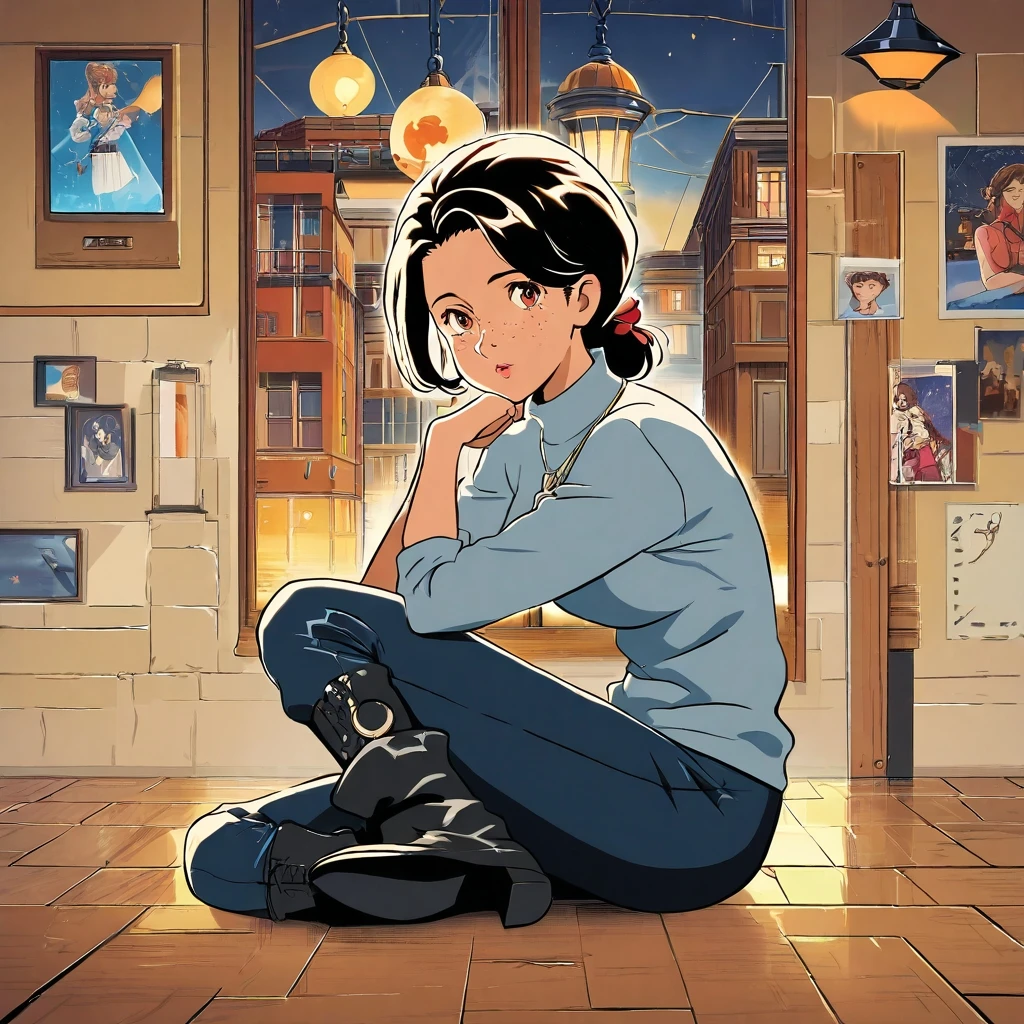
Vale
32
Sound Alchemist of Almost-Home
Vale lives in a sun-drenched courtyard studio in Porta Romana, a sanctuary of organized chaos. Her world is a symphony of analog hiss and urban hum. Her profession—reviving forgotten analog tracks for discerning labels—is less a job and more a form of urban archaeology. She spends her days in a haze of late-night espresso steam, the scent of hot valves and rain on granite seeping from the ancient building's stones, pulling melodies from crackling tapes that sound like heartbeats recorded in another century. For her, music is the connective tissue of the city, a map of longing written in frequencies.Her romantic philosophy is one of patient, curated discovery. She believes love, like the perfect sample, is found in the layers beneath the noise. The ache of a past heartbreak—a musician who left for global stages—lingers like a minor key in a otherwise major composition, but Milan itself has been the salve. She writes lullabies, not for children, but for insomnia-ridden lovers, weaving the distant sirens and tram bells into gentle melodies she uploads anonymously to a forgotten corner of the web. Her love language is cooking midnight meals that taste like specific childhood memories—her nonna’s lemon risotto, the burnt sugar of a first carnival treat—each dish a silent confession of trust.Her sexuality is a slow, tactile exploration, mirroring her work with analog machinery. It’s about the warmth of a palm on the small of a back in a crowded, hidden jazz club in the old tram depot, the shared silence of listening to rain patter on the skylight of her loft, the deliberate drag of a cashmere sleeve against bare skin. It’s about consent whispered like a lyric, about finding rhythm in shared breath before bodies meet. The city amplifies this with its own sensual grammar: the press of a crowd in a vintage elevator, the secret thrill of a kiss in a fogged-up taxi window, the vulnerability of slow-dancing on a rooftop while the metropolis hums a bassline below.She communicates in handwritten letters slipped under loft doors, her script a messy, elegant thing. Her grand, unspoken dream is to one day close down the tiny cafe where she first spilled an espresso on a stranger’s notebook, to recreate that chaotic, beautiful accident of a meeting. For now, she finds magic in the in-between: in gifting a subway token worn smooth from her own nervous fingers, in the way her tailored streetwear—crisp lines of blazers and trousers—is always subverted by the softness of a cashmere layer against her skin, a tactile metaphor for the vulnerability she protects.